


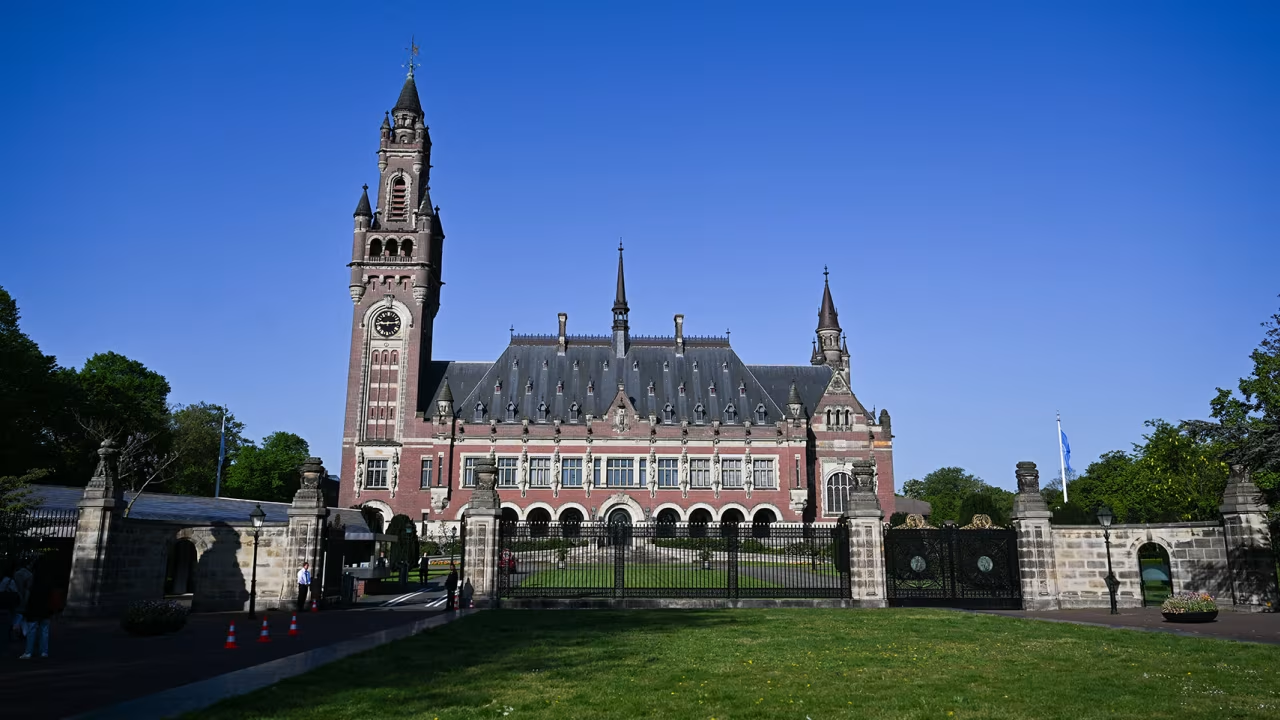
The International Criminal Court (ICC) and the International Court of Justice (ICJ) have received unprecedented public attention in their efforts to prosecute alleged war crimes committed during Russia’s invasion of Ukraine and Israel’s war in Gaza.
The ICC prosecutes individuals and the ICJ prosecutes states. The ICJ was established in 1945 as part of the human rights architecture built after World War II, while the ICC is a younger organization, established in 2002. Both are based in The Hague, Netherlands.
The ICC made headlines in March 2023 when it issued arrest warrants for Russian President Vladimir Putin and another Russian official on suspicion of plotting to deport children from Ukraine.
In November 2024, it also issued arrest warrants for Israeli Prime Minister Benjamin Netanyahu and former Defense Minister Job Gallant. Warrants were also issued for three senior Hamas officials, all of whom were subsequently killed by Israel.
In February, US President Donald Trump signed an executive order imposing sanctions on the ICC, accusing it of abusing its power by “issuing baseless arrest warrants” for Prime Minister Benjamin Netanyahu and Mr Gallant.
The ICJ also gained worldwide fame for its trial of genocide cases brought by South Africa against Israel. The court has not yet issued a final ruling, but issued “interim measures” ordering Israel to prevent genocide in Gaza in early 2024.
The ICJ is also considering the Gambia’s genocide case against Myanmar over its treatment of Rohingya Muslims.
Nina Greger, director of the Peace Research Institute Oslo (PRIO), told CNN that both tribunals deserved the award for their contribution to “upholding international law and norms.”
