

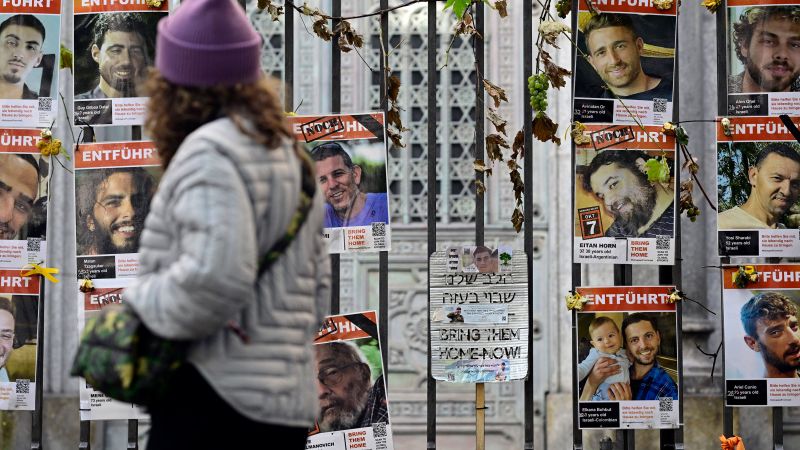
Israel rated Hamas as a possible failure to find and return all the remaining dead hostages in Gaza, according to three Israeli sources.
Sources say the Israeli government is aware that Hamas is not aware of or cannot retrieve some of the remaining 28 deceased hostages. According to one source, the number is between 7 and 9, while another is between 10 and 15.
One source said the assessment was based on Israeli intelligence report and based on messages from Hamas and mediators of repeated negotiations. The reason for the difference between the two ratings was not clear.
There are 20 hostages believed to be alive, and there are serious concerns about the well-being of two of them.
Israel requested the return of all hostages (both alive and dead) as a condition to end the war, during the latest negotiations on hostage and ceasefire contracts in Sharm el-Sheikh, Egypt.
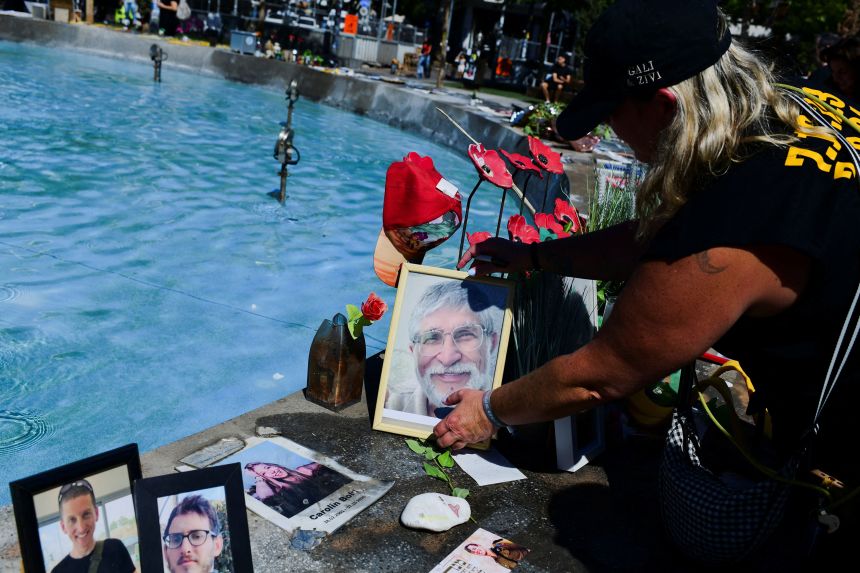
Three Israeli sources have known for several months that Israeli Prime Minister Benjamin Netanyahu and his cabinet may not be able to meet the demand, as Hamas is not aware of where the hostages died. CNN has requested the Israeli government for comment.
The US has also known about the issue for a while, but negotiators in the Biden administration recognize that some hostages are being held by the Gaza factions that Hamas does not have full control.
Barbara Leaf, executive director of the Middle East under President Joe Biden, told CNN: Leaf said it might be difficult to recover the bodies of some of the dead hostages. “It’s much more likely that they can recover all living hostages,” she said.
It is unclear how this uncertainty will affect Egypt’s current important consultations. According to one Israeli source, Israel’s official position was held responsible for all hostages who died, and the Israeli government hopes that they will all be returned. Sources said Hamas may use uncertainty about its ability to return all dead hostages and elicit implementation of the ceasefire arrangement, and argue that it will not return all remaining hostages until Israel agrees to a full military withdrawal from Gaza.
Another Israeli source expressed concern that Netanyahu might use uncertainty as an excuse to derail uncertainty. Critics of the Israeli Prime Minister, including opposition leaders and hostage families, have repeatedly accused him of intentionally undermining negotiations to end the war, claiming that he is imposing new conditions on political grounds, particularly when the deal approaches.
However, other sources say that rather than torpedoing the entire framework under the US president’s 20-point proposal, Netanyahu is likely to use it as leverage for the final details of the contract, given the heavy US and regional pressure to secure the contract.
Uncertainty about the deceased hostages is particularly sensitive in Israeli society. This is because it resonates with previous unresolved cases of missing soldiers. During the seven-week war in Gaza in 2014, Li was killed during Khadar Goldin and his body was taken by Hamas. His body has never been handed over, and now the request for 48 Israeli hostages has been returned. Goldin’s family has been campaigning for many years for his return, citing his commitment to the principle that Israel leaves no one in the conflict.
Ronarad, an Israeli Air Force navigator, was captured in 1986 when the jet shot down Lebanon. Almost forty years later, his unresolved loss of failure is one of Israel’s most painful symbols.
Nathan Echel, one of Netanyahu’s closest confidants, wrote a message to a group of journalists last week, referring to the negotiations in Gaza, saying, “There’s Ron Arad.”
