

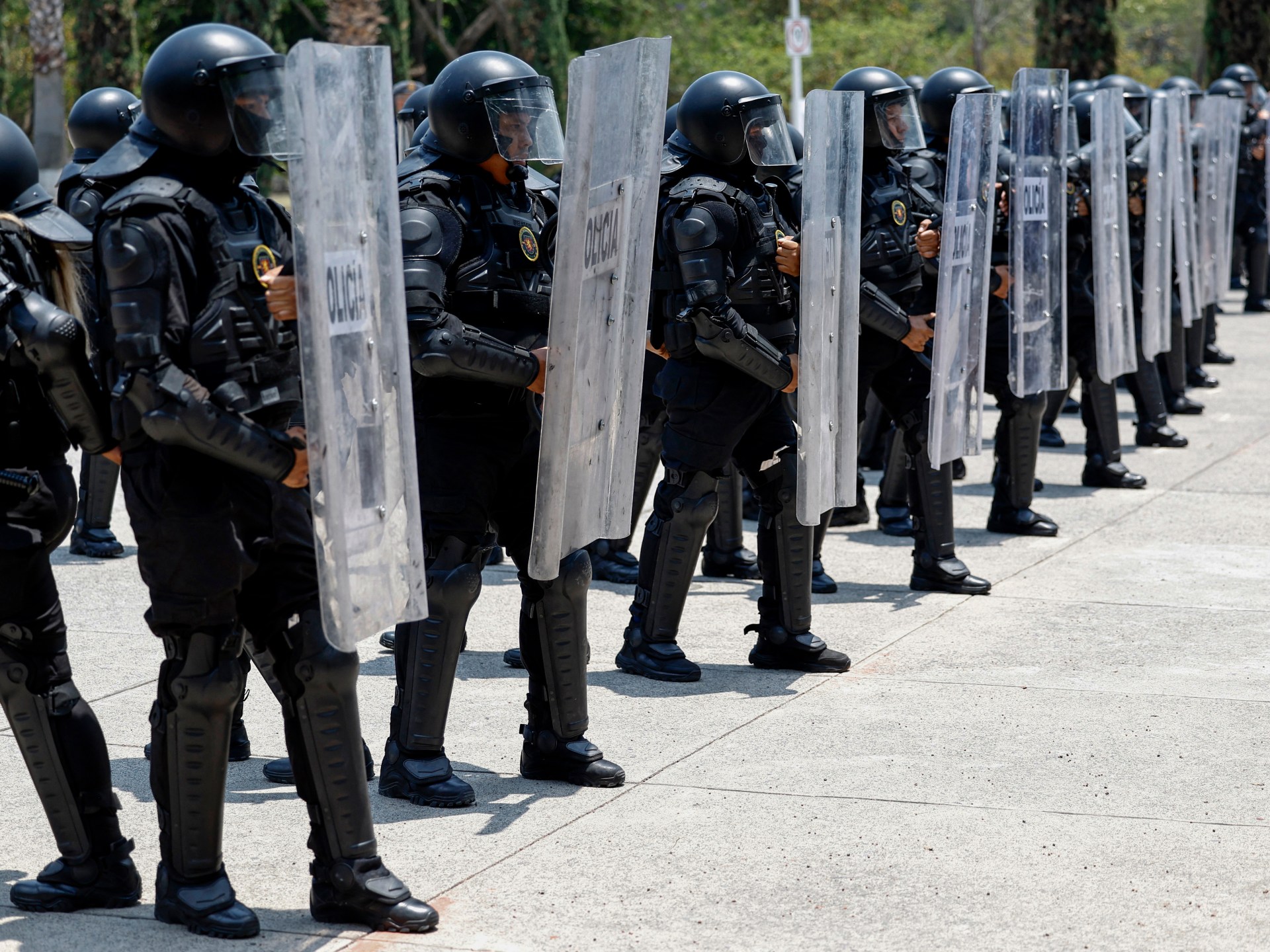
Continued scrutiny of the United States’ role as World Cup co-hosts and FIFA’s role as tournament organizer is overshadowed by a growing list of security concerns and protests in Mexico, where the tournament’s opening round begins next month.
The 2026 World Cup begins on June 11 in Mexico City, with the home team facing South Africa at the Estadio Azteca. But soccer fans have been alarmed by recent incidents of violence and frequent protests in host cities across Mexico.
Recommended stories
list of 4 itemsend of list
The mass shooting that killed 10 people in Mexico’s Puebla state on Sunday exacerbated safety concerns previously raised by human rights groups and international fans traveling to North America for the tournament.
Here’s what happened in Mexico in the months leading up to the World Cup.
Security concerns increase due to shootings and cartel violence
Six men, three women and a minor were among the victims of an armed attack at a residence in Tehuitzingo, 200 kilometers from Mexico City, where the opening round of the tournament is scheduled to take place in just over three weeks.
The state attorney general’s office announced it has opened an investigation into the shooting. Ahead of the attack, Mexican President Claudia Sheinbaum pledged to beef up security, including deploying 100,000 security personnel, including the National Guard, police officers and employees of private security companies.
The shooting occurred less than a month after a gunman killed a Canadian tourist and injured 13 others in Teotihuacan, a popular tourist destination and archaeological site on the outskirts of Mexico City.
President Sheinbaum said Monday that Homeland Security Secretary Markwayne Mullin is scheduled to visit Mexico this week, but did not say why.
In April, Human Rights Watch stressed that Mexico remains one of the most dangerous countries in the world for the media ahead of the World Cup. It also highlighted that FIFA has not addressed the direct risks to journalists working in Mexico’s World Cup host city.
Amnesty International also called on FIFA and World Cup organizers to take urgent action to protect fans, players, journalists, workers and communities as the tournament takes place amid a “serious human rights crisis”.
A wave of violence erupted in Mexico in February after security forces killed Nemesio “El Mencho” Oseguera, a member and leader of the Jalisco New Generation Cartel (CJNG).
FIFA president Gianni Infantino said he was “very relieved” that Mexico would host the tournament after violence sparked by the killing of a drug cartel leader.
Repeated incidents have raised questions about the country’s ability to combat violent crime, and leaders are seeking to allay fears and criticism.

forced disappearance
Several human rights organizations in Mexico are using the World Cup to draw attention to sociopolitical issues that have long gone unaddressed.
Relatives of Mexico’s missing people held a soccer game outside the Nuevo Leon State Government Palace on Sunday, demanding answers about the whereabouts of their loved ones.
Irma Leticia Hidalgo, the mother of missing person Roy Rivera Hidalgo, criticized authorities for investing in what she called “frivolous and superficial activities” while cutting resources for agencies tasked with searching for missing persons.
According to official government data, 133,960 people are missing in Mexico, a crisis largely driven by decades of cartel violence and institutional neglect.
Thousands of people across North America marched on Mother’s Day earlier this month to protest the violence and impunity plaguing the country, led by the mothers of people disappeared from decades of drug violence.
“Mexico mothers have nothing to celebrate because they are playing the most difficult game of justice,” the mothers of the missing people called on soccer fans to join them.
“Mexico is the champion of disappearances,” the protesters chanted.
“We had no choice but to start a fight because no one wanted to take responsibility for the disappearances,” said Graciela Pérez Rodríguez, whose daughter and four other relatives disappeared in 2012.

Teachers strike for higher wages
Teachers and activists marched through Mexico City on Friday on Teachers’ Day to demand higher wages and policy changes, and union leaders warned of a nationwide strike that could disrupt the start of next month’s World Cup.
The National Coordination of Education Workers (CNTE), a teachers’ union, rejected the government’s announcement of a 9% pay increase and called for a doubling of salaries and a reversal of education reforms.
Pedro Hernández Morales, general secretary of Mexico City’s CNTE Section 9, warned that “the ball will not roll” if demands are not met by Mexico’s opening game on June 11, threatening a national teacher strike.
The warning adds to the tension in an already tumultuous education debate, after authorities last week backed away from plans to shorten the school year because of the competition after a backlash from parents and educators.
