

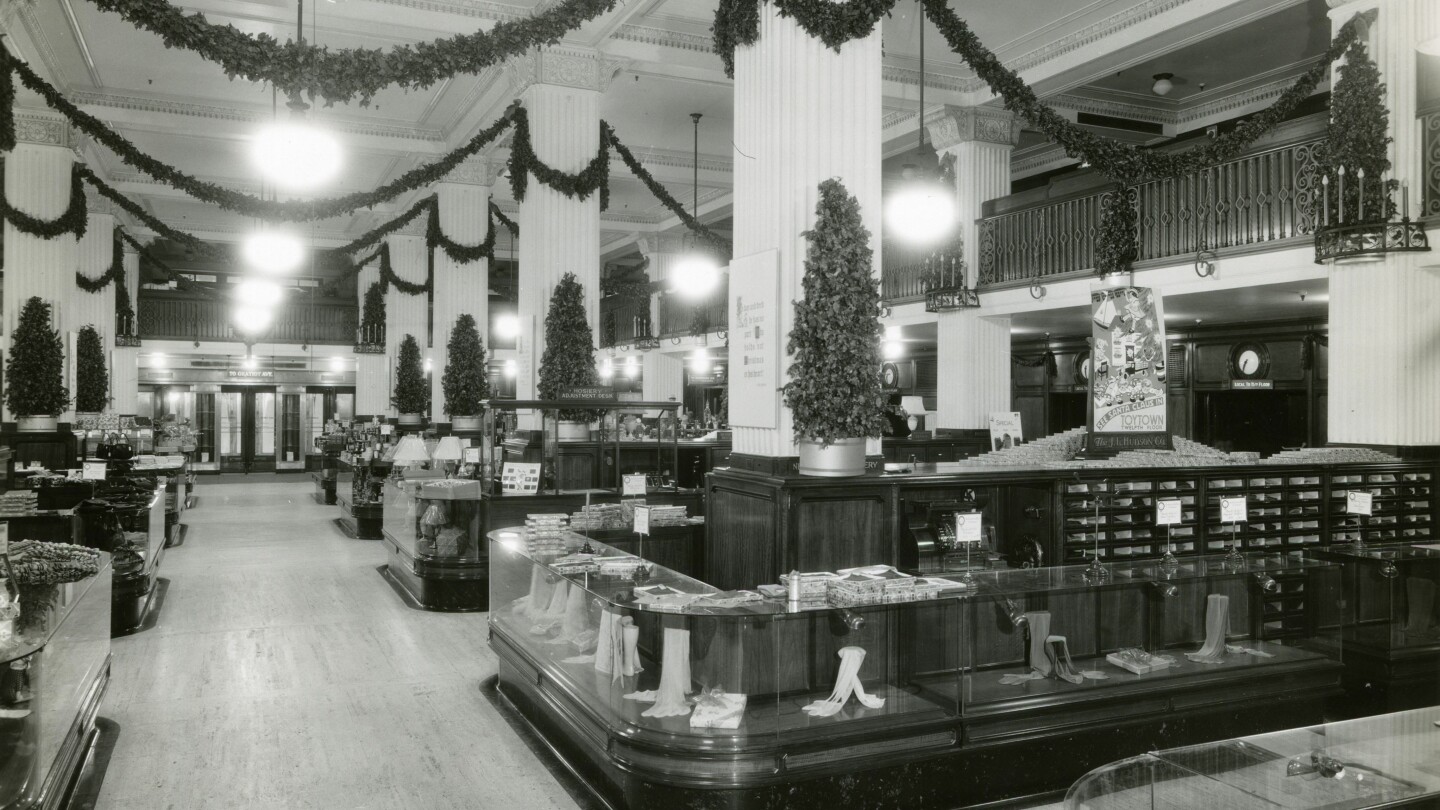
DETROIT (AP) — Before there were sprawling suburban malls with amusement park rides and stores selling everything from jeans to jelly beans, there was a Hudson’s in downtown Detroit.
The towering department store reflected the growth and affluence of the auto manufacturing town, but its fortunes, like the city’s, were soured by population migration and economic downturn.
In 1998, more than a century after J.L. Hudson opened its doors, the 25-story building was demolished, leaving a deep hole, literally and figuratively, a remnant of what Detroit once was.
Until this year.
The Woodward Avenue site is home to a gleaming 45-story tower and a 12-story office building. New 1.5 million square feet (140,000 square meters) hudson’s detroit The development also includes retail space and will feature luxury condominiums. general motors company We are moving our headquarters there A five-star hotel is scheduled to open in 2027.
“People are saying this is no longer the Detroit of their fathers and grandfathers,” said Dan Gilbert, whose property management firm Bedrock developed the $1.5 billion construction. “You don’t even have to look at the numbers, you can just walk around and feel it. a different detroit”
reversal of fate
The Old Hudson building commanded attention and commanded respect, said Jeremy Dimick, collections director at the Detroit Historical Society. The new ones are equally impressive. Its tower soars 210 meters (685 feet) above downtown Detroit.
Its arrival is the latest chapter in the city’s renaissance.
Detroit was once mired in debt, struggling to pay its bills and keep its lights on. filed for bankruptcy in 2013when its credit rating was junk bond status.
The city emerged from bankruptcy in 2014 with a general fund balance of more than $1 billion and has recorded 10 consecutive years of budget surpluses since then. Moody’s Investment Services raised Detroit’s credit rating for the 11th time in a row this year and cited the Hudson’s development in its report.
“When I walk downtown, I feel the energy,” Gilbert said. His company, Bedrock, owns more than 100 properties in downtown Detroit. “There’s just been a significant change.”
“Why go downtown?”
Founded in Detroit in 1881, the JL Hudson Store initially specialized in clothing for men and boys. After occupying various spaces downtown, the company opened a store on Woodward Avenue 10 years later and expanded its offerings, according to . Detroit Historical Society.
The building grew over the years. Approximately 12 of the final 25 floors were dedicated to retail space in what was considered the world’s tallest department store for more than half a century.
Dimmick called it a Detroit institution.
“That was the reason I went downtown,” he said. “It’s been around for so long that it’s become a multigenerational experience of shopping: ‘I went there with my parents, and I’ll take my kids.'”
This grand department store sold fine linens, tableware, and kitchenware. Factory workers could find overalls there. But most of all, Hudson’s provided holiday magic.
Filled with color, sound, and excitement, it was the center of downtown festivities. Thousands of shoppers entered the store each day, moving from department to department on escalators and elevators. The longest line was of children sitting on Santa’s lap and whispering their wishes for presents.
For 76-year-old Randy Block, childhood trips to Hudson’s were about more than just shopping.
“My grandparents would go out of their way to dress me up and take the streetcar to Hudson’s. It was like having dinner somewhere on a Sunday,” said Block, a former public relations executive.
Her most vivid memory is in the toy section of that store.
“I looked forward to going every year around Christmas because they release new toys around Christmas,” Block said. “I liked dolls, but I also liked trains.”
Detroit historian Michael Houser recalls Hudson’s as “everybody’s store.”
“You had an affordable basement store,” Hauser said. “Two entire floors were fashion and homewares. It had its own cafeteria. You didn’t have to be wealthy to eat and shop.”
Gilbert, the billionaire owner of Quicken Loans and the NBA’s Cleveland Cavaliers, said the new Hudson seeks to recreate that magic, remembering the hot fudge sundaes at Hudson’s Soda Counter.
“It’s going to feel like we’re back in time,” he said.
Declining cities and stores
Like many large manufacturing centers, it was a grand and exciting time for Detroiters before the city began to change. A new highway was built. Middle and upper class families left the cities and sought new homes in the suburbs with large gardens.
mid-1950s, Northland Center Just north of Detroit, the largest shopping mall in the United States at the time opened, offering suburban shoppers even more options.
Detroit’s population reached a peak of 1.8 million people It was a decade before a trickle of people retired, taking their money with them and hurting Hudson’s bottom line. It was not until 2023 that the city’s population began to grow again.
The old Hudson’s building was downsized and eventually closed in 1983. On October 24, 1998, it was blown up into a huge pile of rubble, stone, steel and dust.
“It was sad,” recalls Bullock, who watched the implosion from his brother-in-law’s apartment downtown.
What remained was even worse.
“Even if you put all of your stock, your memories, your nostalgia into this place, when that place is gone, it leaves a literal and figurative hole in you,” Dimmick said.
Gilbert, 63, says it will take decades to recoup his investment from Hudson, but that’s not the point of the development.
“We’re doing this for ourselves, but we’re also doing it for the city,” said the fourth-generation Detroiter.
