

Published April 2, 2026
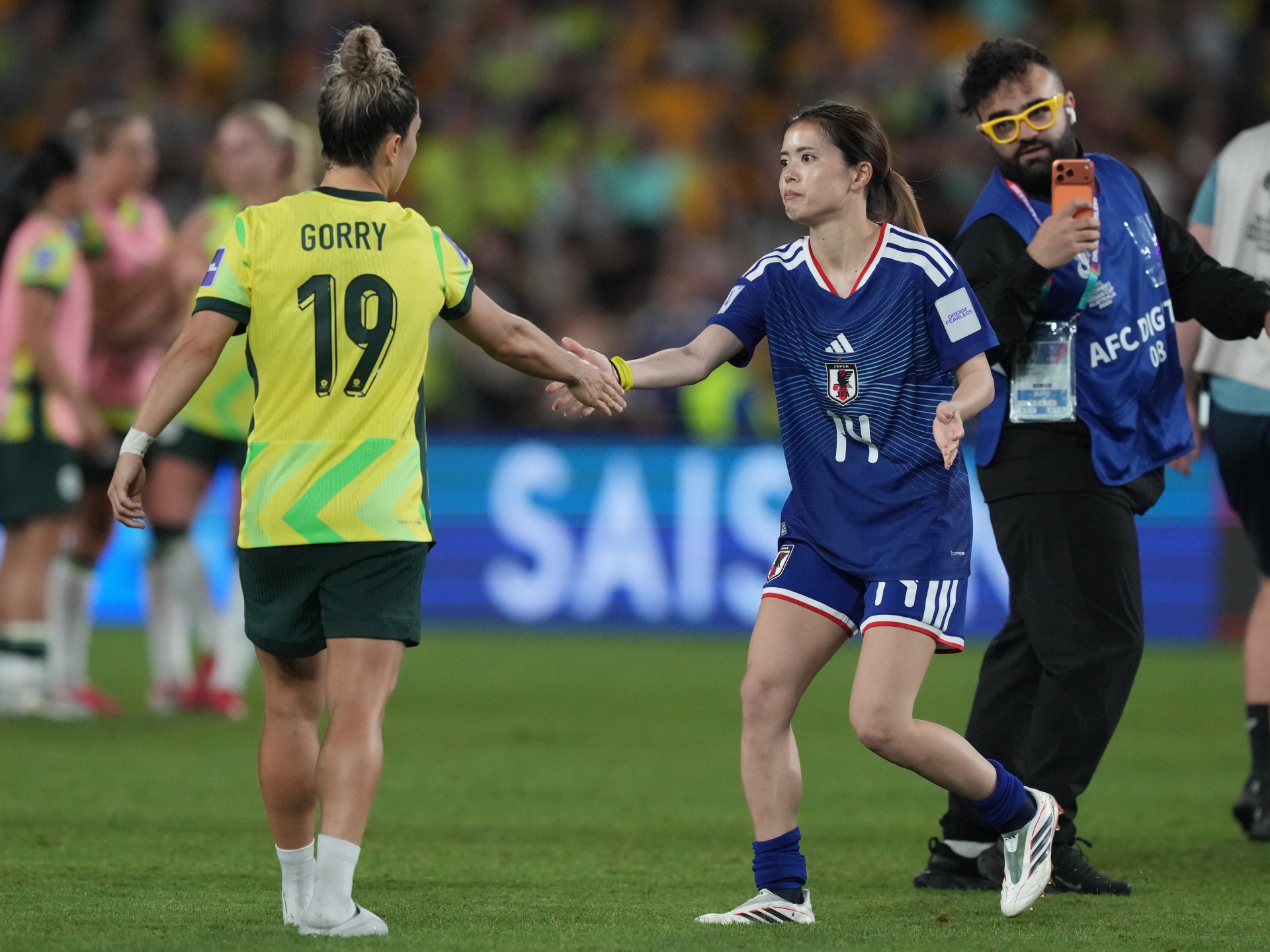
Japan and Australia, the finalists of the Women’s Asian Cup, renewed their calls for prize money on par with the men’s tournament in a direct challenge to the Asian Football Confederation, accusing the governing body of “ignoring” their previous demands.
In the final, held in Sydney on March 21, Japan defeated host country Australia 1-0 in front of more than 74,000 spectators, the largest in the tournament’s history.
Recommended stories
list of 4 itemsend of list
The tournament, which made global headlines, came to an end after seven Iranian players who refused to sing the national anthem were branded “traitors” in their country and requested asylum. Two Iranian players remain in Australia.
The total prize money for the Women’s Asian Cup held last month was widely reported to be the same as in 2022, at $1.8 million, compared to $14.8 million for the men’s equivalent.
A report released in February by the world football federation FIFPRO said the event could generate up to $82.4 million in revenue.
A record 350,000 fans visited the turnstiles during the three weeks of the tournament.
In a joint statement released by FIFPRO on Thursday, the Japanese and Australian teams said: “Despite its success, the tournament remains the lowest paid continental tournament in the world and inequality in the game between men and women still exists.
“Our pre-competition invitations to the AFC to equalize prize money, ensure its distribution to all players and work together to jointly develop a lasting legacy have so far been ignored.
“Equality in prize money will be transformative for all players and football communities across Asia.
“Equal prize money will help raise the standards of the game at all levels across the region.
“Equality benefits the players in the short term, but it benefits football in the long term.”
The statement said the tournament was held “against a backdrop of real challenges that require the AFC and players to work together to address them”.
It highlighted the plight of the Iranian team and how Indian players were left wearing uniforms that did not fit properly.
South Korea’s national team had threatened to boycott the 12-team tournament during warm-up games, citing “worse” treatment by the federation compared to the men’s team.
“These challenges can only be tackled in partnership,” the statement added.
“Looking forward, we look forward to FIFA honoring its promise of equal prize money at the 2027 FIFA Women’s World Cup, and we will continue to fight for equality and respect for women athletes across the region.”
AFP has contacted Kuala Lumpur-based AFC for comment.

Japan fires Nielsen despite winning the Asian Cup
In a further move on Thursday, Japan suddenly sacked coach Nils Nielsen just 12 days after leading her to Women’s Asian Cup glory, with soccer leaders accusing her of being “lazy” and “lacking passion”.
Nielsen, a native of Greenland, won the match against Australia and led Japan to its third Asian title in four tournaments.
The 54-year-old has been appointed since December 2024 and is the first foreign-born coach of the Japanese women’s team.
The Japan Football Association (JFA) announced that Nielsen’s contract will expire after the Asian Cup and the board has decided not to offer him a new contract.
JFA President Tsuneyasu Miyamoto said, “We came to this conclusion after considering various factors in order to win a major international tournament.”
Japan received praise for scoring 29 goals and conceding just one goal at the Asian Cup.
Nielsen described his team as “inspirational” and said he was “very lucky to work with such great players.”
There was no indication at that point that he would be leaving anytime soon.
Women’s national team coach Norio Sasaki said Japan would not be able to win next year’s World Cup in Brazil if Nielsen remained in charge.
“His coaching was a little too loose, a little too lenient. We need a more rigorous approach and tougher training,” said Sasaki, who led Japan to a World Cup victory in 2011.
Sasaki said Nielsen had a “gentle personality” and was not tough enough to win major world titles.
“When I talked to him about what he could do to take the team to the next level, there was a sense that he lacked passion,” he said.
Japan is scheduled to play three away friendlies against the United States in April.
Michihisa Kano will be appointed as the tour’s interim coach.
Sasaki said the next full-time coach will likely be Japanese.
Nielsen previously coached women’s teams in Denmark and Switzerland and was technical director of Manchester City’s women’s team.
