

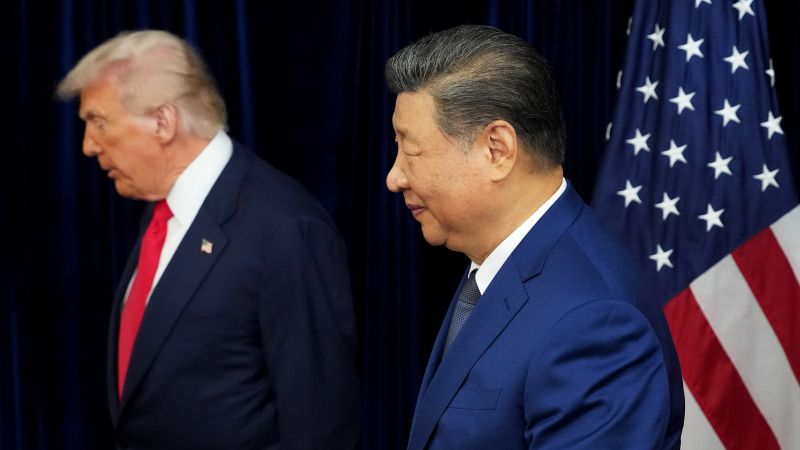
Pacific nations and regional leaders, including China’s Xi Jinping, are gathering in South Korea for a major summit on Friday. But the leader of a global power, Donald Trump, is conspicuously absent.
The US president departed South Korea on Thursday, shortly after a landmark meeting with the Chinese president that appeared to calm the lingering trade tensions between the world’s two largest economies.
Mr Xi has been thrust into the spotlight after President Trump chose to skip the annual Asia-Pacific Economic Cooperation summit, which brings together countries that account for more than half of global trade, and is expected to hold important talks with Japan’s new leader Sanae Takaichi and Canada’s Mark Carney.
Despite Trump’s absence, the two-day event in Gyeongju comes with the president’s protectionist trade policies and tough global tariffs looming. U.S. Treasury Secretary Scott Bessent will represent President Trump in the talks.
In his opening remarks at the forum, President Xi called for unity and cooperation among the 21 economic groups on both sides of the Pacific.
“The world is experiencing rapid changes not seen in the last 100 years,” Xi said at the forum. “The more turbulent times become, the more we must stand together.”
“The door to China’s opening up will not be closed, it will only be opened wider,” Xi said.
Decisions made in Gyeongju are non-binding, and leaders have faced difficulty reaching agreement in the past, including on thorny issues such as Russia’s war in Ukraine. But the main focus of this year’s forum will be on strengthening supply chains and fostering cooperation as economies around the world reel from President Trump’s tariff offensive.
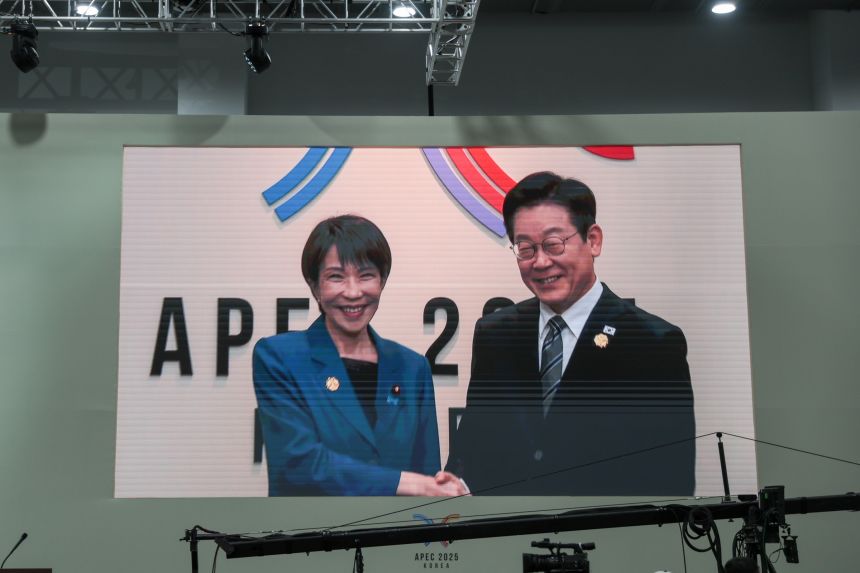
“We are at a critical turning point in the rapidly changing global economic order,” South Korean President and APEC Chairman Lee Jae-myung said in a speech at the summit on Friday. “Global economic uncertainty is deepening and trade and investment are losing momentum as the free trade order undergoes dramatic changes.”
“Only cooperation and unity can surely lead us to a better future,” Lee said.
President Trump’s three-legged Asia tour, which included visits to Malaysia, Japan and South Korea, was generally seen as a success by all parties, with Asian leaders displaying master classes in hospitality and flattery in an effort to win the president over and ease trade negotiations in the process.
The meeting between President Trump and President Xi ended with a trade deal that calls for the United States to cut tariffs on China by 10% and reduce the effective tax rate on Chinese exports to 47%. He called on China to delay some of its rare earth export restrictions and resume purchasing U.S. soybeans.
In Japan, President Trump and newly appointed Prime Minister Takaichi embarked on a “new golden age” of relations, signing a critical minerals agreement. And, according to the White House, the new trade deal reached with Mr. Lee will see South Korea invest billions of dollars in the United States, including in shipbuilding, aerospace and technology.
On Friday, President Xi met with Japan’s Takaichi. Gaoichi criticized China’s growing military presence in the region and called for cooperation with Taiwan, an autonomous island that Beijing claims as its own territory.
Xi told Gao Shi that China was ready to “work with Japan towards constructive and stable bilateral relations that meet the demands of the new era,” according to China’s official Xinhua News Agency.
Takaichi faces a difficult balance in his talks with President Xi. China remains Japan’s largest trading partner, and Takaichi inherited a country facing a growing economic crisis.
According to Chinese state media, Mr. Xi also met with Mr. Carney, who is involved in the escalating trade war with President Trump, and Thai Prime Minister Anutin Charnvirakul.
In comments that echoed Mr. Xi and Mr. Li’s speeches at APEC, Mr. Carney told the forum that the world was “facing a new crossroads in history.”
“Our world is undergoing one of the most profound changes since the fall of the Berlin Wall,” he said. “That old world of steadily expanding trade and investment liberalization is over.”
He said Canada aims to double its exports outside the United States over the next 10 years as it seeks to diversify away from the United States.
