

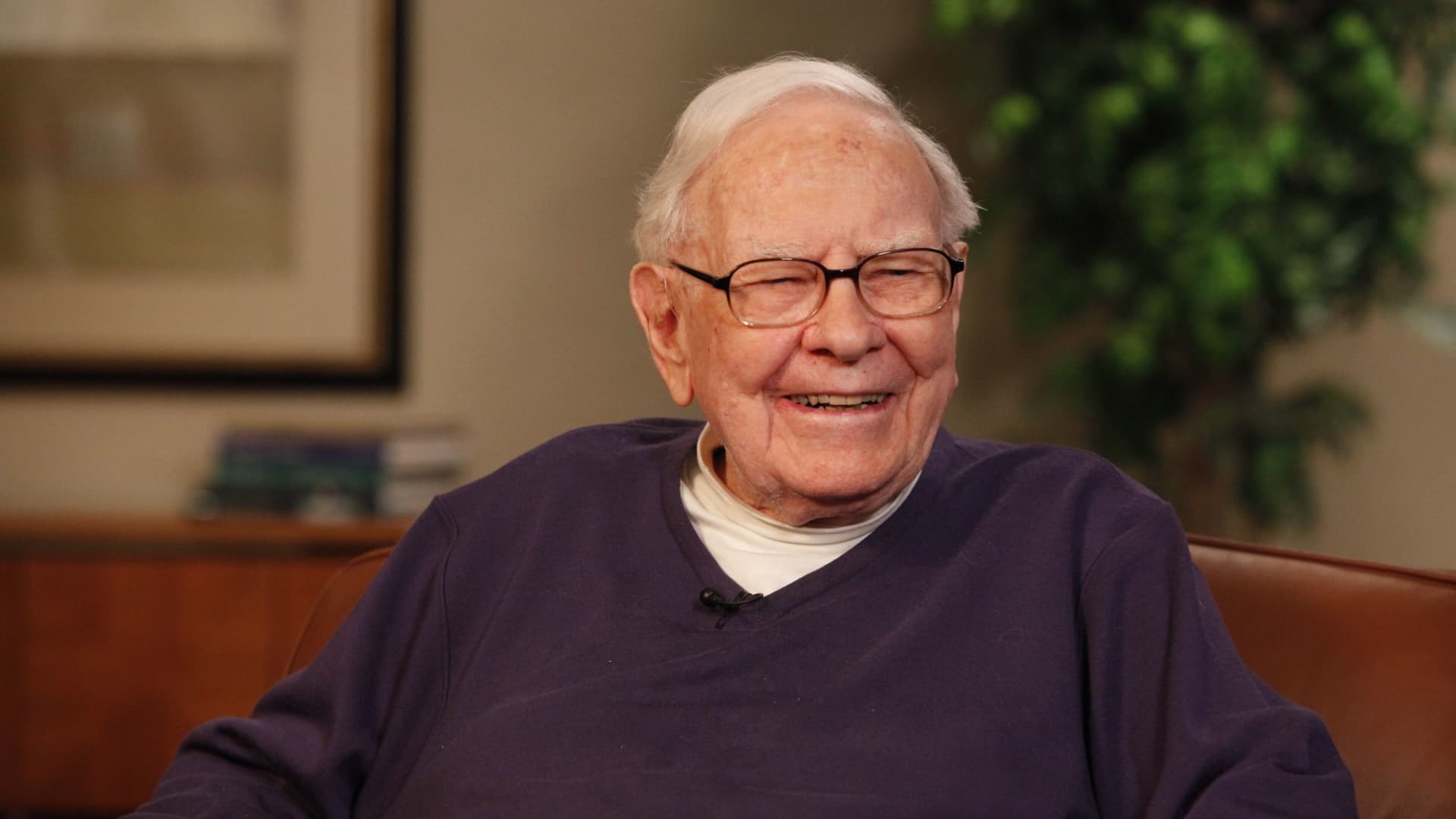
Warren Buffett, in his first public comments since stepping down as Berkshire Hathaway’s chief executive, offered a measured and measured view of the market, downplaying the significance of recent volatility while warning of lingering weaknesses in the banking system. In an interview with CNBC, the 95-year-old investor said stress in financial institutions could quickly spill over, underscoring the interconnected nature of the sector. “They all influence each other, and one problem can spill over into another,” Buffett said. “When people scream fire in a crowded theater, everyone stops and runs. It still pays to beat people to the door,” he said. “I stand there and say, ‘Everyone calm down,’ but it’s because I can’t run fast.” His comments come as investors increasingly scrutinize parts of the private credit market, particularly funds exposed to riskier borrowers such as software companies. Redemption pressure has already surfaced in some stocks, raising questions about liquidity management in an asset class that has grown rapidly in an era of low interest rates. The comment illustrates Buffett’s long-standing concern that confidence shocks can accelerate stress across banks, especially during times of heightened uncertainty. At the same time, Buffett took a noticeably softer tone toward the broader market, suggesting that the recent volatility has fallen short of the turmoil that has historically created attractive opportunities for Berkshire. “Three times since I took over, we’ve definitely gone down more than 50%,” he says. “This is not something to get you excited.” Wall Street volatility increased significantly during the Iran war as oil prices soared above the $110 level. In late March, the Dow Jones Industrial Average, Nasdaq Composite Index, and Russell 2000 index all fell more than 10% from their recent highs, briefly falling into correction territory before rebounding. Buffett added that Berkshire’s long-term approach remains the same and emphasized that the company is not focused on modest profits. “We’re not going to get to 5% or 6%,” he said. The Oracle of Omaha also said he remains closely involved in Berkshire’s investment decisions, adding that he has recently made “small” new purchases without elaborating.
