

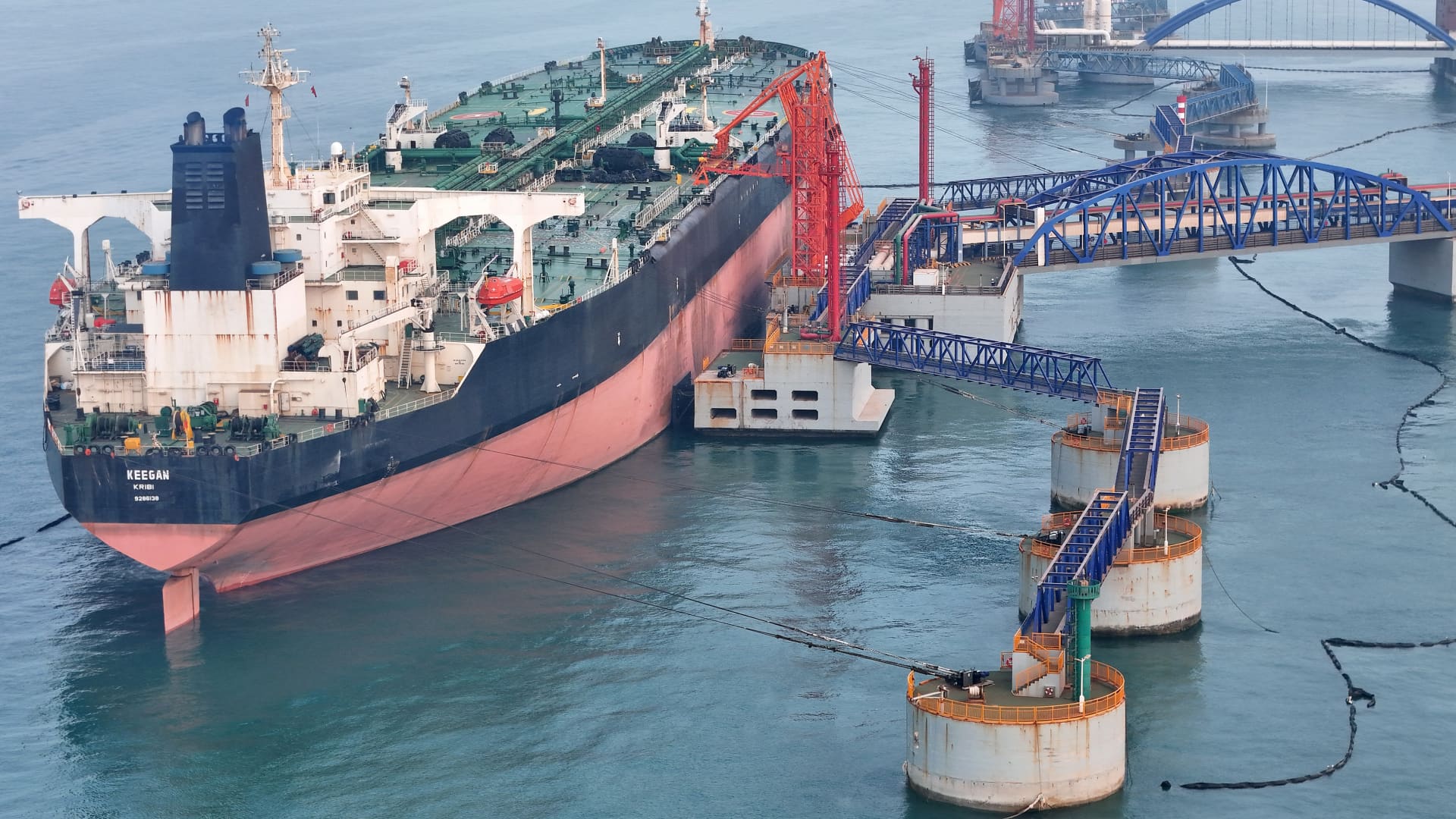
This photo taken on March 26, 2026 shows an oil tanker loading crude oil at the port of Yantai city in eastern China’s Shandong province.
CN-STR | AFP | Getty Images
Hello, my name is Dylan Butts from Singapore. Welcome to another edition of CNBC’s Daily Open.
On March 11, President Donald Trump said the Iran war could end “soon,” adding, “It will end whenever I want it to end.”
But as the war enters its fifth week and reports emerge of possible U.S. ground operations, the timeline for a potential ceasefire or settlement remains as uncertain as ever.
That uncertainty is beginning to show in the markets, especially the oil market, with industry players sounding serious alarm about the fallout from the long-running conflict.
What you need to know today
The Pentagon is preparing for weeks of ground operations in Iran as thousands of American soldiers and Marines arrive in the Middle East, The Washington Post reported, citing U.S. officials.
Potential ground operations reportedly fall short of a full-scale invasion, but could include an assault by a mix of special operations forces and conventional infantry, officials said.
In comments to the Financial Times on Sunday, Trump also said he wanted to “get Iranian oil,” including the possibility of seizing Kharg Island, Iran’s main oil terminal.
Taken together, these reports suggest the possibility of an escalation of the war with Iran. The fallout has already spooked markets, raising concerns about broader supply chain disruptions and rising global prices.
U.S. oil prices have soared more than 50% since late February, with Brent crude up more than 55%. Oil company executives and analysts have warned that the disruption from the Iran war is already greater than the market realized and that prices are unlikely to return to pre-war levels anytime soon.
Industry leaders have also said the Strait of Hormuz, whose vital shipping route is currently blocked by the war, must reopen by mid-April or supply disruptions could worsen significantly.
In the face of this uncertainty, businesses and other organizations are preparing for a world where conflict and associated oil price fluctuations will become long-term challenges, impacting everything from travel plans to mail delivery.
U.S. stock futures fell Sunday night on the latest reports of possible ground operations ahead of a holiday-shortened week of trading. Asia-Pacific markets also fell on Monday after US markets ended the week negative again as investors showed signs of headline fatigue from the conflict.
— Dylan Butts
And finally…
Tech founders shaken by Chinese government’s sudden intervention in Meta Inc. Manus, venture capital focused on “de-China”
Late last year, the tech world from Silicon Valley to Shenzhen erupted when Meta acquired Manas, a Singaporean AI startup with Chinese roots, for $2 billion.
For Chinese founders seeking to develop products that rival their U.S. peers, the deal felt like proof that a complex offshore structure known as “Singapore washing,” in which companies move to the city-state, is the answer to avoiding scrutiny from both Beijing and Washington.
Those hopes were quickly dashed by China’s surprise intervention in the deal within days, as the Chinese government stepped up efforts to prevent Chinese AI founders from moving their businesses overseas.
— Anique Bao
