

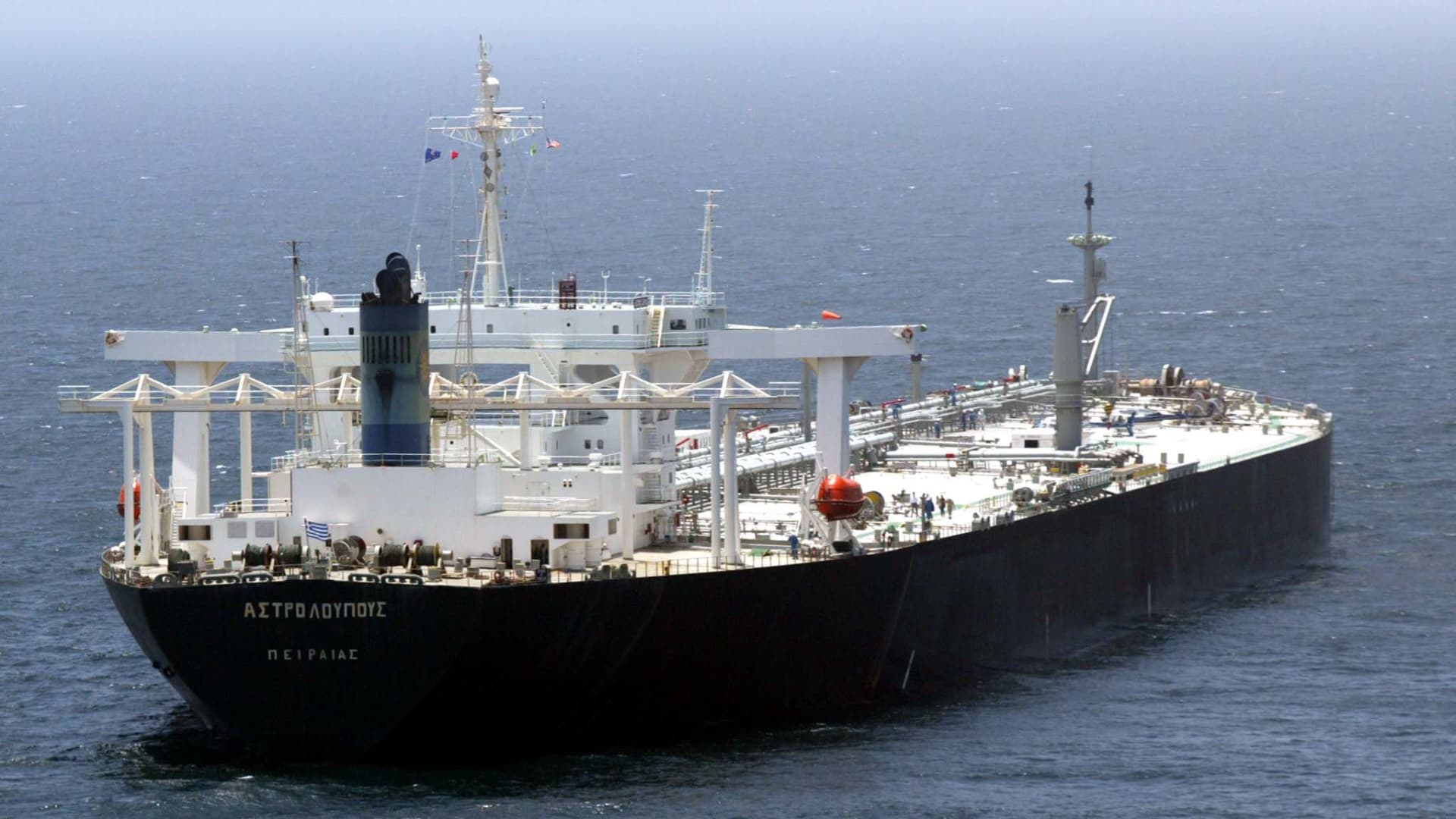
On July 3, 2002, the Russian supertanker Astro Lupus waits to offload its first direct shipment of Russian crude oil in the Gulf of Mexico.
Pool | AFP | Getty Images
The United States on Thursday temporarily authorized the purchase of Russian oil stranded at sea in a bid to stabilize energy markets and suspended sanctions it had imposed on Russia after the country first attacked Ukraine.
U.S. Treasury Secretary Scott Bessent said in a post on X that the 30-day delay is a “narrowly tailored short-term measure” that applies only to oil already in transit.
CNBC understands that as of March 12, approximately 124 million barrels of Russian crude oil existed at sea in 30 locations around the world, equivalent to approximately five to six days’ worth of supply.
“While a temporary increase in oil prices is a short-term, temporary disruption, it will have significant long-term benefits for our country and our economy,” Bessent said.
Oil prices have fluctuated rapidly since the start of the Iran war, with crude oil prices nearing $120 per barrel earlier this week. Global benchmark Brent crude oil settled at just above $100 a barrel on Thursday after Iran’s new supreme leader Mojtaba Khamenei vowed to keep the Strait of Hormuz closed.

Bessent noted that the temporary measure would not bring “significant financial benefits to the Russian government” because Moscow derives most of its energy revenue from taxes that are assessed at the point of extraction.
The exemption applies to Russian crude oil products that are loaded onto ships by 12:01 a.m. ET, and purchases are allowed until 12:01 a.m. on April 11, according to a notice posted on the Treasury Department’s website.
Indian exemption
The move comes after the U.S. government last week granted India a 30-day exemption to buy Russian crude oil, which Bessent also said does not provide significant economic benefit to the Russian government because it “only authorizes transactions involving oil that is already stranded at sea.”
In a podcast interview published Friday, Bessent said it was “unfortunate” that Russia would benefit economically from the move, but added: “I hope it’s only for a micro period.”
He explained that the exemption was given because “Russian barrels are offshore and are a quick source of supply for Indian refineries.”
The G7 and European Union imposed sanctions on Russian oil over the 2022 invasion of Ukraine, capping the price of Russian oil at $44.10 per barrel. The EU also pledged to phase out remaining oil imports from Russia by the end of 2027.
In 2022, then-U.S. President Joe Biden had banned imports of Russian oil, liquefied natural gas, and coal into the United States.

