

Ukraine’s military has stepped up attacks on Russia’s energy infrastructure as Moscow benefits from higher oil prices and some sanctions relief.
Ukrainian drones struck multiple Russian refineries and export terminals last week, accelerating an operation that began last summer to target one of Russia’s biggest sources of revenue.
With wars in the Middle East and soaring oil prices giving the Kremlin a boost, Kiev is redoubling its efforts to undermine Russia’s energy production.
Ukraine’s military has claimed 10 major attacks against Russia’s energy infrastructure this month, including some deep into Russia. Although the extent of the impact is unclear, Russia is insisting on banning gasoline exports.
Ukrainian President Volodymyr Zelenskiy told CNN in a phone call with journalists on Saturday that Ukraine’s long-range drones are becoming more effective.
The latest attack announced by the Ukrainian military was against a large Russian oil refinery in Yaroslavl, northeast of Moscow, early Saturday morning. The military said the refinery was hit and a fire ensued.
Yaroslavl Governor Mikhail Evlaev acknowledged that some residential buildings and “commercial facilities” had been damaged, but said more than 30 drones had been neutralized.
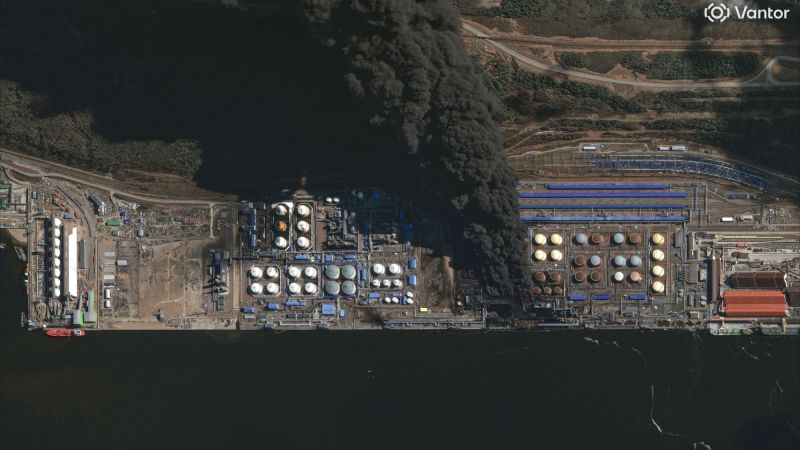
Russia’s oil export terminal in Ust-Luga on the Baltic coast was attacked twice last week. Ukraine’s Security Service said early Friday that long-range drones “damaged oil loading stations and tank farms storing oil and petroleum products.”
Geo-tagged video showed a massive fire breaking out at the port, and Russia’s Emergency Situations Ministry warned residents of the nearby city of St. Petersburg about “air pollution” following the attack.
“We responded with a strike on the energy infrastructure. We responded with a powerful strike, reducing the capabilities of Ustruga,” Zelenskiy told CNN.
Zelenskiy said “40% of the capacity remained at the facility” after the drone attack.
Ports in nearby Primorsky Krai were also attacked last week, and Ukraine said fires were still visible at both ports as of Saturday.
An oil refinery operated by state-owned company Rosneft in Saratov, southern Russia, was bombed over the weekend.
Before the Middle East conflict began, effectively paralyzing the Strait of Hormuz, Russian crude oil was trading at a deep discount to other benchmarks on global markets.
Analysts say they may now command a premium price. Russia has also benefited from some relief from US sanctions. In an effort to calm the oil market, the U.S. Treasury earlier this month suspended sanctions on Russian crude already at sea.
President Zelenskiy on Saturday renewed his criticism of sanctions relief, claiming that Russian intelligence services are using satellite imagery to aid Iran in targeting areas.
“By lifting sanctions on the invaders, who are earning money every day, they are disseminating relevant information about attacks on allied bases in the region,” Zelenskiy said.

Russia’s state budget relies on oil revenues for at least a third of its revenue, analysts say. Those revenues may have doubled in the past month, he said.
According to the state-run TASS news agency, the Russian government is poised to reintroduce a ban on gasoline exports as Ukraine’s strike continues.
The measure, which will take effect next Wednesday on April 1, is being discussed by Russian Deputy Prime Minister Alexander Novak, industry ministries and oil companies, the report said.
The government imposed similar measures last September, but lifted the ban in January.
Russian newspaper Kommersant reported that the ban would be reintroduced as the domestic market suffers as producers seek to boost profits from gasoline exports.
But the paper also acknowledged what it called “unscheduled refinery maintenance” and fires in Primorye and Ustiluga.
President Zelenskiy said Saturday that the Ukraine attack was a response to Russia’s attack on the country’s power infrastructure, which caused widespread power outages this winter.
“Russia must stop attacking our energy infrastructure, and we will not retaliate,” he added.
