

Reuters
—
Veteran President Yoweri Museveni was declared the overwhelming winner of Uganda’s presidential election on Saturday, extending his rule by 50 years after a campaign marred by violence and allegations of fraud.
The result was a decisive victory for Museveni, 81, as he sought to strengthen his political standing amid mounting speculation about his eventual successor.
Mr Museveni won just under 72% of the vote, the Uganda Electoral Commission announced at a ceremony in the capital Kampala on Saturday. His main challenger, pop singer-turned-politician Bobi Wine, was rated at 24%.
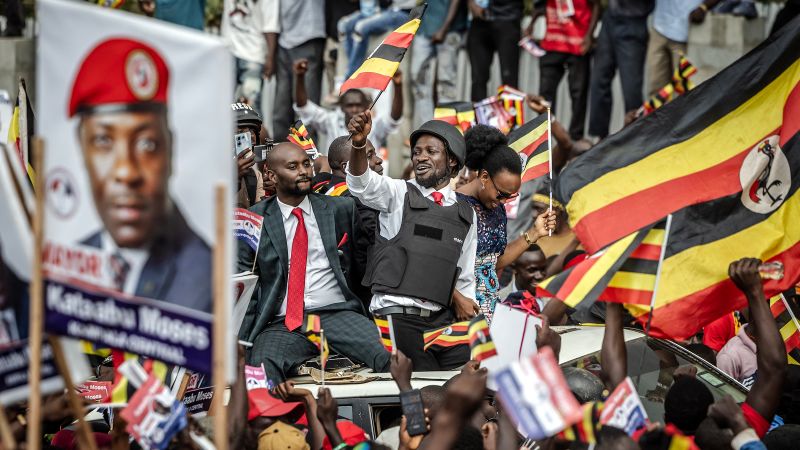
Mr Wine called on his supporters to protest, alleging massive fraud in the election, which was held under an internet blackout that authorities said was necessary to prevent “misinformation”. Wine went missing on Saturday after he said he fled a military raid on his home. Sources close to him told Reuters he was on the run in Uganda.

“Last night was very difficult at my house…the military and police raided our house. They cut off the power and some of the surveillance cameras,” Wine, whose real name is Robert Kyagulanyi, said in a post on X.
“I want to make sure I got away from them, but I’m not home at the moment.”
He added that his wife and other family members were under house arrest, which Reuters could not immediately confirm.
In one major incident of violence reported in the hours after the polls closed, police said seven people were killed and three injured when officers opened fire in self-defense against opposition “thugs” organized by local lawmaker Mwanga Kivumbi in central Uganda.
Kivumbi disputed this account, saying 10 people were killed by security forces inside his home.


Overall, fears that Uganda would see violence similar to the one in neighboring Tanzania, where hundreds were killed after October’s elections, appear to have gone unrealized.
Museveni’s victory was not surprising. Since coming to power at the head of a rebellion in 1986, he has amended the constitution twice to remove age and term limits and has taken control of state institutions.
In the last election in 2021, he defeated Mr Wine with 58% of the vote, but the US said the election was neither free nor fair.
During the campaign, Wine’s rallies were repeatedly interrupted by security forces firing tear gas and bullets. The riots left at least one person dead and hundreds of opposition supporters arrested.
Despite concerns about his human rights record, Museveni has won gratitude from Western countries for sending troops to regional hotspots such as Somalia and hosting millions of refugees.

Many Ugandans also appreciated the relative stability of his tenure, and he campaigned on the slogan “defending our interests.” Economic growth is expected to jump to double digits this year when oil production begins.
But speculation is mounting about his succession plans.
Mr Museveni is widely believed to be backing his son, military commander Muhoozi Kainerugaba, as his successor, but denies grooming him for the role.
In an interview with Sky News this week, Mr Museveni dismissed talk of resignation.
“If I’m available, I’m not dead, I’m not senile, but I’m still alive and I have some knowledge, if you’re really serious about your country, why wouldn’t you want to use me?” he said.
