

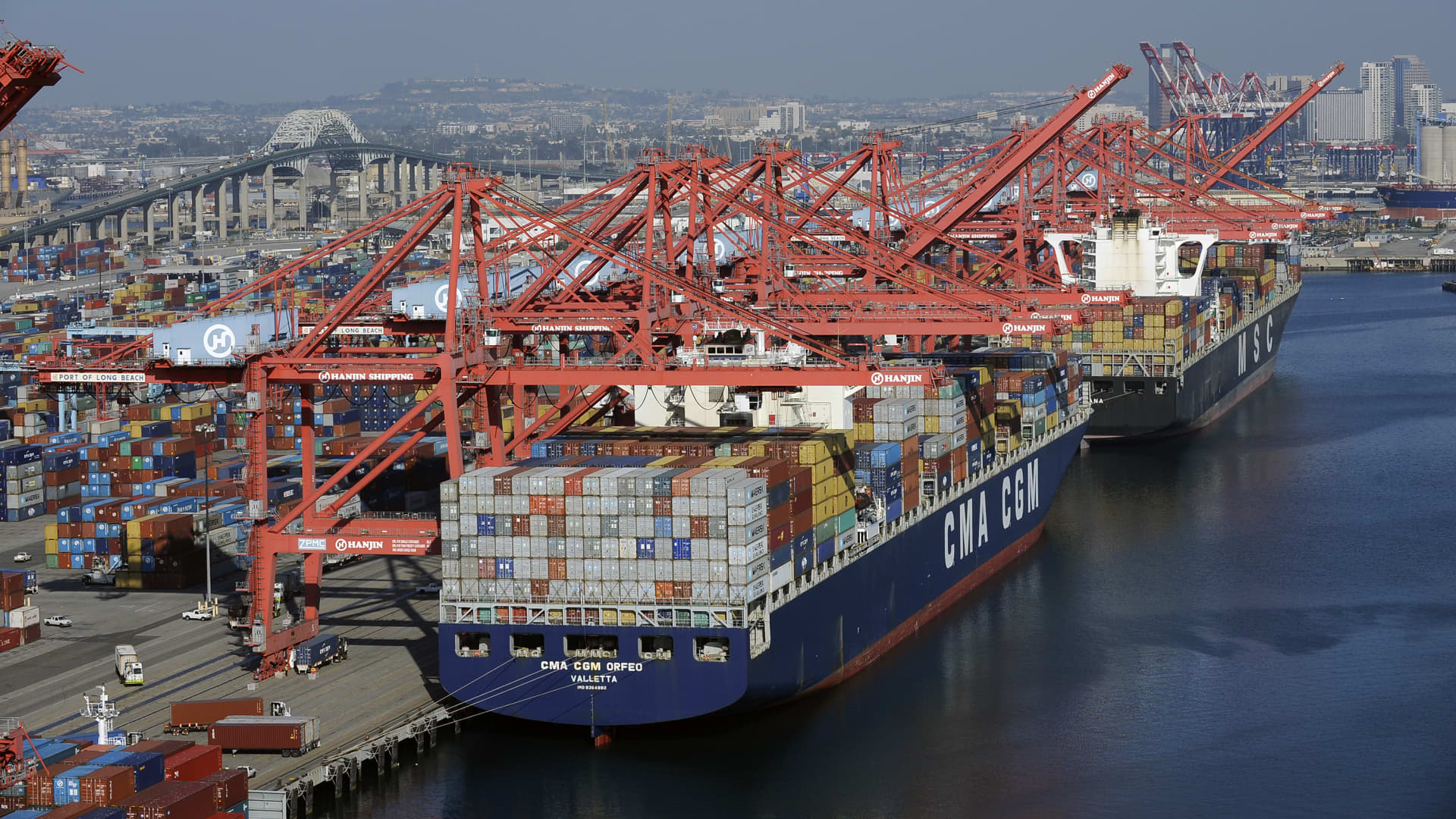
With less than 24 hours until the U.S. government’s new port fees for Chinese-made cargo ships, importers are grappling with additional duties that include other Chinese-made machinery that is key to their supply chains.
On Friday, the Office of the U.S. Trade Representative, after reviewing public comments on the previous rule, announced proposed amendments that include an additional 150% tariff on components that make up rubber-tire gantry cranes, rail-mounted gantry cranes, automatic stacking cranes, reach stackers, straddle carriers, terminal tractors, top loaders, and equipment.
Taking into account the layering of previous tariffs on cranes, the new tariff rate could reach 270%.
In addition to port crane fees, additional changes include changes to the fee structure for vehicle carriers, also known as roll-on roll-off vessels, which help transport automobiles, farm equipment, and other heavy equipment.
From now on, you will be charged based on the net tonnage of your vessel, rather than the number of vehicles you transport. A shipping company that owns and operates RoRos said the changes could cost millions of dollars.
This will be on top of new USTR port fees scheduled to go into effect on Tuesday. USTR under the Biden administration investigated China’s maritime practices in both shipbuilding and crane manufacturing. The Trump administration pursued trade measures. Trade experts say payment of these new tariffs can be deferred until December 10, but the charges will start to apply from October 14.
A spokesperson for the American Association of Port Authorities said in an email to CNBC that the port industry faces further taxes on equipment needed for supply chain expansion and resiliency.
“Ports large and small are struggling to finance the latest world-class heavy-duty equipment like cranes as government policies double prices overnight. The choice is literally between affordable equipment or falling behind,” the spokesperson said. “The industry has always worked with the government to shift sourcing domestically and to our allies. The industry has always supported supply-side manufacturing incentives for that purpose, and I expect Congress, with support from the Trump administration, to eventually pass it on a bipartisan basis. Until then, there will be a shortage of readily available and affordable equipment. I hope and believe that these challenges to global supply chains and mutually beneficial trade will be resolved by the U.S. government,” said negotiators soon. ”
Lars Jensen, founder of Vespucci Maritime, told CNBC that fees for cranes and port equipment are just an additional element to the cost of the U.S. supply chain.
“In effect, tariffs create further headwinds, making imports more expensive and exports less competitive,” Jensen said. “In recent months, we have seen a decline in container traffic to and from the US, while volumes in the rest of the world have increased significantly. Any new headwinds will only solidify that development.”
Thomas Kazakos, secretary general of the International Chamber of Shipping, which represents the world’s national shipowner associations and more than 80% of the world’s merchant fleet, told CNBC that the amendments are still under consideration.
“ICS supports the ambition to improve U.S. shipbuilding capabilities and strengthen the U.S. shipbuilding industry, as increased commercial tonnage will strengthen the efficiency and competitiveness of the global maritime sector. However, USTR’s proposed service and port fees will have a significant impact on U.S. exports,” Kazakos said. The proposed port fees are protectionist in nature and could undermine U.S. export competitiveness and increase costs for U.S. businesses and consumers. ”
In a global maritime study conducted by ICS and Harvard Kennedy School of Government Professor Craig VanGlastek, research suggests that lower levels of trade restrictive measures affecting maritime transport could increase some countries’ GDPs by up to 3.4%.
“Eliminating tariff and non-tariff barriers is a quick and easy tool for policymakers to use to raise GDP levels,” Kazakos said. “Countries at all levels of economic development would be better off if they could reduce existing barriers even slightly. As we have seen, these measures often provoke retaliatory measures. Ultimately, no one wins by pursuing these tactics.”
China recently announced counter-tariff measures. U.S. Treasury Secretary Scott Bessent said there was “substantive communication” with China over the weekend regarding trade, adding that President Trump is scheduled to meet with Chinese President Xi Jinping in South Korea later this month.
This correction is good news for the US energy market. USTR has removed the license suspension clause for LNG shipments. Provisions in the April announcement mandated that an increasing proportion of U.S. LNG exports must be moved on U.S.-built vessels.
Other vessels that participate in U.S. maritime security programs, transport military vehicles, and are built in shipyards outside the U.S. will continue to benefit from the “targeted exemption” through 2029.
Karl Bentzel, CEO of the National Waterfront Employers Association, told CNBC that the industry group is “disappointed, but not surprised, that the USTR did not grant the three-year exemption we requested, based on consultation with the White House.”
Bentzel said he is still considering a 150% penalty for the very broadly affecting tariffs on additional algo processing equipment. “It just seemed to come out of nowhere,” Bentzel said.
“It’s clear that the hammer has been put down on China’s material handling machinery, and this will make it more important than ever to get government support to develop U.S.-based material handling technology,” he said.
