

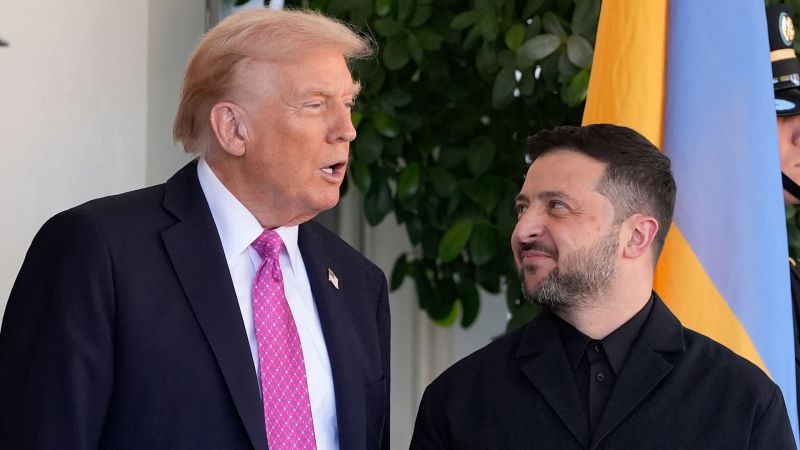
Relations between US President Donald Trump and Ukrainian President Volodymyr Zelenskiy have undoubtedly improved, but the real gains sought by Kiev seem to be out of reach for now.
Even after nine months of extraordinary diplomatic maneuvers and abuse, President Trump wants to give Russian President Vladimir Putin another chance at dialogue over his blatant military escalation.
But amidst the flattery and the belief that an elusive peace was on the horizon, there was also good news for Ukraine. President Trump’s final words on the matter, in a Truth Social post distributed as he departed for Mar-a-Lago, also suggested that “they should stop right there,” meaning a ceasefire along current front lines, something Kiev would find very acceptable.
“We have to stop where we are. It’s important that we stop where we are and then speak,” Zelenskiy told CNN at a press conference after the meeting.

In fact, the day could have ended much worse for Ukraine.
First, President Trump extolled the deadly virtues of the tomahawk and said his meeting with Zelensky was meant to deliver those virtues. “That’s why we’re here,” he said. “The tomahawk is very dangerous… It could mean escalation, and a lot of bad things could happen.” This is a threat that President Trump could not have imagined when he first took power. The president gleefully suggested that he might hand Zelenskiy the essence of his weapons so that Ukraine could strike deep into Russia.
But at the same time, Trump undermined his own threat by quickly revealing the nature of the deal in front of Putin. Trump added: “I hope we can end this war without thinking about the Tomahawk.” “I think we’re pretty close to that.”
The truth is likely still a long way from what Mr. Trump called “Number 9” deals, referring to the number of peace agreements around the world that Mr. Trump claims to have been involved in. But over time, Trump’s new approach of threatening actual military escalation through American technology purchased by European allies and supplied to Ukraine could move him closer to the deal Putin still wants.
This threat is both military and psychological. US doesn’t have enough inventory to give ‘thousands’ of Tomahawks President Trump said Thursday he joked with President Putin that he might give them to Ukraine. Since missiles are usually launched from sea, Ukraine will have to wait several months at most before receiving dozens of missiles capable of land-based launches.
they are very expensive. Its range is not much greater than the drones that Ukraine currently launches deep into Russia every night. If it were used, Kiev would have to hit $2 million worth of Tomahawk targets, which would mean hitting critical military and government infrastructure that President Trump could veto. President Trump and President Zelenskiy appear to have agreed to keep the deal vague. President Zelenskiy did not provide details of the Tomahawk talks, saying the United States did not want escalation. Asked whether he was optimistic or pessimistic about missiles, he said, “Realistic.”
Second, President Trump is now unafraid to admit that President Putin may be playing him. This is an important, albeit premature, epiphany. He added: “I’ve been played by some of the best players and I’ve done really well.”
No concrete date has yet been set for the Budapest summit with Putin, and it appears to be another moment for the Kremlin to try to buy more time. But Putin will likely meet with the wise American president about his own shortcomings in dealing with Kremlin leaders and what it will take to get Moscow’s attention. President Trump is now heeding the advice of his European allies. President Putin is clearly responding with force.
Whether President Trump succeeds in using this threat is probably less important in changing the dynamics of the conflict itself. Mr. Zelensky sat in front of Mr. Trump in a position few observers had imagined possible in the spring.
As President Putin’s much-vaunted summer offensive rattles into autumn, it has been unusually unsuccessful in capturing key towns in the east. With just a few weeks left before winter arrives in November, things could change. However, due to the intense suffering, losses and costs of the summer months, Pokrovsk, Kupiansk and Kostiantynivka remain in Ukrainian hands. Control of Kiev was unstable, Russian forces advanced across open land and through small villages, leaving Ukraine at a disadvantage heading into the winter. However, Kiev’s key position, surprisingly, was maintained for the most part.
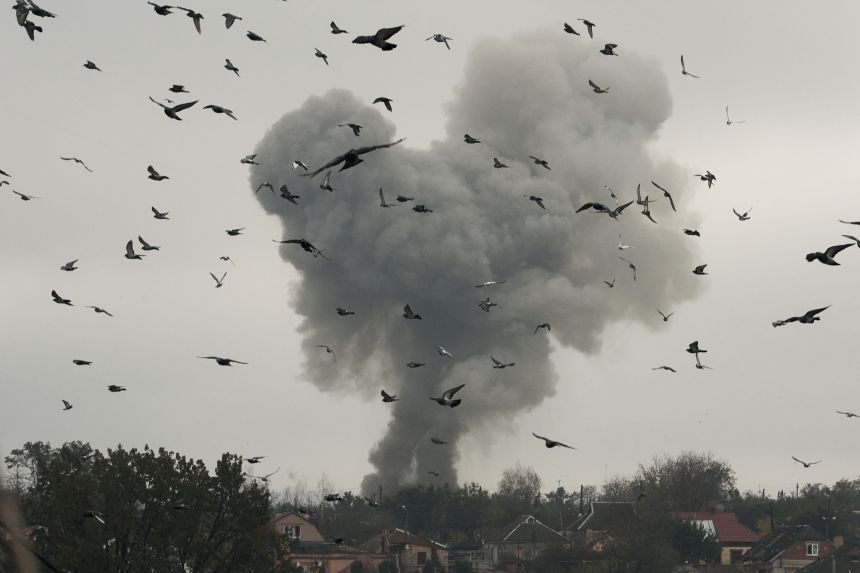
This is surprising given the manpower, resources and morale crisis looming in Ukraine in May, and could upend the balance of power in the coming months. President Putin has played the military card again, but has not (yet) achieved his goals. In a few weeks, winter will bring bare foliage, making it difficult for Russian infantry to advance under cover from the threat of Kiev’s drones.
Ukraine has once again disappointed expectations, in part because of grit and sacrifice, but also because, as President Trump acknowledged, “they make very good drones.” These new dynamics may continue to change.
But for the Kremlin, pressure for results has turned into uncomfortable demands to explain recent failures.
Can President Putin afford to fight from winter to spring and into a fourth summer to refocus on increasingly minimalist goals? Gas shortages caused by Ukraine’s attacks on refineries, rising inflation, the instability of new recruit contracts, and the Kremlin’s consistent failure to come up with a real breakthrough suggest he is unable to do so.
Mr. Zelenskiy survived a spring and summer in which Ukraine’s main allies turned against him and tried to reach a peace deal with the enemy without Kiev. Ukraine saw Europe step into the vacuum left by the US economically and militarily, and then saw the same recalcitrant White House provide them with its best missiles.
Mr. Zelenskiy was once a global salesman for projects that helped Ukraine defend itself and allowed it to join NATO. He is currently touring NATO countries touting the latest and rapidly evolving Ukrainian drone technology.
Recent changes are not very reassuring for President Putin. Yes, China is still supported, but India is definitely paying the price for the secondary sanctions imposed by the US on its Russian oil purchases. (Trump suggested that India had decided to halt purchases of Russian oil on Friday, but numerous reports suggest that is not the case).
Russia’s plans and support base depend on military victory. President Putin has not yet achieved that. Given the trends in late October that will bring about a complete battlefield shift in this war, he may — surprisingly — do so in the coming weeks.
But whatever the ability of Russia’s closed, authoritarian society to suppress dissent, the question that has become loudest for Putin is: “What’s next?”
