

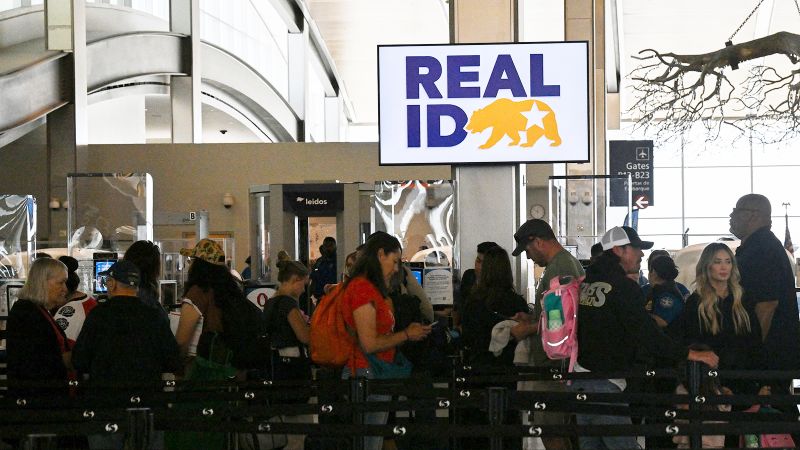
The Transportation Security Administration is proposing an $18 fee for travelers without a REAL ID to pass through airport checkpoints.
The fee covers costs associated with new technology needed to verify a passenger’s identity, TSA said in a notice Thursday.
REAL IDs (driver’s licenses or identification cards that meet federal security standards) became required for all air travel within the United States on May 7, after years of delays.
The REAL ID Act, passed by Congress in 2005, enacted the 9/11 Commission’s recommendations that the federal government strengthen security standards for identification.
Under the new proposed rule, travelers without a REAL ID would be able to pay a fee and use a new biometric kiosk that would give them 10-day access to TSA checkpoints, according to a Federal Register notice.
However, the notice says that paying for the new “modern alternative identity verification program” does not guarantee access.
Once someone chooses to use the program and provides the required information, “TSA verifies the identity using the individual’s biographical and/or biometric information and matches the individual to results on the Secure Flight Watch List.”
“Individuals who verify their identity using TSA’s Alternative Identification Process may also be subject to additional screening or may experience delays,” the notice reads.
Passports remain an acceptable form of identification for both domestic and international air travel, and non-REAL ID-compliant licenses remain valid for driving and other identification purposes beyond federal requirements.
The notice states that the $18 per person fee is non-refundable.
“This notice serves as the next step in the REAL ID compliance process signed more than 20 years ago and finally implemented by Secretary Noem in May 2025,” a TSA spokesperson told CNN. “TSA is working with stakeholders and partners to ensure both safety and efficiency at our checkpoints. Additional guidance will be released in the coming days.”
CNN has reached out to the TSA for additional information on when this proposed rule would go into effect.
