

There is a proverb around the African continent that says, “When an elder dies, the library burns down.” For Nigerian artist and filmmaker Malik Afegbua, that loss is more than just a metaphor. “I don’t know what my great-grandfather looked like,” he told CNN. “There’s no story about him.”
“There’s no data, there’s no library,” he said.
Afegbua has launched a project called Legacy Link that hopes to not only preserve the experiences and lives of older people across the continent, but also enable them to “live forever,” he says.
He has interviewed elders about their lives, recorded their stories, shot videos, and created 3D scans of heirlooms such as masks and drums. He wants to use this data to create “digital twins” of older people, displayed as holographic displays in public areas such as airports, and use AI to bring their reactions to life and allow people to have conversations with them.
The final display “feels like someone is standing in front of you and having a conversation,” Afegbua said. Users can ask digital elders questions about their lives and experiences, and the AI generates answers based on Afegbua’s interviews with the person. He also plans to create an online chatbot to make the project as accessible as possible.

This initiative is still in its early stages. Mr Afegbua said he had interviewed 15 people in Nigeria and planned to conduct 30 more interviews, expanding to Kenya and Cameroon. His goal is to interview 1,000 people by 2028.
He wants the final project to be available in as many languages as possible, and says he relies on human translation because “AI can’t understand certain languages or what certain nuances mean.”
At first, some of the subjects were hesitant. When he went to interview a group in Ikorodu, Lagos State, they told Afegbua that their ancestors told them they would never share these stories.
Afegbua explained the concept to the elders with a slideshow, and after showing it, “they were excited, intrigued, and wanted to learn.”
He introduced Elders to large-scale language models, “so they can understand how AI can help with storytelling, memory recall, and structuring ideas.”
He also explained how AI can be used for photos, videos, and audio recordings from smartphones to help “refine stories, generate transcriptions, extend memories into writing, and structure content in ways that can be shared more widely.”
The interviews initially focused on “normal lives,” he said, but he started asking about their personal experiences to find out “what really happened at a certain time.”
Mr Afegbua said there was a need to be careful about sensitive topics such as the Nigerian Civil War (1967-1970). “The majority were hesitant. Some outright said they didn’t want to talk about it,” he recalled. He plans to “tackle the war directly” through interviews with those personally affected, but said: “The trauma is still strong. We will never force it.”
Afegbua previously gained international attention for another project focused on the elderly. His 2023 work “Older People Series” used AI to generate images of older Africans on the catwalk.
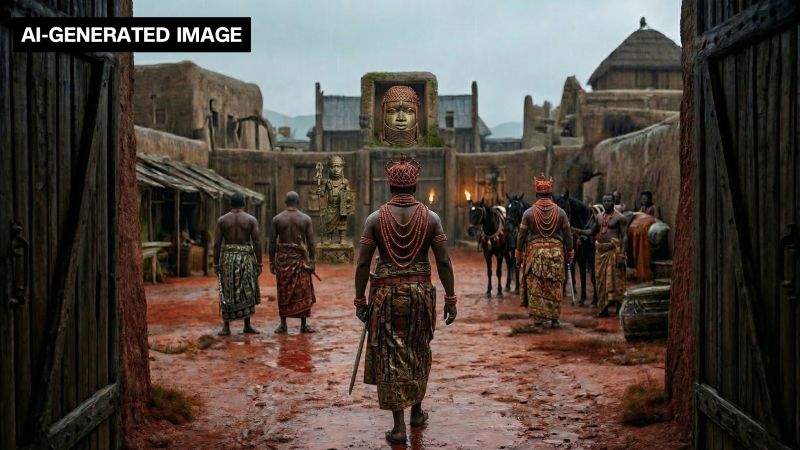
While LegacyLink aims to preserve the knowledge of living people, Afegbua also works on visual projects to restore the past. Use AI to recreate lost, destroyed or inaccessible African heritage.
In the ReMemory project, Afegbua recreated AI based on historical records and academic research. Once the work is complete, users will be able to access the site through their mobile phones, computers, and even virtual reality.
The idea came from a project he did at the Kofar Mata Dyeing Factory in Kano, Nigeria. This dye factory has been in operation for five centuries and made the city famous for its traditional indigo-dyed fabrics. Afegbua said the insecurity in the area meant some people didn’t want to go there, so he created a VR movie of traditional mine shafts “in case they go extinct.”

He first plans to virtually reconstruct the walls of the historic city of Benin. Built between the 7th and 14th centuries, these 18-meter (59-foot)-high earthworks encircled cities in modern-day Nigeria and spanned more than 1,200 kilometers (746 miles). Although some parts remain, most of the walls are in disrepair.
Afegbua said that although there are drawings and descriptions of the walls, there are gaps in the historical record, but “we are trying to get as close as we can.”
Both projects have a long way to go, but they contribute to Afegbua’s mission to use AI to “recover language, artifacts, and symbols so that we can experience them in person.”
