

Miami —
We were living in “historic and prophetic times” at the Miami Security Forum.
“God has anointed President Donald Trump as a modern-day Cyrus,” declared Pastor Mario Bramnick, referring to the ancient king of Persia.
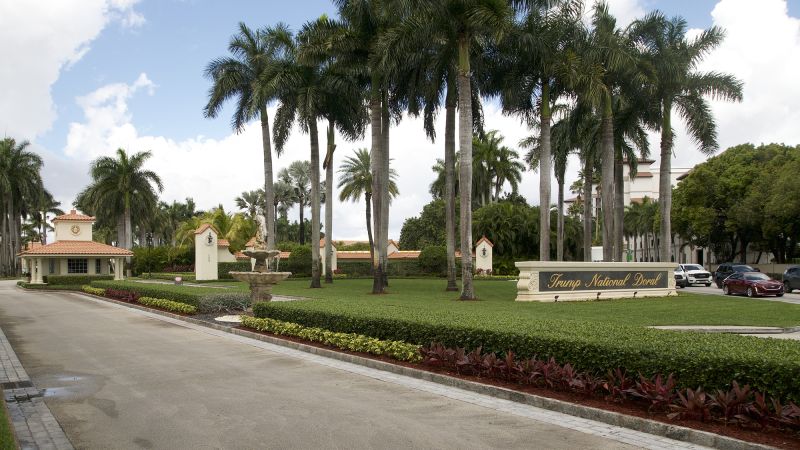
Think-tankers, Latin American politicians, officials from the US defense establishment and at least one journalist watched as Bramnick paced the stage of the Donald J. Trump Grand Ballroom at the Trump National Doral, a sprawling golf resort eight miles from the airport and eighteen from the Everglades.
For two-and-a-half days in Miami, we were gathered here to review Trump’s foreign policy pivot to the Western Hemisphere – the so-called “Donroe Doctrine,” a play on the 19th century Monroe Doctrine aimed at keeping European nations out of the Americas. It was a new forum that the Heritage Foundation, an influential conservative think tank, hopes will become a yearly event.
There was plenty to discuss. What the White House refers to as the “restoration of American preeminence” in Latin America has within just a few months seen the capture of Venezuelan President Nicolás Maduro, an oil blockade on Cuba, numerous lethal strikes on alleged narcotrafficking boats in the Caribbean and Eastern Pacific, and the designation of drug cartels as terrorist groups.
According to the White House, it’s been a “tremendous success” that has “strengthened our relationships in our own backyard” and made “the entire region safer.”
Bramnick favorably compared Trump’s tactics to those under former Presidents Joe Biden and Barack Obama.
Under Biden and Obama, Bramnick said, “we saw in the US and Latin America progressive, leftist networks attempting to control foreign policy and steer the Americas and Latin America towards globalism and communism and an anti-Christian agenda.”
“But certainly, there is a new sheriff in town,” he added. “And things are changing.”
The new sheriff is, of course, the man with his name by the ballroom door.

In the flag-lined vestibule outside the ballroom, Colombian Minister of Defense Pedro Sánchez schmoozed alongside other attendees, surrounded by an entourage of aides in military uniform.
He was a surprising guest, given the US has sanctioned Colombia’s leftist President Gustavo Petro for allegedly allowing “drug cartels to flourish.”
The sanctions run parallel to Trump’s efforts to bring the tools and rhetoric of the Global War on Terror to bear against drug cartels, designating a handful as terrorist groups early on in his second term. The conference even began with a panel discussion on “the imperative of recognizing drug cartels as terrorist groups.”
“One of the themes of this conference is our allies, and supposed allies, who say that they’re going to do certain things – we want to support them in doing so,” the Heritage Foundation President Kevin Roberts said of the invite extended to Colombia.
The implied criticism – that Colombia isn’t doing enough to fight drug trafficking – is part of why Sánchez decided to attend. Sitting on the patio between the main clubhouse and the ballroom building, Sánchez said the reason Colombia is here is “because we’re an essential piece of the puzzle.”
“If the problem is global, it’s necessary to keep (our) relationships. International crimes don’t recognize borders.”
Some of the other Colombian guests were not pleased that Sánchez was there. A group of them scoffed over lunch that Sánchez would take two days to visit Miami when there was plenty to do back home in Colombia. A local governor had tagged Sánchez in a post on X the day before, demanding that the ministry of defense deal with vandalism allegedly caused by anti-mining activists.
“Two complete days in this forum?” said Maria José Bernal, an economist and business lobbyist, incredulous. “I know it’s super important, but two days? A minister of defense of our country, away from our country…”
Sánchez was sitting a few tables away and did not appear to be occupied with any interviews. Asked whether she had told him her concerns, Bernal hesitated.
“Well,” Bernal said. “I tweeted it.”
I approached Sánchez after lunch to ask him what he thought of Bernal’s criticisms.
“We cannot satisfy 100% of the people,” Sánchez said.

Sánchez was one of the few representatives of a leftist government speaking at the forum. Many of the government speakers came from either conservative administrations cozy with the White House, or from opposition parties in Latin America that admire Trump.
Paulo Bilynskyj, a bearded deputy in the lower house of Brazil’s congress, was among the latter group. He’s a member of the same party as Brazil’s former President Jair Bolsonaro, often compared to Trump for his pugnacious style, his far-right politics and his aborted effort to stay in power after losing a national election.
At lunch, Bilynskyj sat with a small group of right-wing Brazilian legislators, officials and influencers, all opponents of Brazilian President Luiz Inácio Lula da Silva’s leftist government.
“I simply don’t understand why we don’t have more Brazilian officials,” Bilynskyj said of the conference’s attendees. “It would be so important.”
A former policeman in São Paulo, Bilynskyj had argued at the morning session that the US ought to provide Brazilian law enforcement with military-style equipment and air support to fight organized crime.
“Biden was very destructive,” he said afterwards, cutting into steak from the buffet. “He funded all the wrong things in Brazil. That makes me very angry and very resentful.”
The Biden era also coincided with another painful moment for Bilynskyj: Lula’s election victory in 2022. The vote and its aftermath – which included a January 6-style riot at the national capital complex in Brasilia – ended with Bolsonaro sentenced to over 27 years in prison, convicted with numerous other officials of plotting a self-coup. (Due to health issues, Bolsonaro is temporarily serving part of his sentence under house arrest.)
“When I ran for Congress, I thought that Bolsonaro was going to be the president, and I could work with him to get a better Brazil,” said Bilynskyj. “When Lula got elected – which was a fraud – my whole vision for the future fell apart.”
Some of those accused alongside Bolsonaro were present at the forum. Bolsonaro’s former intelligence chief Alexandre Ramagem, now in exile in Miami, was sentenced to 16 years in prison for his alleged involvement in the coup. He livestreamed at the table with a right-wing influencer whom Bilynskyj referred to only as “Mr. Gums.”
Though their hero is in prison, the Brazilians were hopeful. Bilynskyj believes fervently that Bolsonaro’s son Flávio will win the next election in October and put everything right.
Bolsonaro was in the same class in military school as Bilynskyj’s father, he explained.
“Talking to my father and talking to Jair is like talking to the same person,” Bilynskyj said. “I understand him like I understand my father.”
The other legislator eating lunch with Bilynskyj was a Bolsonaro supporter, too, though he was also interested in exploring older forms of government. Luiz Philippe de Orleans e Bragança’s great-great-great grandfather Pedro II, whose reign ended in 1889, was the last Emperor of Brazil. Luiz Philippe extolled the virtues of empire as he enjoyed a plate of shrimp and rice.
“The monarchy is a much better system,” Luiz Philippe said. “There’s no question about it. No question.”
Both Bilynskyj and Luiz Philippe are looking forward to the upcoming biopic of Jair Bolsonaro, “Dark Horse,” starring the American actor Jim Caviezel. Bilynskyj was dismayed that I hadn’t seen Caviezel’s performance as Jesus in Mel Gibson’s “Passion of the Christ.”
“What are you doing in your time? You playing f**king Pokémon?” he asked. “What religion are you?” When I told him that I’m Jewish, he smiled widely and placed a hand on my shoulder. “Okay, you’re wrong.”

Miami is a natural location for a conference on Latin America. Spanish is the predominant language inside and outside the Trump National Doral. And given this is the most Cuban city in the United States, it was only natural that discussions would turn to the old country.
Two days before the conference began, Cuba’s national power grid failed amid the ongoing US fuel blockade of the island, which began after the US cut the flow of oil between Venezuela and Cuba in the wake of Maduro’s capture.
The effect of the shortage has been stark: trash piling high on the curbs of Havana, hospitals limiting their services, less food at the marketplace and rare public protests. Meanwhile, Trump has mused that he’s thinking of “taking” Cuba, which has been at odds with the US since its Communist revolution in 1959.
“There’s a lot of expectations that I’ve seen for some real changes in Cuba, which I personally haven’t felt at any point in the past couple decades,” said Andrés Martínez-Fernández, a Latin America expert at the Heritage Foundation and the conference’s chief organizer.
“There’s a pretty clear signal that this is not going to be a temporary item on the agenda of the United States,” he added. “I think the conditions on the ground are also more receptive to that kind of change.”
If one were to uncoil the long history of US engagement with Latin America, from the halls of Montezuma to the cells of CECOT, what was the most successful period? What era should the US strive to emulate in turning its attention once again toward the Western Hemisphere?
“Definitely the 19th century,” said Luiz Phillippe. Back then, Latin America and the US had “the same enemies, which were the British Empire and the French Empire.”
“I think the United States saw the region as a friendly place, as an extension of the same values or the same shared history.”
It was a popular view in Miami – after all, the “Donroe Doctrine ” takes after the Monroe Doctrine, with the United States as the gatekeeper to the Western Hemisphere, swatting away at European interlopers.
Kevin Roberts, the president of Heritage, thinks this is the golden age of America in the Americas.
“I happen to think it’s right now,” Roberts said, but if he had to choose a moment in history, he’d go with the consecutive administrations of Presidents William McKinley and Teddy Roosevelt – a time he described as “the height of the Monroe Doctrine.”
The Trump administration certainly admires the McKinley-Roosevelt period as well. The other name for the “Donroe Doctrine ” is the “Trump Corollary,” itself a reference to the “Roosevelt Corollary,” wherein Roosevelt outlined how the US could act as an “international police power” in the Western Hemisphere.
That stretch notably included the “Banana Wars,” where the United States launched numerous military interventions in Central America and the Caribbean on behalf of American agricultural concerns, inspiring O. Henry to coin the term “Banana Republic.”
It wasn’t perfect, Roberts admitted.
He is “pointing to something at a higher level, at a macro level, which is the American perspective as a nation state that is going to pay attention to its hemisphere first,” Roberts explained.
Asked about their personal favorite period of US engagement with Latin America, others at the conference pointed to President Ronald Reagan, whose administration invaded the small Caribbean island of Grenada to topple a left-wing military government there, and armed right-wing militias in Nicaragua using the proceeds of illegal arms sales to Iran.
“There was a lot of cooperation between the US and Honduras” during the Reagan period, said newly-elected Honduran legislator Oswaldo Ramos Aguilar. “Every institution in Honduras had a counterpart in the US and the communication was fluent, so I think that Honduras thrived during those years.”
As if to distill everyone’s views on the question, later that day, a Trump administration official took the stage at the forum and suggested that we look back even further for inspiration for the future of the Americas.
“We’re going back hundreds of years,” said Assistant Secretary of Defense Joseph Humire. “President Reagan did great things on containing communism in Central America. But we’re going way past that.”
When it comes to the US role in the Western Hemisphere, Humire has a personal saying: “We’re going back to 1815.”
“What happened in 1815?” Humire asked. “There was a secretary of war that said, ‘You know what? I know the Continental Army (sic) wants to all move north, but we need to be worried about what’s happening in the south and the west.’”
Humire explained that he was referring to the Battle of New Orleans, the final American victory against the British in the War of 1812. That secretary of war was James Monroe, who would eventually go on to formulate what became known as the Monroe Doctrine.
“We’re not forgetting about this part of the world,” Humire said. “April is going to be a fun month. You guys are gonna have to buckle up.”
