

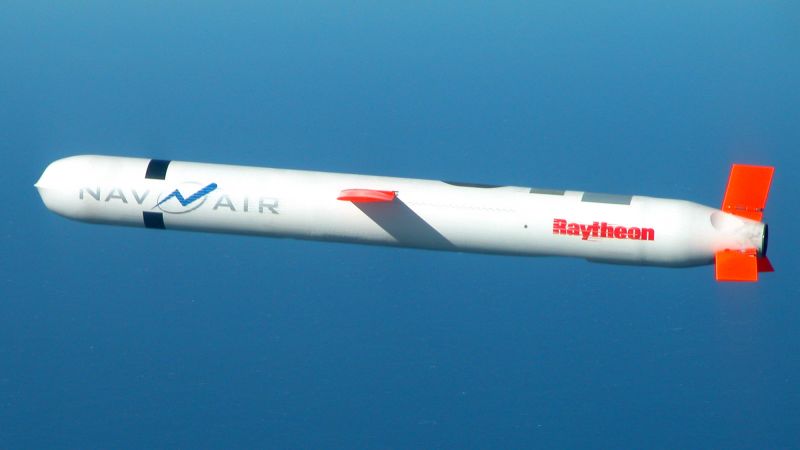
The Tomahawk is the mainstay of the US missile arsenal. It was deployed in attacks in Syria and Libya, and was used extensively against the regime of former Iraqi dictator Saddam Hussein in both the 1990s and 2003.
About 30 of the cruise missiles were used as part of the US attack on Iran’s nuclear facilities in June.
Although the Tomahawk is not new, it is still effective and relatively inexpensive at $2 million per missile. Depending on the variant, it can attack targets at a range of 1,600 to 2,500 kilometers (1,000 to 1,600 miles).
Although this is not much compared to some long-range Ukrainian drones, the Tomahawk would have much higher explosive power. It has advanced guidance technology and travels at subsonic speeds (approximately 550 miles per hour).
They also fly low, literally following the contours of land, making them difficult to detect and intercept.
For these reasons, Ukrainian President Volodymyr Zelenskiy has been lobbying the Trump administration to deploy Tomahawks that would allow Ukraine to strike targets deep in Russia. He’s not going to get them, at least not yet. President Trump made clear last week that the United States has little spare capacity, saying, “We need Tomahawks for America. We have a lot of them, but we need them.”
As we have seen in this war of attrition, no single system is game-changing: F-16 jets, Abrams tanks, even the Patriot missile batteries supplied to Ukraine. Hundreds of Tomahawks would be needed to neutralize Russia’s oil refineries and air bases.
Still, with just a few dozen rounds, the Ukrainian military could be able to cause significant damage to key Russian infrastructure far from the border, including the Shahed drone factory in Tatarstan and the Engels II air base in Saratov region, according to the Washington-based think tank Institute for War Research.
“It is very difficult to operate with Ukrainian drones alone. We need long-range Tomahawks,” Zelenskiy said in an interview with the US network NBC on Sunday.
He also said the Tomahawks would “strengthen Ukraine and force Russia to cool down a little bit and come to the negotiating table.”
The Kremlin was so shaken by the prospect of Kiev procuring the Tomahawks that it issued dire warnings about escalating the war, given that the missiles could be equipped with nuclear warheads. According to Sergei Naryshkin, head of the Foreign Intelligence Service (SVR), Russia will perceive the supply to Ukraine as a “hostile move” that threatens global security.
Russian President Vladimir Putin tried to pre-empt this possibility in a lengthy telephone conversation with President Trump on the eve of President Zelenskiy’s visit to Washington on October 16th.
The tomahawk has certainly been proven in practice. In 1991, 122 Tomahawks were fired into Iraqi defenses during the first three days of Operation Desert Storm as the United States and its allies tried to expel Iraqi forces from Kuwait. This was the first time it was used. It was also used in precision strikes in the Balkans, Afghanistan in 1998, Yemen, Libya, and Syria. The latest version of the missile was introduced in 2021 with enhanced electronics and an extended range.
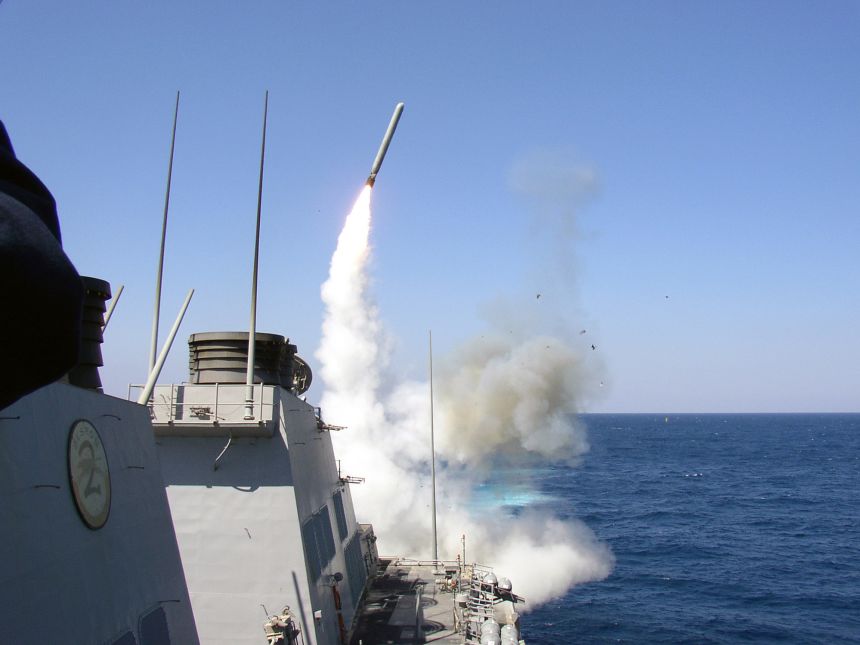
But it was primarily a sea-launched missile. To launch the missile, Ukraine needs a ground-based launcher called Typhon. Typhon, which resembles a large container, was developed after the United States withdrew from the Intermediate-Range Nuclear Forces Treaty with Moscow in 2019, citing multiple violations by Russia.
President Zelenskiy has spoken optimistically about Ukraine’s Flamingo cruise missile, which is said to have a range comparable to that of the Tomahawk. But its capabilities are shrouded in mystery, and Ukraine lacks the resources to scale up production.
The Tomahawk will support Kiev’s long-range strikes into Russian territory, but Ukraine needs more and more capable air defenses above all as Russia ramps up its large-scale attacks with a combination of missiles and drones.
President Zelenskiy met with U.S. manufacturers Lockheed Martin and Raytheon during a recent visit to Washington to pursue what he described as a “huge deal” to buy weapons worth about $90 billion.
