

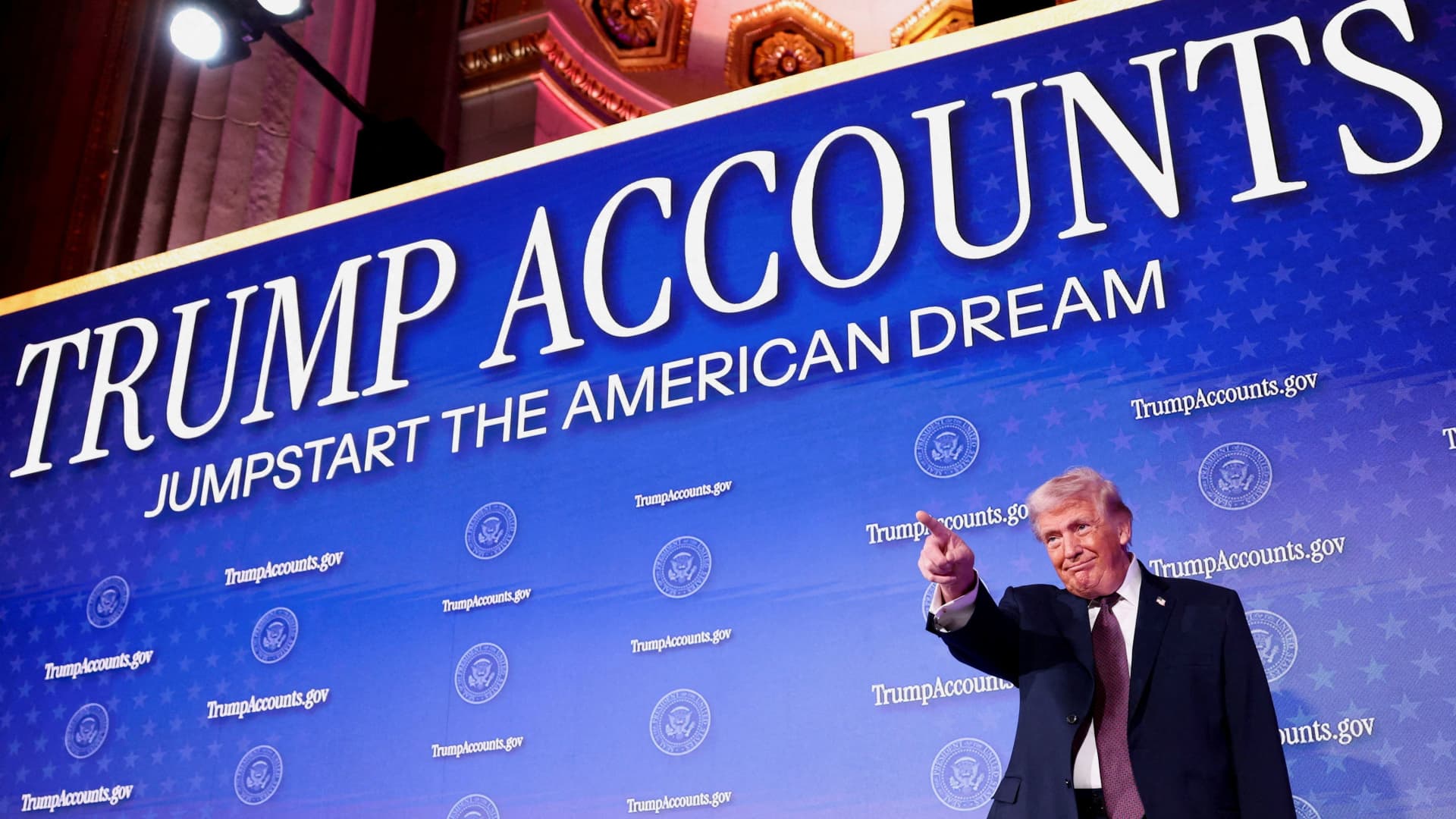

In his State of the Union address, President Donald Trump described the upcoming Trump Account as “a tax-free investment account for every American child.”
“This is something very special. It took off and went through the roof,” President Trump said in his annual address to Congress.
Accounts created under President Trump’s “Big and Beautiful Bill” will function much like traditional individual retirement accounts once a child turns 18, according to December guidance from the U.S. Treasury Department and IRS.
The tax rules for Mr. Trump’s accounts are complicated, but they will be taxed.
“There’s no sense that Trump’s account is tax-free,” said Ben Henry Moreland, senior financial planning geek at advisor platform Kitces.com. “People pay taxes on the dollars they contribute to the account, and they pay taxes on any further increases when they withdraw from the account.”
President Trump’s account is scheduled to open on July 4, and most funds typically cannot be withdrawn for years. That means it could be a long time before account holders experience any tax consequences. Meanwhile, it’s difficult to predict how Congress might change the tax system before withdrawals begin.
“The President is right: Every American child will be eligible to receive a $1,000 seed investment from the federal government, in addition to other potential contributions from philanthropists, to grow tax-free in a Trump account,” White House press secretary Khush Desai told CNBC in an email.
How President Trump’s account is taxed
The $1,000 in seed money from the Treasury and donations from philanthropists will be deposited into the account before taxes are paid. According to Treasury guidance, these pre-tax funds are subject to ordinary income taxes upon withdrawal. Similar tax treatment applies to company matches of up to $2,500 per employee and employee salary deferrals of up to $2,500.
On the other hand, donations made by parents, guardians, beneficiaries, etc. are after-tax amounts, meaning they have already been taxed. According to Treasury guidance, these contributions create a “basis” in the account. If your family keeps track of your savings, experts say this shouldn’t be taxed on withdrawals.
Regardless of the type of donation, Trump’s account earnings will grow tax-deferred. This means that you won’t pay taxes while the money remains in your account.
According to Treasury guidance, this growth won’t result in annual taxes on capital gains or dividends like you would with a brokerage account, but when the funds are withdrawn, the gains will be taxed as ordinary income.
Withdrawals can also include a mix of taxable and tax-free money, since the contributions are different.
“These accounts are effectively traditional IRA accounts for minors,” says Tommy Lucas, a certified financial planner with Moisand Fitzgerald Tamayo in Orlando, Fla. “Traditional IRAs are tax-deferred, but they’re not permanently tax-free.”
“At some point in the future, the child will recognize taxable income when they withdraw from the account,” Lucas said. Moisando Fitzgerald Tamayo was ranked 69th on CNBC’s 2025 Top 100 Financial Advisors list.
Families need to plan for their taxes.
Marianela Collado, a certified financial planner and CEO of Tobias Financial Advisors in Plantation, Fla., said in an email that while “people are certainly welcome to put money toward their children, there are other options that are more tax-advantaged.”
For example, once a child has an income, families can also consider a 529 college savings plan, a brokerage account for minors, or a Roth IRA, said Corrado, who is also a member of CNBC’s Council of Financial Advisors.
How big is Trump’s account likely to grow?
Once the account is set up, babies born between 2025 and 2028 will receive a one-time contribution of $1,000 from the Treasury.
The president also said Tuesday that “with small additional contributions, these young people’s accounts could grow to more than $100,000 by the time they turn 18.”
TrumpAccounts.gov starts with an initial $1,000 in Treasury deposits and projects that the account can grow to $6,000 by age 18, with no further contributions. This estimate is based on the S&P 500’s historical average annual return of greater than 10%.
Future growth projections depend, among other things, on annual contributions and investment performance. In addition, taxes, storage fees, or funds disbursement rates can reduce returns, experts say.
For example, Lucas calculates that, assuming the same U.S. stock market rate of return, parents would need to contribute $1,882.81 a year from birth to reach a six-figure balance by age 18.
For some households, saving more than $150 a month may be considered “modest,” he said. For others, “this would not be possible, especially considering multiple children.”
