


Editor’s note: Call to Earth is a CNN editorial series dedicated to reporting on the environmental challenges facing our planet and their solutions. Rolex’s Perpetual Planet Initiative has partnered with CNN to promote awareness and education on key sustainability issues and inspire positive action.
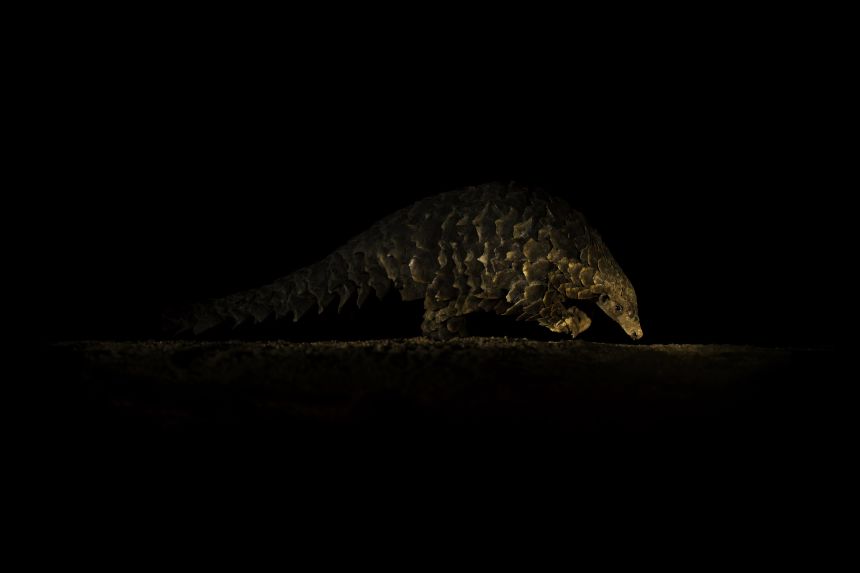
It has hard armor-like scales all over its body and tail. Feet with five sharp claws. Pangolins have insect-like tongues that extend up to 25 cm (10 inches), making them look more like dinosaurs than mammals.
“The way it walks on its hind legs and lifts its little front paws reminds me of something from the past. It’s like a little Tyrannosaurus rex walking,” says Tristan Dix, a wildlife photographer and safari guide based in South Africa. “I feel like there is a connection to a bygone era.”
Pangolins have been around for 80 million years, but humans have only been around for 350,000 years. But their future is uncertain. All eight extant pangolin species, native to Asia and Africa, are listed by the International Union for Conservation of Nature (IUCN) as having varying degrees of threat.
Dix’s photo of the Temminck pangolin is featured on the cover of “10 years of Remembering Wildlife”, the latest in the photo book series of the “Remembering Wildlife” project, which donates profits to conservation efforts.
Founded in 2015 by photographer Margot Raggett, the initiative produces a photo book dedicated to one endangered species each year and has raised more than $1.55 million since its inception, reports Remembering Wildlife magazine. This year, pangolins are the star.
Pangolins are the most illegally traded mammals in the world, driven by demand for their meat and keratin scales, which are used primarily in traditional medicine, which is not scientifically proven.
“What makes pangolins particularly vulnerable to poaching is their slow movement. Pangolins don’t run away, so they’re easy to catch by humans,” explains ecologist Dr. Wendy Panayino, who wrote the section of the book dedicated to pangolins.
Between 2010 and 2023, more than 136,000 pangolins were illegally traded, and around 400 smuggling cases occurred. China is the largest market for illegally traded pangolins. Recent changes in Chinese law and enforcement regarding the use of pangolin scales have slightly reduced poaching, but the trade remains rampant.
Although it is difficult to estimate the exact number of poached animals, Raggett says that at the rate at which poaching is estimated to be occurring, 1 million pangolins will have been captured in the 10 years she has been running the Remembering Wildlife series.
“When I realized that, I felt really bad. So I really apologize for not approaching the pangolins until now,” Raggett said.
Poaching is not the only human-induced challenge facing pangolins.
“In southern Africa, electric fences pose a major threat to pangolins, given their defensive habit of curling up into a ball when threatened,” Dr Panaino said. “Because they walk on their hind legs, the electricity often comes into contact with their abdomens, curling up into a ball and constantly electrocuting them.”
Little is known about pangolins because they are rarely seen in the wild.
“We don’t even know how many pangolins there are,” Raggett said. “One of the reasons I was hesitant about pangolins is that they are incredibly secretive and nocturnal, which makes it very difficult to get a decent photo of them in the wild.”
As a result, this project is the first in the Remembering Wildlife series to bend the usual wild-only rules to allow photos of pangolins released into the wild and pangolins in sanctuaries.
Dix captured the image of a pangolin at night at Sabi Sands, a private game reserve adjacent to South Africa’s Kruger National Park. “In 17 years of guiding, I’ve only seen 15,” he says. “Pangolin photography always felt like it was just out of reach.
“I was just lucky… in that particular image, that pangolin just happened to come out of its burrow and cross the road as we were going.”
A recent IUCN report revealed that a lack of data and reporting gaps are hampering efforts to save this animal. Raggett and Dix hope the photo book will raise awareness of pangolins and support conservation efforts.
“Many people who come on safari for the first time have never heard of pangolins,” says Dix. “So if you can create photos that people can relate to, it makes a huge difference.”
Raggett agrees. “People need to love something, want to protect it, and be afraid of losing it,” she says. “People say to me, ‘I had never even heard of pangolins until I told you I was publishing a book about them.’ In a way, that’s a good thing. It’s a testament to the work we’re doing and raising awareness about these adorable, gorgeous, charismatic little animals that more people need to know about.”
