

The long wait is over.
After years of planning and countless delays, the European Union’s Entry and Exit System (EES) will go live on October 12th.
Nothing has changed regarding the rules of who can enter the EU and how long they can stay, but the new system will track cross-border movements within the 29-nation Schengen area. This is done by capturing visitors’ biometric data, similar to what other countries, including the United States, already do.
How does it work? And how can it affect your vacation? Here’s everything you need to know.
The EU’s immigration system captures biometric data from non-EU nationals entering the Schengen area (essentially all EU member states except Cyprus and Ireland, as well as Switzerland, Iceland and Norway). Just as travelers entering the United States are fingerprinted, travelers to the EU are also fingerprinted when they enter the EU and when they leave the EU.
Its purpose is twofold. One is to reduce crime and illegal cross-border movement, but the other is to ensure that visitors do not overstay their welcome.
Third country nationals, known as non-EU nationals, are only allowed to spend 90 out of 180 days in the EU.
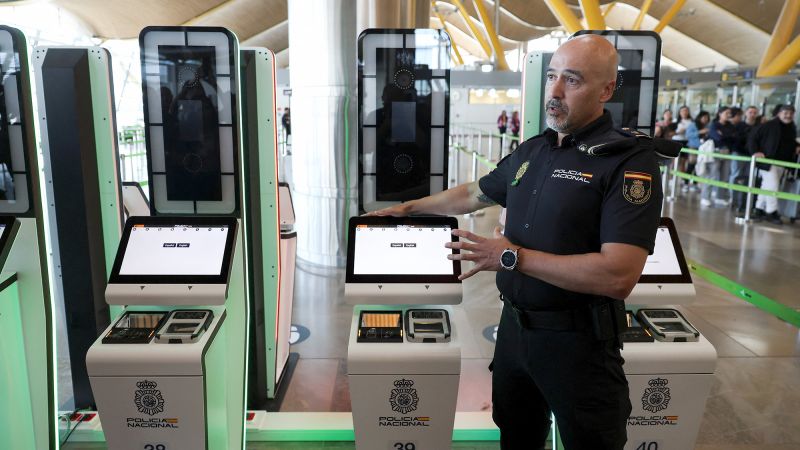
The system should be simple and match faces and fingerprints to biometric data already recorded. However, creating the record will take some time. When a traveler encounters the system for the first time, their photo and fingerprints are taken and their passport data is recorded. Self-service kiosks are already installed at border points throughout the Schengen area where travelers can register.
Once you register, your photo and fingerprints will be matched against those already on our system on subsequent visits. If you have a biometric passport and there is an E-gate at the border crossing, you should be able to enter the country with it.
At first it wasn’t. The rollout will occur in stages to avoid anticipated logistical disruptions. Each member state can decide where and how to implement the system. The only requirement is that each country registers 10% of its travelers after 30 days. By 90 days, 35% of travelers should be registered, increasing to 50% after 150 days. Countries must register all travelers in the system by April 9, the 180th day.
From October 12, at least one border crossing point in each EU country will have to operate the system. The European Commission recommends that member states introduce the system at various sea, air and land checkpoints.
Outside of that guidance, countries are free to implement it as they wish.
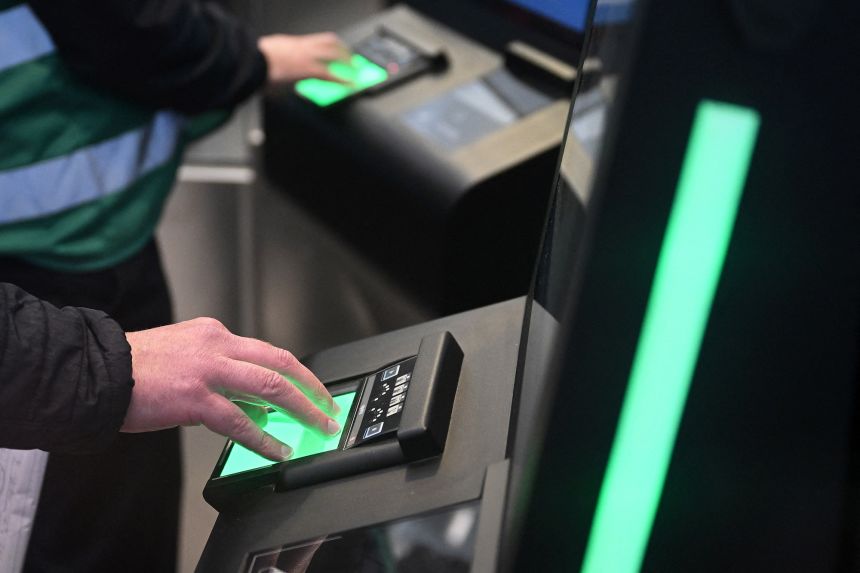
Your fingerprints and facial photo will be taken.
It also records passport information (full name and date of birth), dates and locations of entry and exit into the Schengen area. If admission is refused, this will also be noted.
You will also be asked where you are staying and whether you have funds to cover your trip.
EU officials say authorities are trying to minimize delays by rolling out the implementation in stages. However, they cautioned that “there may be some initial delays.”
Setting up self-service kiosks at entry points for registering initial details can help speed things up.
Not yet. The system will be rolled out over the next six months, so even if you pass through the EES, your passport will be stamped when you cross the border. This is to allow you to track your days in the EU, even across borders that don’t yet use this technology. Once the system is fully implemented (scheduled for April 9th), passport stamps will end.
This is recorded in the system and displayed at future entry points.
Information is stored for three years, so if you travel regularly within the Schengen area, your information will continue to be updated. However, if you do not travel for the next three years, you will need to re-register the next time you travel to the EU. There are strict rules on how data is processed. Visit our website for more information.
An EU spokesperson said there was no need to re-register. Since the biometric details are already in the system, the system simply needs to be updated with the new passport number.
No, because the EU already has your biometric data. The same applies to EU residents, regardless of their nationality. Legal residents will already have biometric data captured as part of the residency process.
A complete list of those exempt from the EES can be found here.
Children under the age of 12 do not need to submit fingerprints, but must go through the rest of the process.
yes. Since Brexit, British nationals will be counted as third-country nationals in the same way as other countries. The only exception is British nationals who are legally resident in the EU or who are subject to the Withdrawal Agreement.
If you’re not good at math, here’s a handy official calculator.
Sanctions for overstayers range from fines to deportation to bloc-wide entry bans.
ETIAS is a new pre-travel visa waiver scheme launched by the EU, similar to ESTA for travelers to the United States. An EU spokesperson said the launch has been postponed “probably” to the end of next year after numerous delays. You will be notified because the information campaign will start 6 months in advance.
