

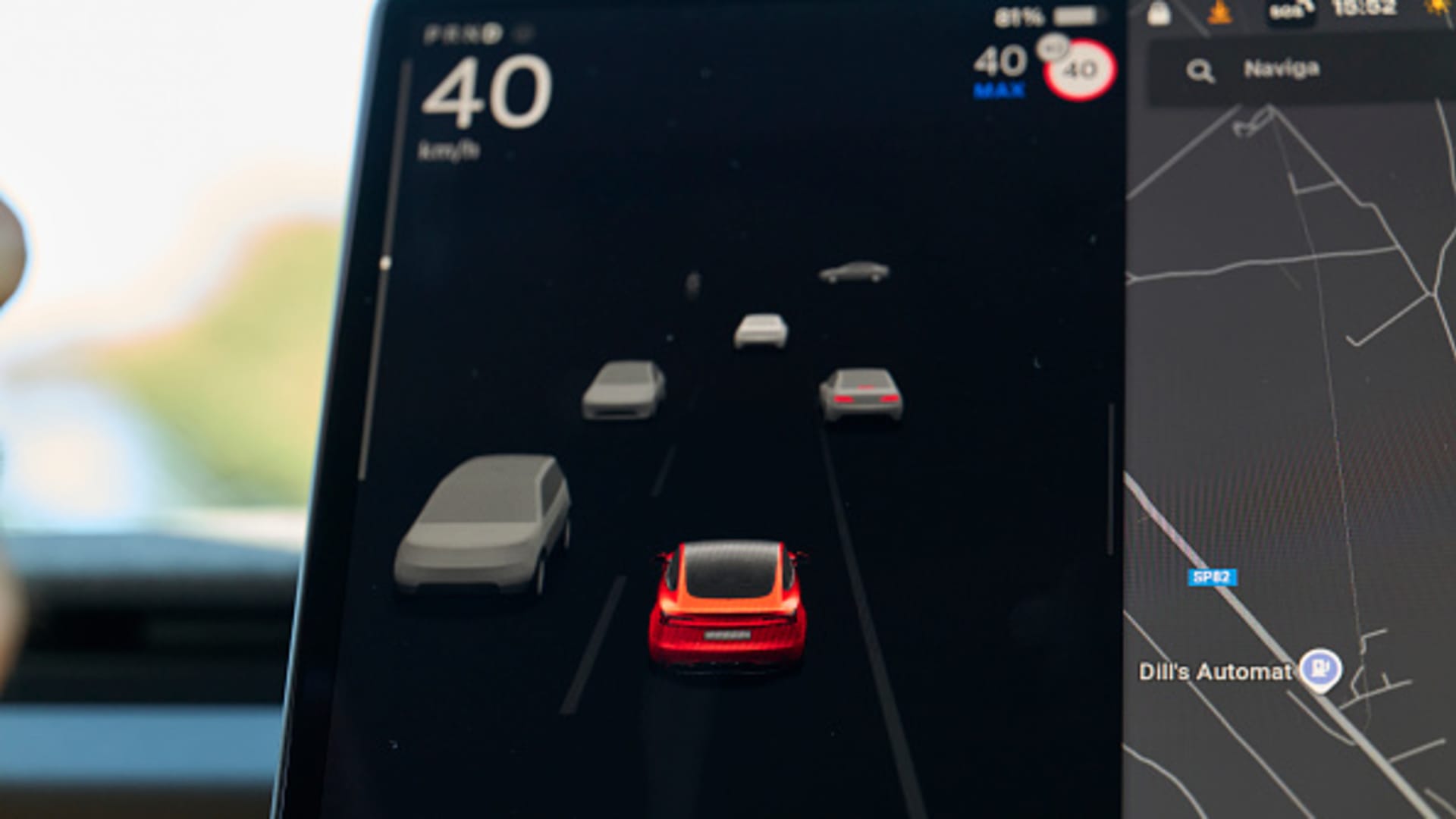
New Tesla Model 3 tablet.
Mateo Della Torre | Null Photo | Getty Images
tesla is facing federal investigation into possible safety flaws in its FSD, a partially autonomous driving system also known as fully autonomous driving (supervised).
In 44 separate incidents, Tesla drivers using FSD said the system caused them to run red lights, swerve into oncoming traffic, and commit traffic violations that resulted in crashes, including in some cases resulting in personal injury, according to media, vehicle owners, and other incident reports to the National Highway Traffic Safety Administration.
In a notice posted Thursday on the agency’s website, NHTSA said the investigation covers “all Tesla vehicles equipped with FSD (supervised) or FSD (beta),” an estimated 2,882,566 of the company’s electric vehicles.
Tesla vehicles require a human driver to brake and steer at any time, even when FSD is activated.
The NHTSA’s Office of Defect Investigations has begun a preliminary evaluation to “assess whether there was advance warning or sufficient time for the driver to react to unexpected behavior” by Tesla’s FSD and “to safely supervise autonomous driving tasks,” among other purposes.
ODI’s review will also assess “the FSD’s ability to warn the driver of the system’s impending action, the time it takes the driver to respond, the FSD’s ability to detect and display traffic signals to the driver and respond appropriately, and the FSD’s ability to detect and respond to lane markings and wrong-way signs.”
Tesla did not respond to requests for comment on the new federal investigation. The company released a new version of FSD, version 14.1, to customers this week.
Tesla CEO Elon Musk has long promised investors that Tesla would one day be able to turn existing electric cars into robotaxis with a simple software update, allowing owners to earn money while they sleep or go on vacation.
That hasn’t happened yet, and Tesla has since informed owners that future upgrades will require new hardware as well as software releases.
Tesla is testing a robotaxi-branded ride-hailing service in Texas and elsewhere that would feature a human safety driver or attendant to direct the ride and intervene manually when needed.
In February, Musk and President Donald Trump cut the NHTSA workforce as part of a broader effort to reduce the federal workforce, impacting the agency’s ability to investigate vehicle safety and regulate self-driving cars, the Washington Post first reported.

