

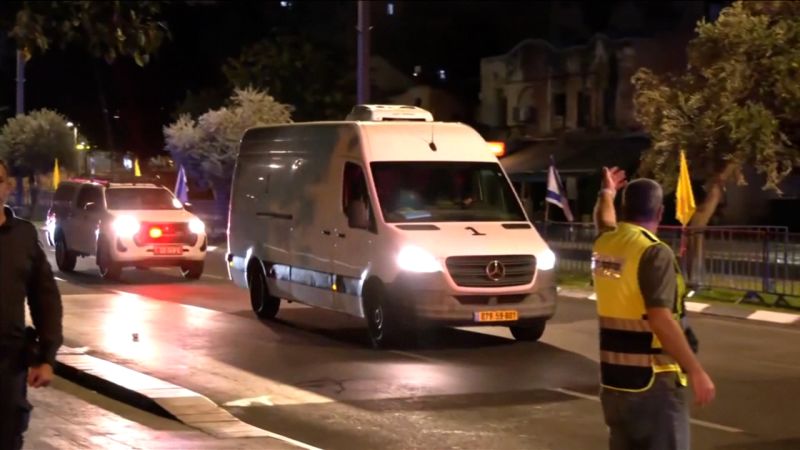
The body of the 10th deceased hostage returned to Israel from Gaza under the recent ceasefire agreement has been identified as the ceasefire enters its second week, despite facing numerous challenges and next steps remaining unresolved.
“Kibbutz Nir Oz announces that we are returning to bury our beloved Eliyahu (Churchill) Margalit of blessed memory,” a kibbutz (village) spokesperson said in a statement.
The Israeli Prime Minister’s Office (PMO) and the Israel Defense Forces (IDF) have confirmed the identity of Margalit, who was 75 years old when she was killed in a Hamas-led attack on Israel two years ago on October 7. His body was later taken to Gaza, the Israeli military said.
“We will always remember him as a kind-hearted man whose world was filled with family, kibbutz, nature and animals,” the kibbutz said.
There are now 18 dead hostages remaining in Gaza after Margalit’s body was returned.
Frustration is growing in Israel over delays in returning the bodies of the remaining hostages, a condition outlined in a cease-fire agreement between Israel and Hamas that took effect last week.
Hamas announced that it had handed over all accessible remains of hostages. Israeli intelligence assesses that Hamas may not be able to locate and return all of the dead hostages remaining in Gaza.
Meanwhile, Israeli intelligence assesses that Hamas may not be able to find and return all the dead hostages remaining in Gaza.
Still, Israel believes it knows the whereabouts of some of the dead hostages that Hamas claims are missing, according to two Israeli officials familiar with the matter, and Israel’s foreign minister has accused Hamas of trying to use the hostages as bargaining chips.
Hamas’s al-Qassam Brigades, a militant group, had previously called for help and said on Wednesday that recovering the bodies of the remaining hostages would require “huge efforts and special equipment.”
In its statement, Al-Qassam Brigades said it had “complied with the terms of the agreement and handed over all living prisoners and accessible corpses in its possession.”
For now, both sides seem to believe that the ceasefire in Gaza is holding, but it is not without its burdens from Hamas’ failure to return all bodies, initial delays in delivering aid to the enclave, and continued, albeit isolated, killings of Palestinians by Israeli attacks.
A Palestinian family returning to their home in northern Gaza was killed by Israeli forces on Friday after they drove across the Israeli-controlled border under the cease-fire agreement, Gaza Civil Defense spokesman Mahmoud Bassal told CNN.
The vehicle was carrying 11 civilians, including several women and children, Bassal said. Gaza’s civil defense forces, in coordination with the United Nations, recovered nine bodies on Saturday, including four children and three women. The bodies of two other children are still missing, civil defense officials said.
The Israeli military told CNN that its forces “fired warning shots” after “a suspicious vehicle was observed crossing the yellow line.” This is a reference to Israel’s initial line of withdrawal. “The vehicles continued to approach in a manner that posed an imminent threat to troops,” the military said.
Hamas has accused Israel of violating the ceasefire with these killings, but as of Saturday, no retaliatory measures had been taken.
Israel has also allowed more aid into the country in recent days, but aid groups have called for more borders to be opened to improve deliveries.
The World Food Program said Friday it was unable to bring enough food into Gaza due to “extremely difficult” conditions, including community displacement, poor road conditions and only two open border crossings.
The Rafah border crossing, a key gateway between Gaza and Egypt, is not yet open.
The intersection was scheduled to be opened to civilian traffic in both directions as part of the ceasefire agreement, but Israel’s Coordinator of Government Activities in the Territories (COGAT) said on Thursday that the opening date “will be announced at a later stage.”
Israel’s foreign minister said last week that the port could open on Sunday.
Negotiations on a key next step in the cease-fire agreement began in Egypt last week, Israeli sources and regional officials told CNN, with talks focusing on demilitarizing Gaza, governing the Strip and forming an international force to help secure the enclave after two years of war.
The Trump administration’s 20-point plan to end the war in Gaza says the enclave will be managed by a group of apolitical Palestinian technocrats and an oversight body called the Peace Commission, which will be chaired by US President Donald Trump.
According to the plan, an International Stabilization Force (ISF) consisting of militaries from several countries will be established to secure the area.
But Hamas remains vague about disarmament and the transfer of power, even though Hamas has sent its chief negotiator to Cairo for talks over the Palestinian commission that will govern Gaza.
Additionally, countries scheduled to join the International Stabilization Force are still negotiating its composition, with some seeking a mandate from the UN Security Council before joining.
CNN’s Lauren Izso contributed to this report.
