

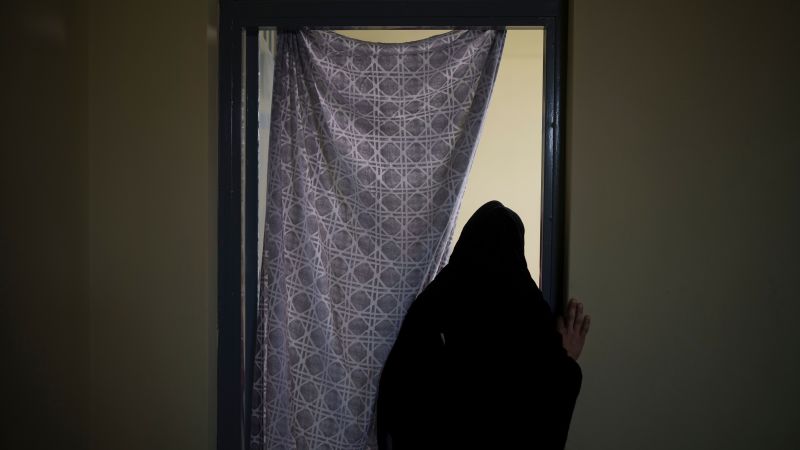
Taliban authorities in Afghanistan have issued strict laws that make sodomy punishable by death and allow men to beat their wives as long as they do not break bones or leave visible scars.
Human rights activists condemned the move as “devastating” and warned it would further limit women’s access to justice.
“Men have the right to have complete control over women,” human rights activist Mahbooba Serraj told CNN from Kabul. “His word is the word of the law, that’s all.”
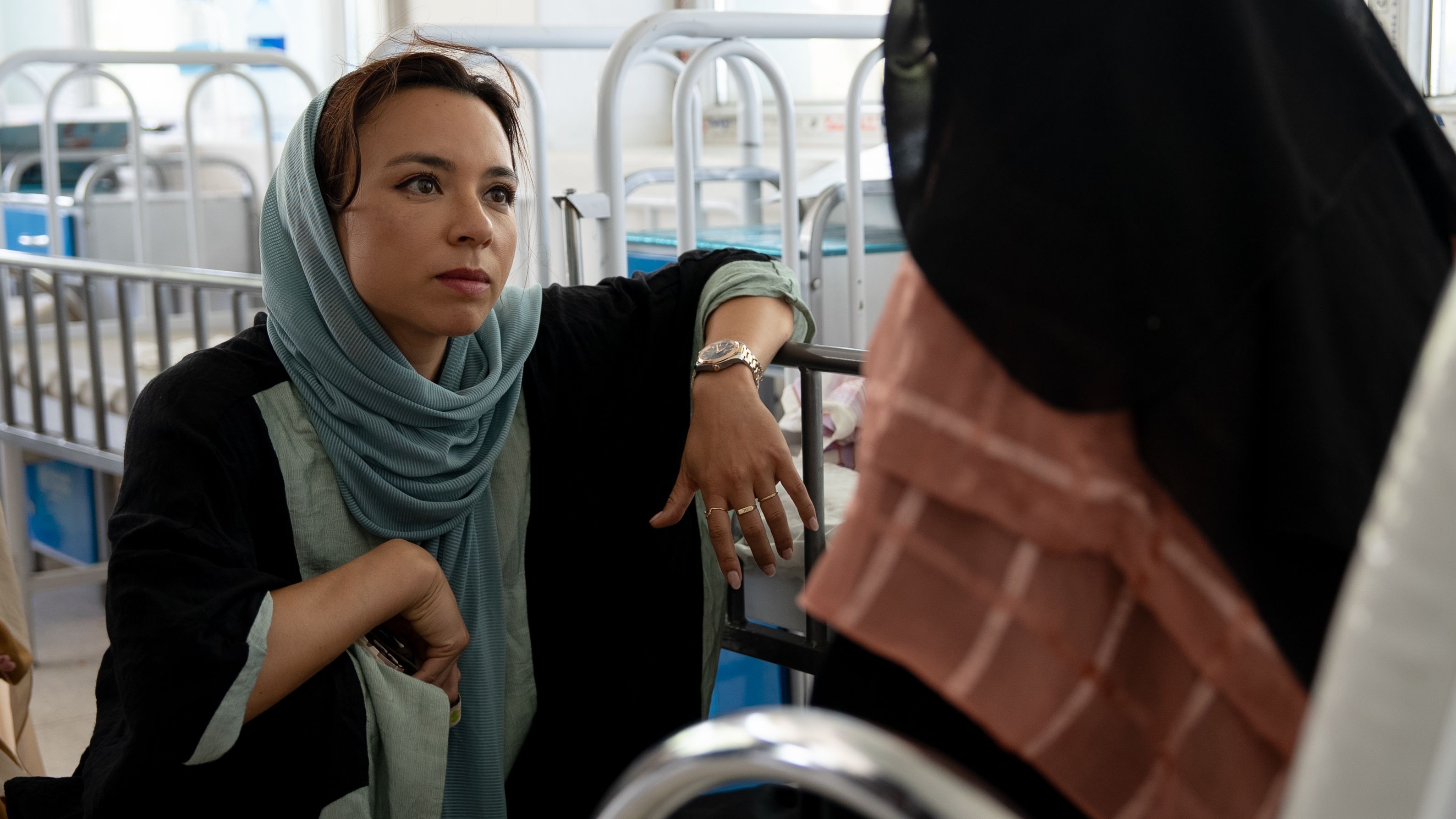
The Trump administration says there have been no deaths as a result of the aid cuts. We went to Taliban Afghanistan to investigate

The decree was issued last month, but only recently attracted international attention after it was leaked to Afghan rights group Rawadari, which published it in its original Pashto language. The document was then translated into English by the Afghanistan Analyst Network.
The penalties detailed there are already widespread in Afghanistan, but this is the first time they have been so clearly enshrined in law since the United States and its allies withdrew from Afghanistan in August 2021, allowing the Taliban to return to power.
The Taliban maintains that all decisions are in line with Islamic Sharia law and have religious legitimacy.
“If a husband beats his wife severely, resulting in broken bones, open wounds, or black and blue scars on her body, and the wife appeals to a judge, the husband will be considered a criminal,” the code reads, according to a translation by the Afghanistan Analysts Network. “The judge should sentence him to 15 days in jail.”
Punishments for animal abuse are even harsher. The law stipulates that anyone who forces animals such as dogs or roosters to fight will be sentenced to five months in prison.
The statute also allows fathers to punish children for reasons such as failure to pray. The punishment for a teacher who hits a student so hard that it causes broken bones is to be fired from his job.
Given that women are prohibited from leaving their homes in Afghanistan without a male guardian, activists argue that the new law will prevent women from seeking justice even in cases of severe physical violence. Afghanistan’s Sharia law also stipulates that a woman’s testimony is worth half that of a man’s.
Women’s rights have steadily declined since the Taliban returned to power. Women are almost entirely prohibited from working outside the home. UNICEF estimates that more than two million girls and women are excluded from education due to the Taliban’s ban on secondary education and university enrollment.
The law “legitimizes violence against women and children,” U.N. human rights official Volker Türk told the Human Rights Council in Geneva on Thursday, warning that “Afghanistan is a human rights graveyard. Afghanistan is a human rights graveyard.”
“Women and girls in Afghanistan face oppression that amounts to extreme discrimination and persecution based on gender,” Turk said. “The system of segregation is based on gender, not race, and is reminiscent of apartheid.”

This ordinance also cracks down on dissenting opinions. Anyone who insults Taliban leader Hibatullah Akhundzada will be sentenced to 39 lashes and one year in prison, while those who “humiliate a senior official” will be sentenced to six months in prison and 20 lashes.
The activist group Rawadari, which first circulated the decree, said it “fails to meet even the most basic standards of a fair trial, including the principle of equality before the law.”
The death penalty is also allowed for a wide range of crimes.
Judges or imams can sentence to death those who spread doctrines “against Islam” and those who “continued” to engage in theft, homosexuality, heresy, witchcraft, or anything other than vaginal intercourse.
Activists say the way the doctrine defines “Muslim” leaves authorities wide discretion to punish religious minorities in a diverse country.
“The number of calls I receive from women in desperate situations across Afghanistan is staggering,” Seraj, a women’s rights activist, told CNN. “When these kinds of laws come into force and husbands can decide everything, forget about it. At least before there was fear of courts and judges, women would complain. What do we do now?”
CNN’s Kara Fox contributed to this report.
