

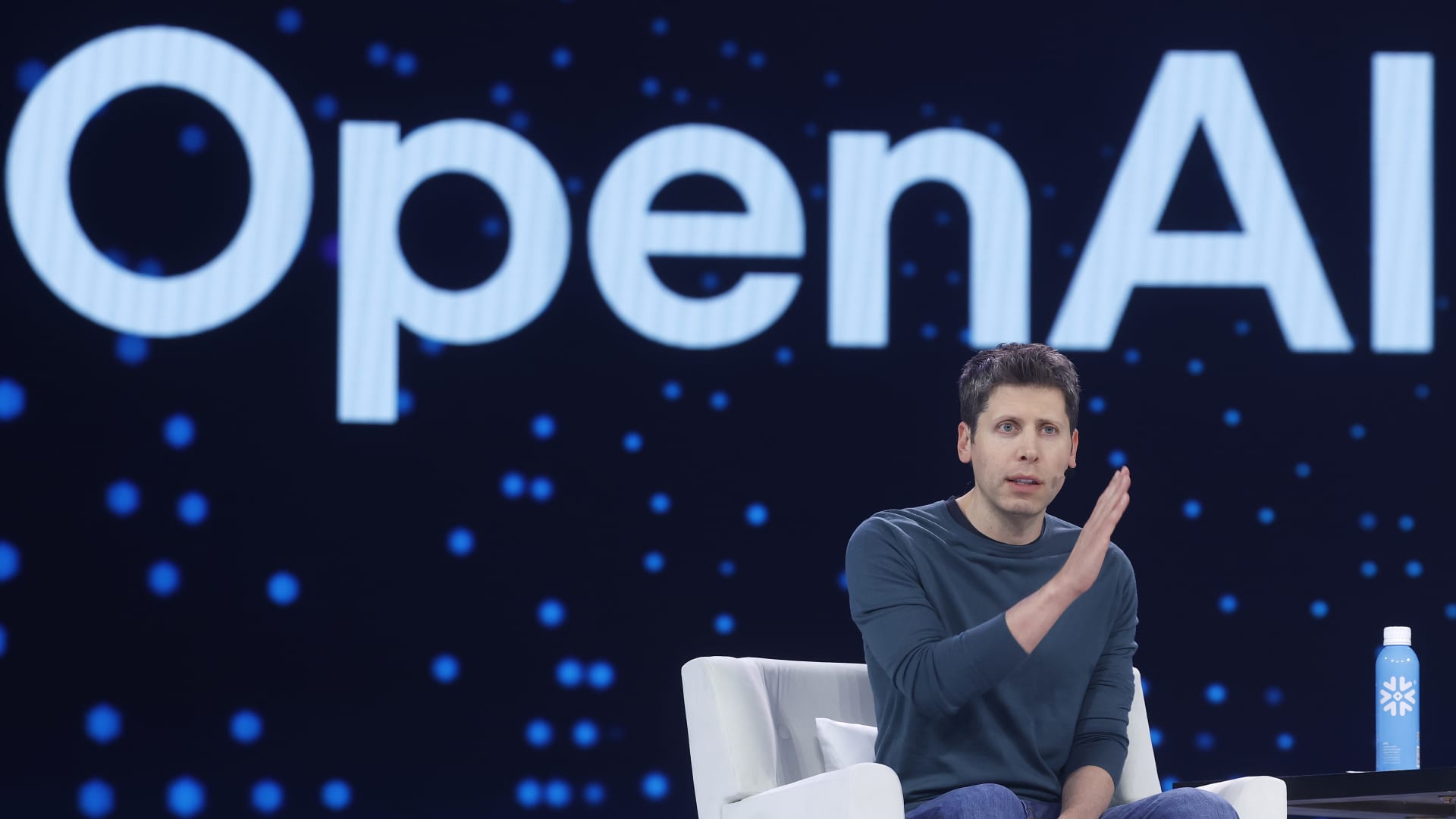
The long-awaited public listings of SpaceX, OpenAI, and Anthropic are expected this year, but questions remain about whether investors will be willing to pay the hefty price tags commensurate with their valuations. Elon Musk’s SpaceX was valued at $800 billion in a secondary stock sale in December, according to a letter to shareholders from the company’s finance chief reviewed by Reuters. There have been widespread rumors that the space technology company plans to go public in 2026, and Musk confirmed the reports last month. OpenAI completed a secondary stock sale in October that valued the company at $500 billion, and is rumored to be targeting $1 trillion in free float on the stock market. Anthropic is also believed to be gearing up for an IPO, setting itself apart from OpenAI with its spending restraints and model efficiency, which fetched a price tag of up to $350 billion in a November round backed by Microsoft and Nvidia. Samuel Kerr, head of equity capital markets at Mergermarkets, told CNBC’s “Squawk Box Europe” on Monday that a listing of this size would be a “major market event.” “The biggest IPO we did globally was Saudi Aramco, and it was a very Saudi story with a lot of Middle Eastern investors involved,” he said. “OpenAI is going to be very different.”Saudi Aramco was valued at $1.88 trillion when it went public in 2019. The focus on the IPO market by these “large, attractive private companies” represents a fundamental shift in the trend of companies staying private for longer periods of time that has emerged over the past few years, Kerr said. Previously, companies wanted to protect their intellectual property, but it was difficult to do so as a public company because reporting obligations were much higher. Currently, the level of investment required to fund growth ambitions is high, many of which are related to AI, forcing them to go public. Possible valuation gap OpenAI’s scale and sprawl means a disappointing debut “could be a big problem” for the entire AI sector, how investors trade and the valuations companies earn, Kerr said. Nick Payens, head of AI at The Futurum Group, said the difference in valuation could be even wider if OpenAI is aiming for $1 trillion. Patience told CNBC that the numbers are about a “perfect scenario where AGI is imminent,” referring to artificial general intelligence, understood as the point at which artificial systems reach human capabilities. “Furthermore, there will also be questions about governance and control, especially with respect to Microsoft stock. Investors will want clarity on the path to profitability outside of enterprise deals and how to manage huge computing costs. For better or worse, AI could be the bellwether of AI,” he said. Meanwhile, Anthropic, founded by a group of former OpenAI staff, offers an AI alternative to risk-averse pension funds and conservative investors, Patience added. “This is a safety hedge for the company, a much lower valuation than OpenAI, and a story about the reliability and safety of the company rather than the magic of AGI.” But Musk-premium SpaceX, according to Kerr, “is going to be the only deal that anyone will want to buy” because there is no clear space technology competitor. “Perhaps just from that hype alone, SpaceX could achieve a $1.5 trillion valuation,” he said. But achieving such a rating may depend on the success of its satellite division Starlink and Starship rockets. “Starlink has effectively become a global power company with recurring revenue, and institutional investors will see this as a higher-growth infrastructure investment, similar to telecom or defense stocks, but with higher growth rates,” Patience said. “Retail Musk premiums are likely to be a big hit on day one, but long-term retention is based on their recurring revenue and even the space-based data center story that surfaced last year, but that’s a long way off.” In any case, the list provides a better way to see the value of a business and provides a benchmark for comparison. Read more DeepSeek exploded into the market a year ago. Why haven’t we done that since then? Nvidia wants to power its robotaxi fleet with chips and software by 2027 Democratic mayor of Silicon Valley’s largest city opposes billionaire tax “What happens to the stock price after the IPO is a completely different question,” Anna Rathbun, founder and CEO of Grenadilla Advisory, told CNBC. Last year, she added, “We haven’t had a good record of debut prices being maintained post-IPO, but this gives us a clue as to how the public market thinks about private market valuations.” Flow of Money “If the prize is large enough, the market is generally willing to pay it back,” said Michael Field, chief equity strategist at Morningstar. SpaceX and OpenAI are the big prizes, he said. “For many investors, the chance to own a piece of innovative technology is too good to pass up,” he said, adding, “The current numbers suggest that both companies are candidates to become the world’s largest publicly traded companies.” Given that initial public offerings are a funding mechanism, the next question is where companies empty their coffers. “We expect a significant portion to go toward custom silicon development and energy infrastructure. The IPOs that offer the clearest path to owning their own compute stacks will be the winners in the long run,” Patience said, noting that this will reduce companies’ dependence on hyperscalers. Market watchers are also keeping an eye on related stocks, as investors could move money from existing AI investments into OpenAI or Anthropic. The Magnificent 7 index, which includes Apple, Microsoft, Nvidia, Tesla, Meta, Alphabet, and Amazon, is up more than 17% over the past year, but its strong performance can be attributed to market concentration. “With more IPOs on the horizon, public market investors will have more options to invest in AI as a theme. This is healthy for public markets and for everyday investors,” Rathbun said. Nothing is set in stone, though, as AI bubble chatter continues. “If we see a severe correction or multiple recessions, the incentives for IPOs could change for individual investors,” he added. “To gauge the IPO activity of these technology companies, we need to pay attention to their public market multiples.”
