

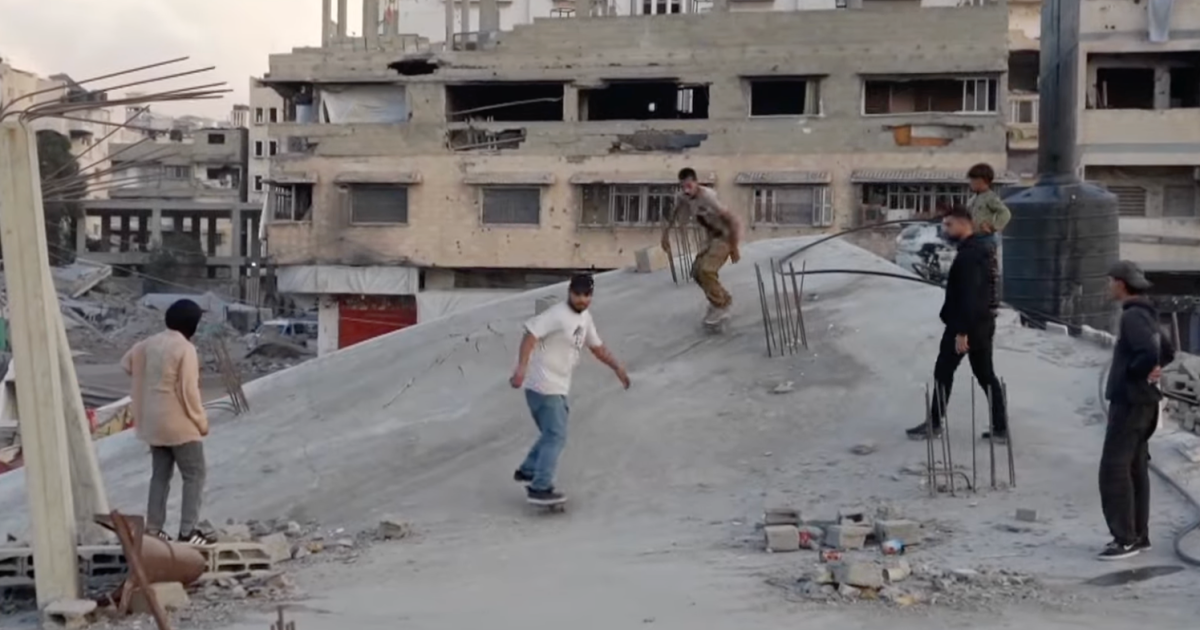
A mobile skate park moving between displacement camps in Gaza is providing rare mental health support to children trapped in one of the world’s worst humanitarian crises, where trauma and grief are widespread.
Amidst the ruins of Gaza City, where collapsed buildings and twisted concrete dominate the landscape, a group of young Palestinians has turned destruction into an unlikely playground.
Recommended stories
list of 3 itemsend of list
Since the uneasy ceasefire began on October 10, skateboarding coaches have been holding sessions to provide traumatized children with a moment of freedom and normalcy.
“We used to have a skate park in the Gaza Strip. This was our dream here in Gaza,” said Rajab al-Rayfi, one of the children’s coaches. “But unfortunately, after we finally achieved that dream and built the skatepark, war broke out and everything was destroyed.”
The Skateboard Initiative operates against a backdrop of continued Israeli violence despite a ceasefire.
Since the start of the ceasefire on October 10, Israeli forces have killed at least 260 Palestinians and wounded 632 others, with attacks occurring in 25 of the past 31 days.

make do with what’s left
Sessions faces tough challenges.
Skateboard wheels and wood are all at a premium as equipment is in short supply across Gaza. Al-Reifi frequently repairs damaged boards between sessions, knowing that getting a replacement is nearly impossible.
One of the few flat courtyards to survive Israeli artillery bombardment serves as a practice area for beginners, while adventurous skaters have turned piles of rubble and crumbling walls into makeshift ramps and obstacles.
Another dedicated coach, Rimas Dalour, strives to keep the children motivated despite the dire circumstances.
“We don’t have enough skateboards for everyone, we don’t have protective equipment,” she explained. “The clothes they wear are the only thing that cushions them when they fall. Sometimes they get hurt, but they always come back. The desire to play is stronger than the pain.”

“I was skating away from the shelling.”
Among the young skaters is 7-year-old Mara Salem, who has been practicing for seven months.
“I’m here to have fun. I don’t want to skip any sessions. I want to be consistent,” she said. “I was still skateboarding during the war. I was skating on the streets running away from the bombing.”
Her determination reflects the broader resilience of Gaza’s children, who have endured nearly two years of Israeli military attacks.
Skateboarding sessions not only provide a type of recreation and temporary escape for children, but also a means of processing trauma and a means of communal activity.
The mental health needs of children in Gaza remain staggering.
Humanitarian organizations had already identified more than 1 million Palestinian children in need of mental health services before the latest escalation of the conflict.
The scale of the conflict means that no child is protected from its psychological effects, with large-scale displacement, family separation and widespread casualties affecting the entire youth population.
The International Rescue Committee reports that at least 17,000 children are currently unaccompanied or separated from their parents, and child protection cases soared 48% in September alone.
For young skaters, the sessions offer what the war tried to take away: the simple freedom of childhood play.
Schools were destroyed, homes destroyed, and more than 658,000 school-age children lost nearly two years of education.
Still, the children find a way forward amidst the ruins of their neighborhood.
They’re just kids on skateboards, laughing, falling, getting back up and moving forward, literally and figuratively, through the rubble of a fallen world.
