


Russian forces are still advancing along some parts of Ukraine’s long front, despite US President Donald Trump’s renewed call for a freeze on fighting on existing fronts.
After meeting with Ukrainian President Volodymyr Zelenskiy in Washington, D.C., President Trump said on social media on Friday that both sides should “stop right there.”
But the Russians appear to be looking to lock in their profits before winter sets in. Ukraine’s military said it used a record 268 guided airstrikes on Friday, compared to an average of 170-180 a day in the past few weeks. These bombs can carry payloads of up to 1,500 kilograms (3,307 pounds) and primarily target Ukrainian troops and infrastructure close to the front lines.
Russia also continues a nightly barrage of drones and missiles against targets across Ukraine, particularly energy infrastructure. An average of more than 180 drones were launched each night in September, more than double the number at the beginning of the year.
Ukraine has admitted in recent days that about 20% to 30% of its drones are not intercepted.
President Zelenskiy said on Sunday that Russia had used more than 3,270 attack drones, more than 1,370 guided air bombs and nearly 50 missiles of various types against Ukraine.
For some analysts, the Kremlin has no incentive to compromise to improve the military’s performance on the battlefield.
“Moscow has developed new ways to use drones to find and kill Ukrainian soldiers and destroy Ukrainian assets, turning what was once an area of weakness into an area of strength,” Dara Mashikot, a longtime Russia analyst, wrote in Foreign Affairs.
“This has produced better missiles and developed more robust and capable armor systems. This has given junior commanders more freedom to plan,” Massicot added.
One town where pressure on Ukrainians is increasing is Kupiansk, north of Kharkiv. Russian forces have advanced north and east of the town, which has been under siege for more than a year.
Popular Russian blogger War Gonzo said on Telegram on Saturday that there was also fighting in the center of Kupiansk. The Ukrainian military confirmed on Thursday that about 80 Russian troops had entered the town and that its defense forces were “doing everything possible to expel the Russian invaders from Kupiansk and prevent the accumulation of enemy infantry in the city.”
Bodan Miroshnikov, a Ukrainian military blogger, said this week that Russia’s tactics “could lead to overrun (if reinforcements arrive and strengthen the position)”. He added that the situation was very complex, but that “full capture of the city is still far away.”
In the Kharkiv region, close to the border, Russian forces have also asserted their advance near the city of Vovchansk, taking control of nearby villages.
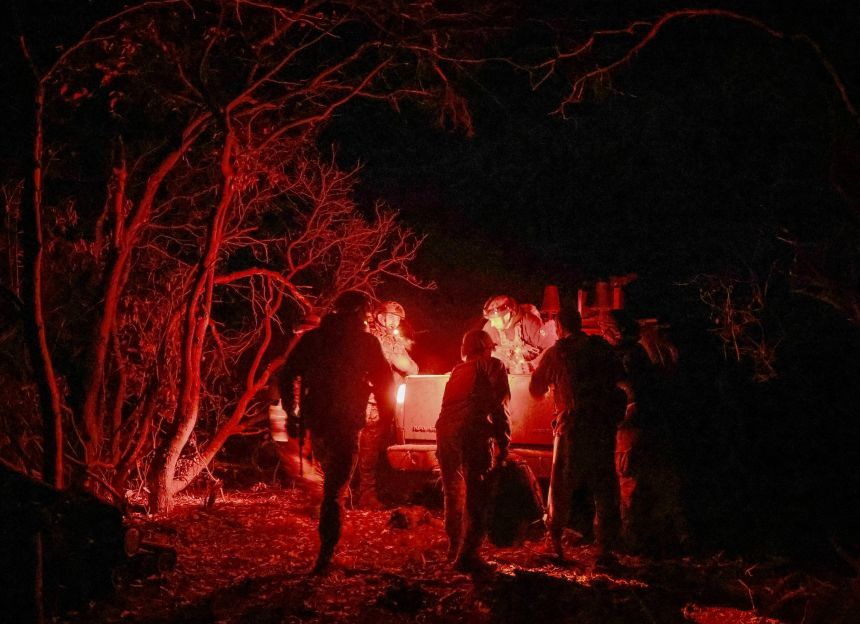
Heavy fighting continues in Donetsk around Pokrovsk, with Russian military bloggers claiming on Saturday that Russian troops were advancing into the city’s northwestern outskirts. Meanwhile, the Ukrainian military claims to have regained about 70 square miles of territory in the Pokrovsk region over the past two months through a series of counterattacks.
Commander-in-Chief of the Ukrainian Armed Forces Oleksandr Shirushkyi claimed on Friday that Russia “did not have a strategic initiative. At the cost of heavy losses, the enemy has achieved only small advances in certain parts of the front.”
“Ukrainian fighters have stopped the enemy’s spring-summer offensive operations,” Shirschiky added.
According to Harvard University’s Belfer Center for Science and International Affairs, Russia has gained about 120 square miles of territory in the past four weeks, about half of the territory it has captured in the past four weeks.
And Russia’s progress comes at a heavy price. The Center for Strategic and International Studies, a U.S.-based think tank, estimated in June that as many as 250,000 Russian soldiers have died in Ukraine, with Russian casualties totaling more than 950,000.
According to the Ukrainian military command, around 14,000 Russian soldiers have been killed or injured in the Pokrovsk region alone since late August. CNN cannot confirm battlefield numbers.
In the face of these losses, the Russian Ministry of Defense appears to be changing the way it recruits additional personnel. In recent weeks, Russian regions have begun cutting back on generous sign-on bonuses used to attract new employees.
The Institute for the Study of War (ISW), a Washington-based think tank, said the Kremlin has traditionally relied on financial incentives to recruit volunteers and avoid new mobilizations, but this practice “is likely to have diminishing returns, which may force the Kremlin to adopt alternative approaches.”
According to ISW, “Russia may begin to periodically mobilize members of Russia’s active reserve to sustain combat operations in Ukraine.”
Meanwhile, Ukraine is betting on long-range attacks targeting Russia’s energy infrastructure in a bid to persuade the Kremlin to agree to negotiations. The company is ramping up production of its own cruise missiles, but has not yet been able to convince President Trump to supply Tomahawk missiles.
Since the beginning of the year, strikes against 45 facilities in Russia’s fuel and energy sector have been carried out successfully, Silsky said. Industry analysts estimate that one-fifth of Russia’s refining capacity has been disrupted.
But despite the casualties and damage to Russia’s economy, Russian President Vladimir Putin shows no signs of agreeing to a ceasefire or negotiations with Ukraine.
More than 1,300 days have passed since Russia’s full-scale invasion began, and one expert has stated that “Ukraine cannot destroy Russia’s military forces, but Russia does not appear to be able to defeat Ukraine militarily.”
