

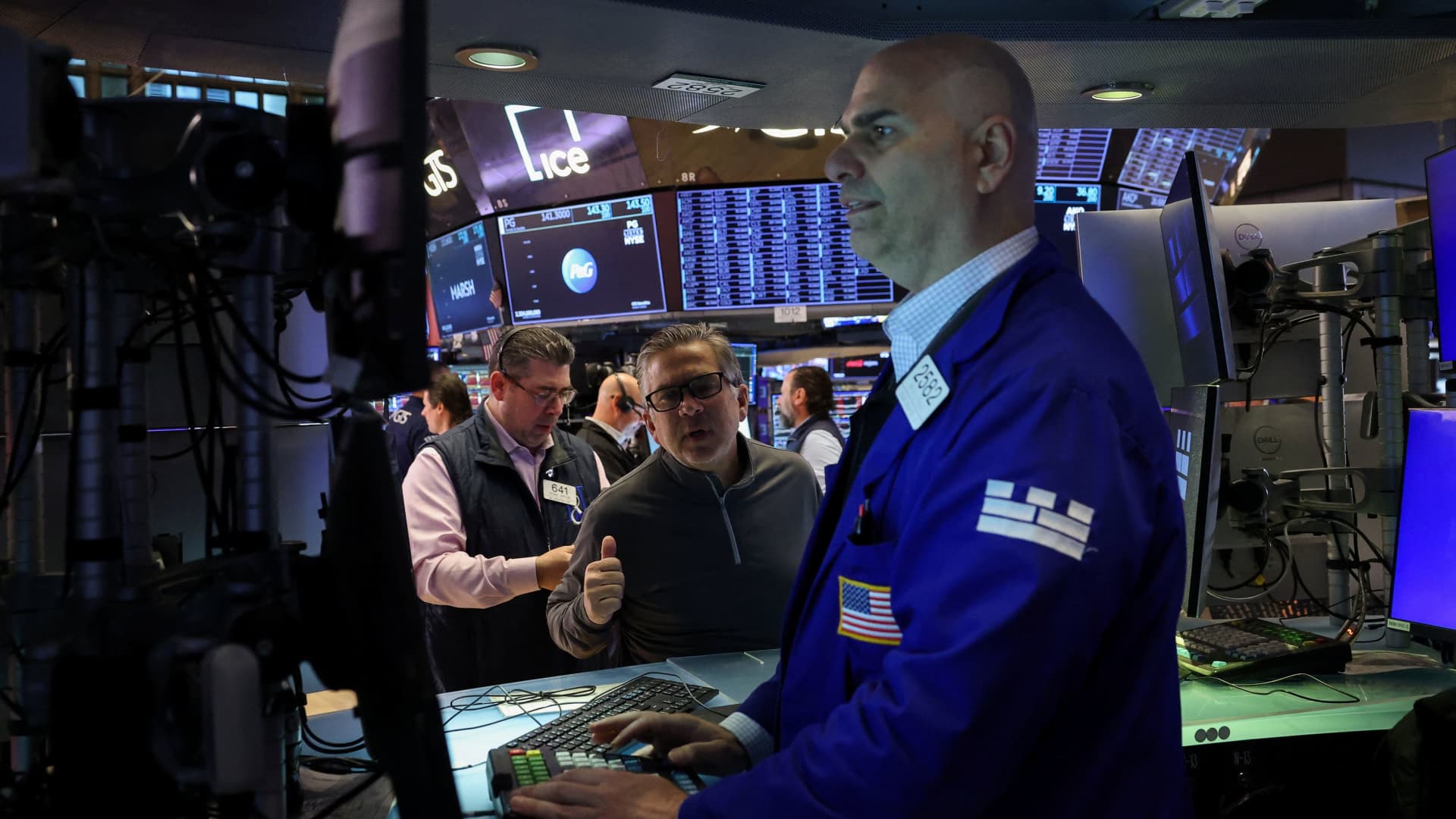
Retail investors used Wednesday’s big rally as an opportunity to reduce risk rather than chase profits, raising questions about the sustainability of the rally tied to President Donald Trump’s optimism about a ceasefire in Iran. According to capital flows tracked by JPMorgan, individual investors were heavily net sellers of exchange-traded funds (ETFs) during Wednesday morning’s rally, including a reduction in exposure to the broader market, with intraday ETF outflows reaching the highest level in a year, a sharp departure from the usual buy-on-the-moment behavior of single-parent investors. By 1 p.m., positions briefly stabilized as investors cut back on selling and selectively bought individual stocks, but by the close, ETF holdings had fallen to their lowest level in more than 10 months and individual stock flows remained negative overall, the data showed. On Wednesday, the Dow Jones Industrial Average rose more than 1,300 points, or 2.9%, after President Trump suspended attacks on Iran for two weeks. It was the best day for the benchmark since April 2025. The S&P 500 soared 2.5% and the Nasdaq Composite Index rose 2.8%. “Today’s relief rally confirms that the shift in retail behavior we’ve been observing over the past month is persisting,” JPMorgan said in a note to clients. For much of the Trump era, individual traders had outsized influence in the stock market, often actively intervening during declines and helping to precipitate sharp rebounds. That dynamic now appears to be waning, with retail investors increasingly hesitant to add exposure even as market conditions improve. Retail flows for individual stocks were negative in nearly every sector on Wednesday, according to JPMorgan. Energy and industrial stocks led the selling, with big outflows from Exxon Mobil, Chevron and Occidental Petroleum. One of the few areas that was relatively resilient was mega-cap technology, according to the company’s data. Retail investors were modest net buyers of stocks such as Tesla, Nvidia, Microsoft, and Metaplatform.
