

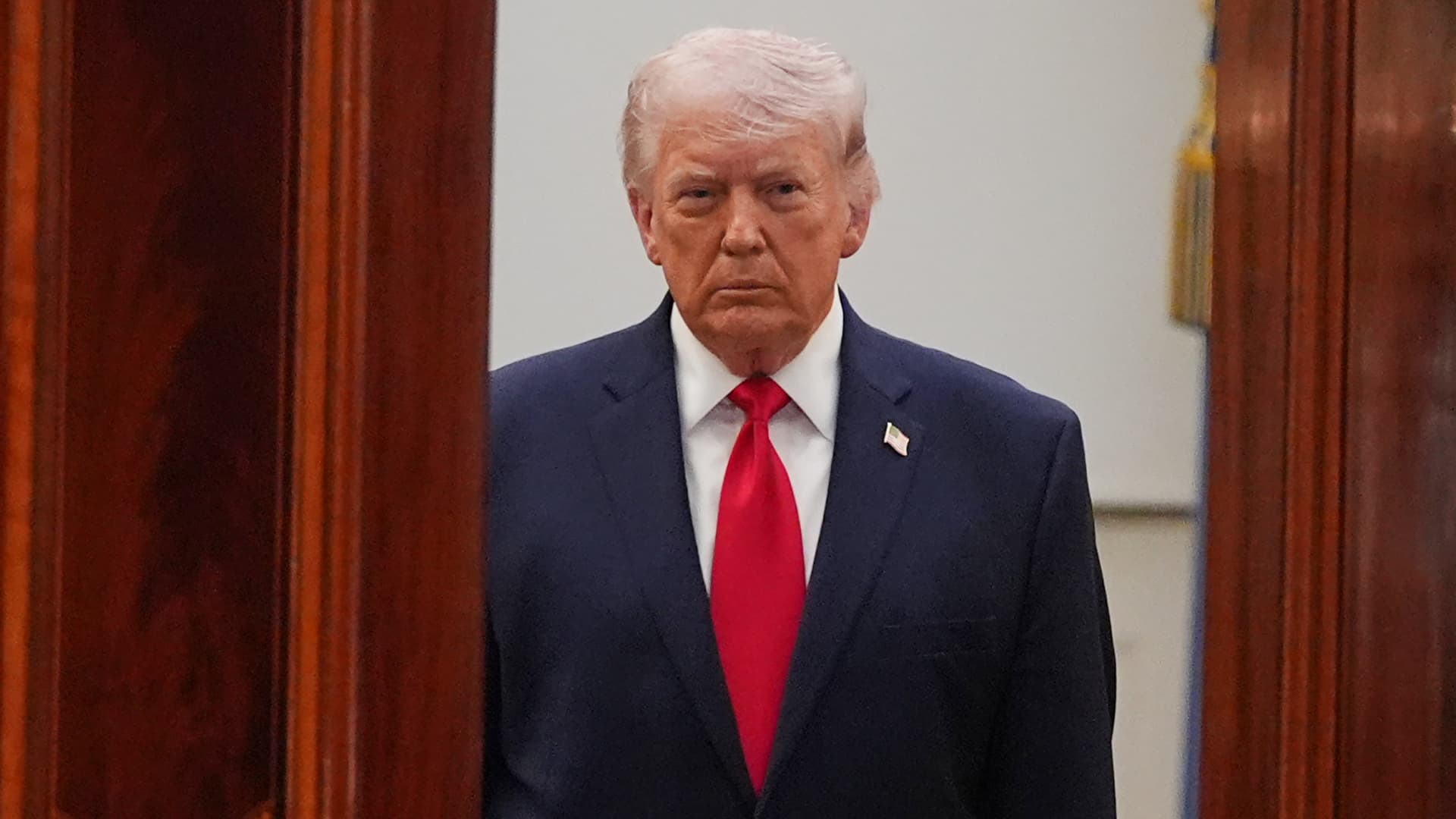

President Donald Trump has doubled down on the U.S. war against Iran, sending oil prices soaring on Thursday as traders brace for a prolonged conflict that would exacerbate already severe disruptions to global energy supplies.
Oil markets had been hoping that Trump would offer a clear exit strategy in his address to the nation on Wednesday night. Instead, the president said the war would last several weeks and vowed to deal an “extremely severe” blow to the Islamic Republic.
“The dispute is expected to last until at least late April, and the barrel calculations will only get tougher,” Ryan McKay, senior commodity strategist at TD Securities, said in a note to clients on Thursday.
By the end of the month, nearly 1 billion barrels will be lost, including up to 600 million barrels of crude oil and about 350 million barrels of refined products such as jet fuel, diesel and gasoline, McKay said. He said that if the war dragged on, losses would add up to an additional 450 million barrels a month.

Brent Crude Oil Futures for the past 5 days
Rapidan Energy expects net oil and product losses to total 630 million barrels by the end of June, taking into account flow diversions through pipelines, emergency stock releases and destocking.
usa crude oil Prices soared more than 10% following President Trump’s comments, to more than $110 per barrel. brent pricethe international benchmark, surged more than 6% to top $107.
Buyers of a physical barrel of U.S. crude are currently prepared to pay a premium of nearly $120 in Houston, or about $5.50 for the May futures contract, said Tom Kloza, an independent oil analyst at Kloza Advisors.
“The speech was a disaster,” John Kilduff, founding partner at Again Capital, told CNBC. He said markets were rapidly pricing in the impact of a prolonged war and the closure of the Strait of Hormuz.
US has no plans to open Hormuz Island
During his speech, President Trump did not lay out a U.S. plan to open the strait, a vital shipping lane that Iran effectively shut down after the tanker attack. This strait connects the Persian Gulf with world markets. Before the war, about 20% of the world’s goods passed through waterways.
“The United States imports very little oil through the Strait of Hormuz, and we have no intention of ever importing any oil. We don’t need it. We never have needed it, and we won’t ever need it,” Trump said in a speech.

The president said, “Countries around the world that receive oil through the Strait of Hormuz must be considerate of that route.” “They have to seize it and cherish it. They can do it easily. We will work together, but we should take the initiative to protect the oil they so desperately depend on.”
President Trump has threatened to bomb Iran’s power plants and take Iran “back to the Stone Age.” He directed countries affected by the strait closure to buy oil from the United States.
“It’s hard to believe that the U.S. military didn’t start reducing its ability to stop Hormuz from day one,” Rapidan Energy president Bob McNally told CNBC. “Just like you can’t imagine a parachutist jumping out of a plane without a parachute on.”
fuel shortage
Matthew Bernstein, an analyst at Rystad Energy, said oil prices were kept from rising further due to refinery cuts, a pre-war oversupply and emergency oil releases by more than 30 countries on the International Energy Agency.
Bernstein told CNBC that markets are starting to price in the long-term effects of the war.
The analyst said, “There will be no return to the pre-war status quo in the future.” “Even after the war ends, prices will be supported by new stockpile demand, higher insurance and shipping costs related to the Strait of Hormuz, and a broader geopolitical risk premium in the market.”

With the Strait still closed, oil reserves will begin to be strained. TD Securities’ Mr. McKay said the amount of crude oil stored in tankers is rapidly decreasing, and onshore inventories could fall to multi-year lows as early as August.
“As the market’s inventory buffers erode, the physical strain we have seen in Asia will start to spread globally,” the strategist said. He said oil and product prices “will face increasing upward pressure in the coming weeks and months” until higher prices begin to reduce demand.
Last week in Houston, Shell CEO Wael Sawan warned that fuel shortages would spread around the world, starting with jet fuel, then diesel and finally gasoline.
“This is a ripple effect,” Sawan said on March 24 at S&P’s global energy conference CERAWeek. “Of course, we think South Asia will be the first to bear the brunt of it, then it will move to Southeast Asia, Northeast Asia, and then Europe as we move into April.”
petrol and diesel prices
Natasha Kaneva, JPMorgan’s head of global commodity research, said in a March 26 note to clients that the U.S. is largely immune to supply shortages because of strong domestic manufacturing. But Kaneba said the West Coast, particularly California, could face supply disruptions by May because it relies on imports.
At the current pace, U.S. retail gasoline prices could rise to $4.25 to $4.45 a gallon over the next two weeks, Patrick de Haan, head of petroleum analysis at GasBuddy, said in a social media post. Diesel prices could jump to $5.80-$6.05 per gallon.

De Haan said record gasoline prices may not be far off. Pump prices hit an all-time high of $5.02 per gallon in June 2022 after Russia’s invasion of Ukraine shook global energy markets.
Kloza said rising diesel prices are currently the most serious problem. “This should cause significant inflation in the second quarter,” the analyst said.
