

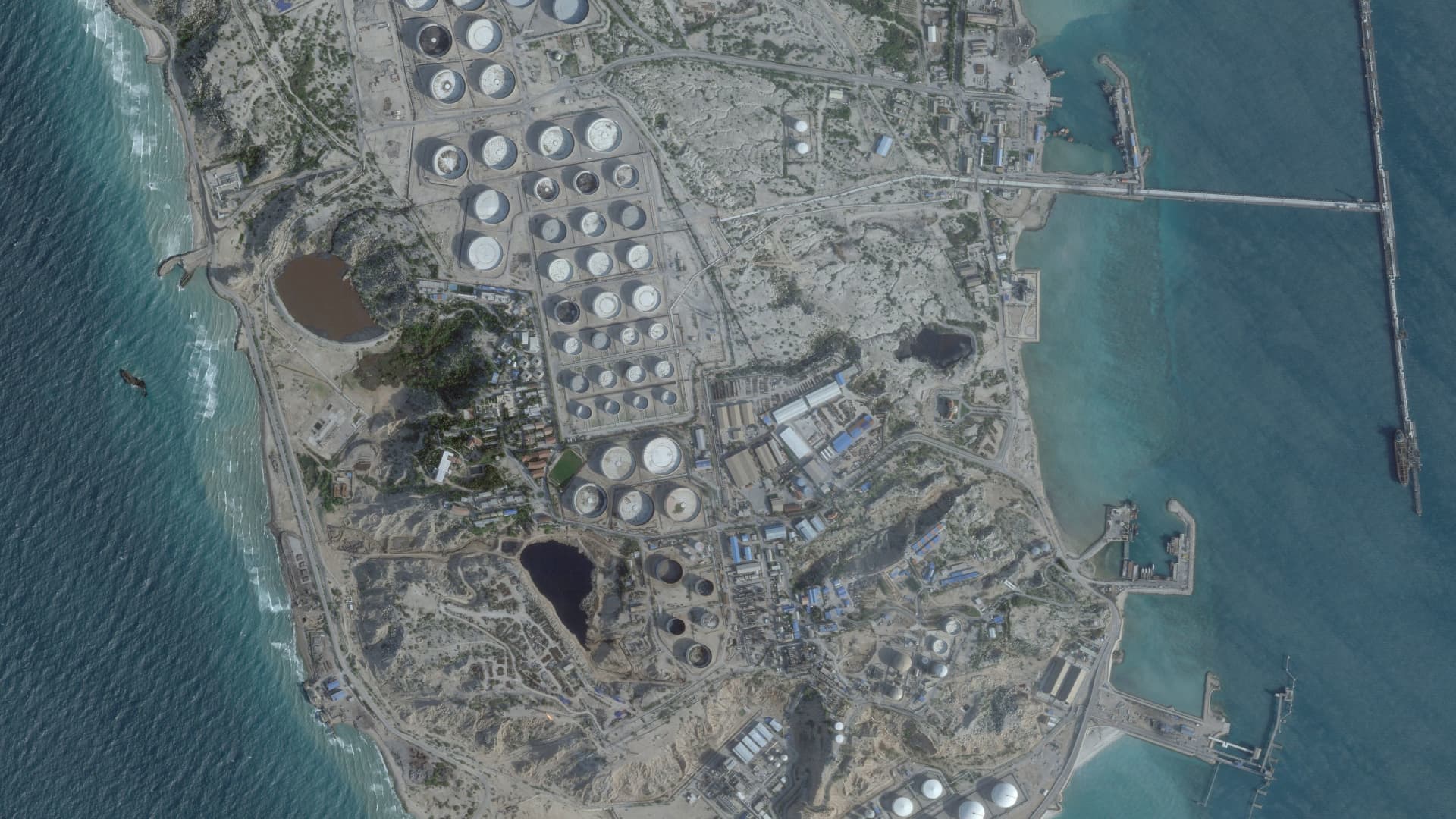

U.S. oil prices topped $100 a barrel Sunday evening as the Trump administration considered a military strike on OPEC member Iran’s main oil export facility on Kharg Island.
US crude oil Oil prices rose 2.64% to $101.32 a barrel by 6:15 p.m. ET. brent The international benchmark price rose 2.94% to $106.17 per barrel.
President Donald Trump ordered an attack on Iranian military facilities on Kharg Island on Friday. President Trump said the attack left oil infrastructure unharmed. But he warned that if Iran continued to attack oil tankers in the vital Strait of Hormuz, the United States would consider attacking oil facilities on the island.
The White House is expected to announce as early as this week that several countries have agreed to help escort oil tankers through the Straits, U.S. officials told The Wall Street Journal. But discussions are still underway on whether such an operation would begin before or after the war ends, officials told the Journal.
U.S. Ambassador to the United Nations Mike Walz reiterated that President Trump had threatened to attack the island’s oil infrastructure. According to JPMorgan, about 90% of Iranian oil exports come from Iran. Iran produced about 3.2 million barrels per day in February, according to OPEC data.
“So far, he has only intentionally attacked military infrastructure,” Walz told CNN in an interview Sunday. “And if he wants to shut down energy infrastructure, I certainly think he’ll keep that option.”
Natasha Kaneva, head of global product strategy at JPMorgan, said in a note to clients on Friday that the US attack on Kharg Island and President Trump’s threat to damage Iran’s oil infrastructure signal a significant escalation of the war.
Kaneva said a direct attack on Iran’s export terminal on the island would immediately halt most of its 1.5 million barrels per day of crude oil exports. This would likely trigger “severe retaliation” by Iran “against the Strait of Hormuz or regional energy infrastructure,” he said.

Iranian attacks on oil tankers in the Persian Gulf have already essentially halted traffic in the strait, the most important trade route for global oil markets. Before the war, about 20% of the world’s oil supply passed through this narrow waterway.
The closure of the strait connecting the Gulf and world markets caused the largest oil supply disruption in history. Oil prices have risen more than 40% since the US and Israel attacked Iran three weeks ago. Brent closed above $100 last week for the first time in four years.
Prices are rising even as more than 30 countries have decided to release 400 million barrels of oil stockpiled to deal with supply disruptions. This is the largest such act in history. The United States plans to release 172 million barrels from the Strategic Petroleum Reserve as part of this effort.
The Paris-based International Energy Agency, which is coordinating the effort, said Sunday that Asian countries would immediately begin receiving emergency oil supplies. Countries in the Americas and Europe will begin releasing stockpiles by the end of March.
U.S. Energy Secretary Chris Wright said Sunday there is no guarantee that oil prices will fall in the coming weeks.
“There are no guarantees in war,” Wright said in an interview with ABC News. “I can guarantee you that without this military operation that exposed the Iranian regime’s teeth, the situation would have deteriorated dramatically.”
