

U.S. Ambassador to the United Nations Mike Walz attends a meeting of the United Nations Security Council at United Nations Headquarters in New York City, February 28, 2026, after the United States and Israel launched an attack on Iran.
Heather Khalifa | Reuters
U.S. Ambassador to the United Nations Mike Walz said Sunday that President Donald Trump is considering an oil infrastructure strike on Kharg Island, a key hub for Iranian oil exports.
“President Trump is not going to take any options off the table,” Walz said on CNN’s “State of the Union.”
Kharg Island has attracted global attention as it is considered one of Iran’s most sensitive economic targets. The terminal accounts for about 90% of the country’s crude oil exports and has a loading capacity of about 7 million barrels per day.
President Trump said Friday he had directed U.S. Central Command to bomb military targets on Kharg Island for the first time, but left oil infrastructure intact. President Trump has repeatedly called on allies to send warships to help the US secure the Strait of Hormuz, while also threatening further attacks on Iran’s oil export hubs.
“So far he has intentionally only attacked military infrastructure,” Walz said on CNN. “And if he wants to shut down energy infrastructure, I certainly think he’ll keep that option.”
Separately, Iranian Foreign Minister Abbas Araghchi said on social media that his country was “ready to form a committee with regional countries to investigate the attacked targets” on Kharg Island.
“Our attacks target only U.S. military bases and interests in the region,” he wrote.
“We have so far not targeted civilian areas or residential areas in regional countries,” Araghchi said in a Sunday Telegram post, adding that “occupying Kharg Island would be a bigger mistake than attacking it.”
President Trump calls for help securing the Strait of Hormuz
The Trump administration may soon announce that a coalition of nations has agreed to work together to escort ships passing through the Strait of Hormuz, The Wall Street Journal reported Sunday, citing U.S. officials. However, it is unclear whether such operations will be launched during the war or after the war.
Still, many countries have responded lukewarmly to President Trump’s repeated calls for other countries to send warships to the Gulf to help the U.S. secure the straits.
“I hope that China, France, Japan, South Korea, the United Kingdom, and others affected by this artificial constraint will send ships to this region,” the president wrote in a post on Truth Social on Saturday. In another post later in the day, President Trump called on countries that depend on the Straits for energy supplies to support U.S. and Israeli military operations in the region.
South Korea’s Ministry of Foreign Affairs said in a statement on Sunday that it “takes note” of the president’s comments and will “coordinate closely and carefully consider” the situation. The Korea International Trade Association said it sources about 70% of its crude oil and 20% of its liquefied natural gas from the Middle East.
German Foreign Minister Johann Vardepoel indicated on ARD TV on Sunday that his country would not take part in the Strait of Hormuz mission for the time being.
“Are we going to be active participants in this conflict anytime soon? No,” he said, adding: “We can ensure the security of the Strait of Hormuz… only with a negotiated solution.”
Britain responded that it was “intensively” considering ways to ensure the security of the Channel. “We are in discussions with our allies,” British Energy Secretary Ed Miliband told Sky News when asked if Britain was considering sending minesweepers or mine-sweeping drones into strategic waterways to help normalize shipping.
Mr Miliband told the BBC: “All options are being considered to help reopen the Channel.” He added: “We do not want a nuclear Iran, but ending this conflict is the best and surest way to reopen the strait.”
There is speculation in Japan that President Trump will request US allies to send warships when he meets with Prime Minister Sanae Takaichi at the White House on Thursday.
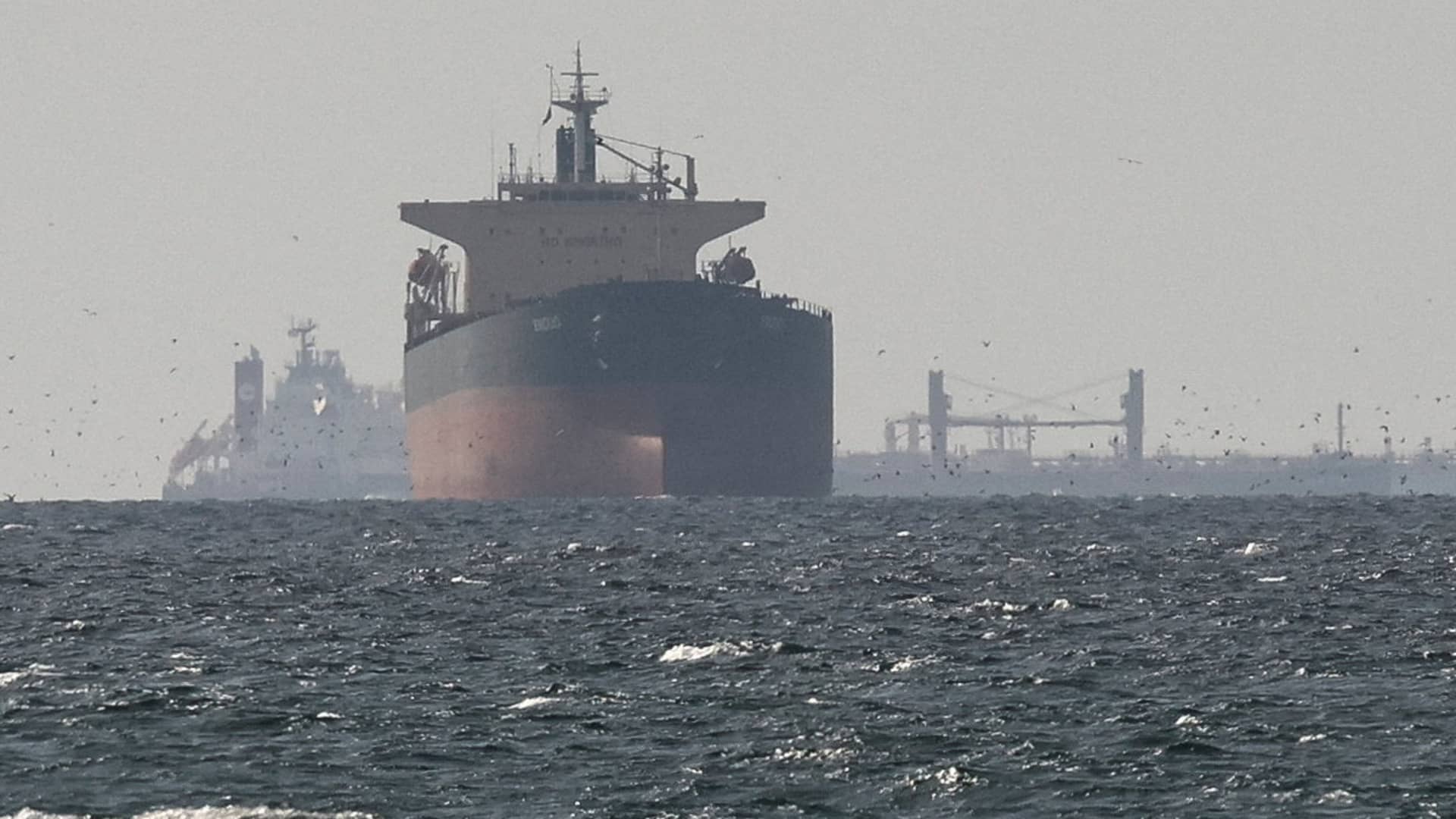
A tanker sails through the Gulf near the Strait of Hormuz during the conflict between the United States, Israel, and Iran, March 11, 2026, in the United Arab Emirates. Viewed from northern Ras Al Khaimah, near the border with Oman’s Musandam Territory.
Stringer | Reuters
Revolutionary Guards vow to end ‘child-killer’ Prime Minister Netanyahu
The Iranian government vowed on Sunday to kill Israeli Prime Minister Benjamin Netanyahu, as the US and Israel’s war against Iran continues to threaten oil supplies in the Gulf.
In a post on X, Iran’s IRNA news agency referred to the country’s Islamic Revolutionary Guard Corps, saying, “The Revolutionary Guards vow to track down and kill the ‘baby killer’ Prime Minister Netanyahu if he is still alive.” Rumors that the Israeli leader had died spread over the weekend, and his office issued a statement calling the reports “false.”
In response, Israel targeted key members of Iran’s leadership over the weekend.
The Israel Defense Forces announced that it had “eliminated” two senior Iranian intelligence officials from the Khatam al-Anbiya emergency command.
Late Saturday, the IDF announced in a post on X that it had attacked the Iranian Space Agency’s main research center and an air defense system production plant.
Iran continued to retaliate against targets around the region. Israel’s emergency services reported a “recent missile barrage” fired into central Israel, but said there were no known injuries.
Oil prices may continue to rise
The war effectively cut off energy supplies through the narrow Strait of Hormuz. About 20% of the world’s oil and gas typically passes through maritime corridors.
On Friday, Brent crude oil futures ended above $100 per barrel for the second day in a row, with the global oil benchmark rising more than 40% since the Iran war began.
As the Iran war enters its third week, oil prices could extend their gains on Monday, but the Trump administration continued to play down the price spike as a short-term problem.
“I think this conflict will definitely end within a few weeks, but it could end sooner,” U.S. Energy Secretary Chris Wright told ABC’s “This Week” on Sunday. “However, we expect the conflict to end in the coming weeks, after which supply will recover and prices will fall.”
Wright falsely claimed in a post on X that the U.S. Navy had successfully escorted an oil tanker through the Straits on Tuesday, causing confusion and roiling markets.

Brent crude futures and U.S. crude oil futures have already soared, spooking global markets. Both contracts have soared more than 40% so far this month, their highest level since 2022, after U.S. and Israeli attacks on Iran nearly halted shipping in the Strait of Hormuz.
Oil loading operations at the United Arab Emirates’ Fujairah port resumed on Sunday after being suspended the previous day due to a fire caused by falling debris from an intercepted drone, according to media reports.
A spokesperson for Abu Dhabi’s state-run oil giant ADNOC, which operates in Fujairah, directed CNBC to the Fujairah Media Office, which did not immediately respond to an emailed request for comment.
Meanwhile, the International Energy Agency said on Sunday that emergency stocks of oil “will soon begin flowing into global markets.”
The IEA also updated last week’s announcement of 400 million barrels to nearly 412 million barrels. The report said member countries in Asia will release their stocks “immediately,” while reserves in Europe and the Americas will be released “from the end of March.”
Major sporting events have been canceled
The effects of the war have not only severely affected air travel, but also major sporting events in the Gulf region due to safety concerns.
F1 announced on Saturday that the Grand Prix races in Bahrain and Saudi Arabia scheduled for April have been canceled.
F1 said in a post to X: “Alternatives have been considered but no alternatives will take place in April.”
And the “Finalissima” match between Spain and Argentina, scheduled to be held in Qatar on March 27, has been cancelled, UEFA announced in a statement on Sunday.
“It is a source of great disappointment for UEFA and the organizers that, due to the circumstances and timing, teams have lost the opportunity to compete for this prestigious award in Qatar,” UEFA said in a statement.
The match between Spain and Argentina was scheduled to be held at Doha’s Lusail Stadium, and soccer fans would have had the chance to watch Lionel Messi and Lamine Yamal face off.
— Reuters and The Associated Press contributed to this report
