

Kandal (Cambodia)
—
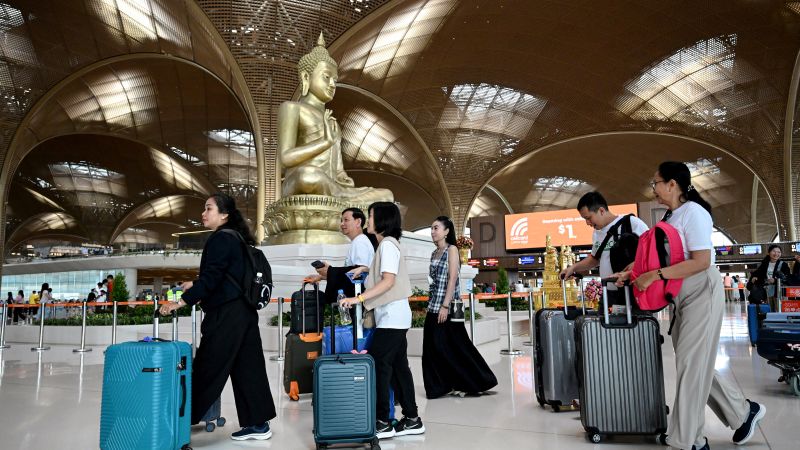
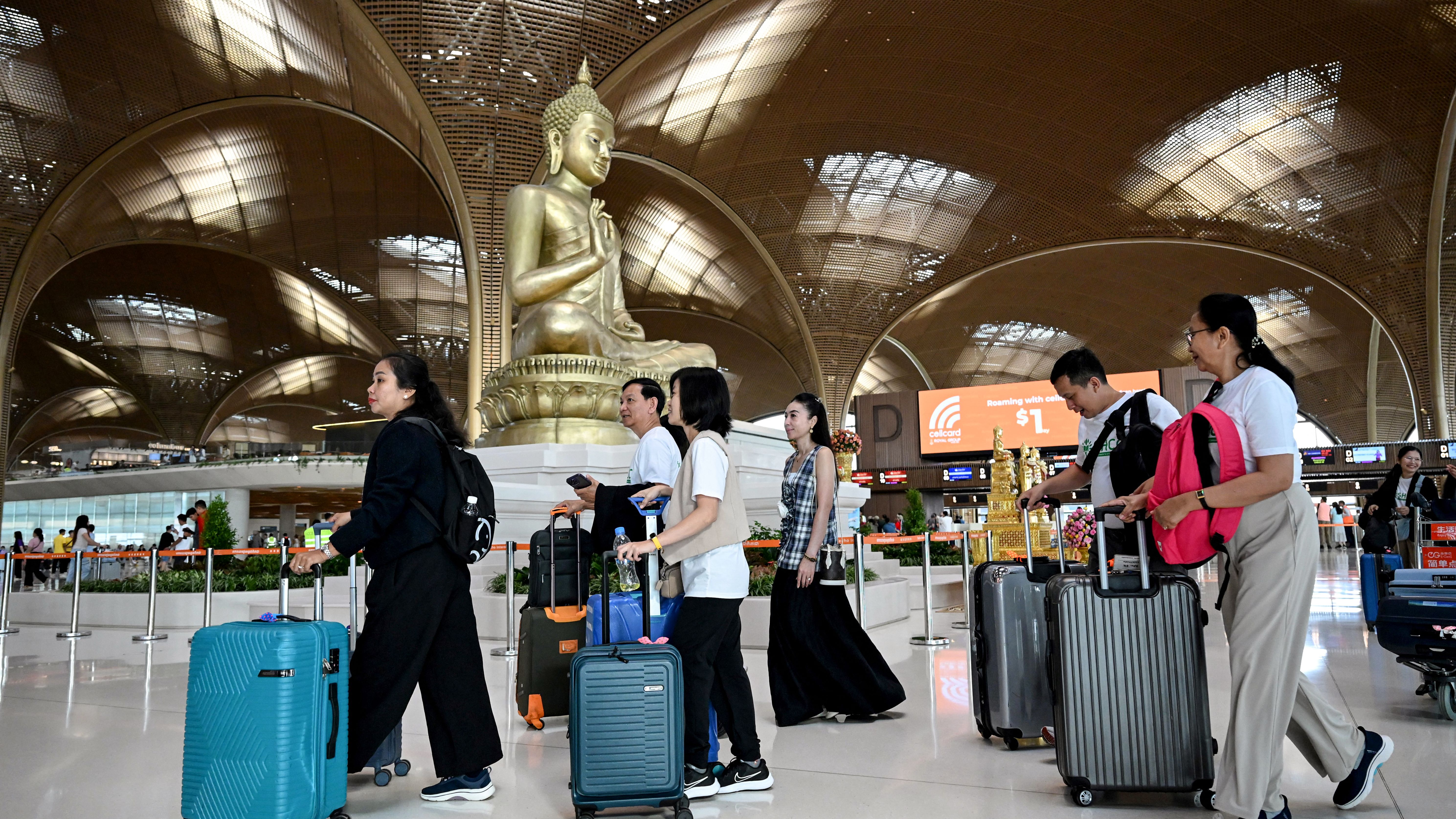
On a humid day in early September, orange-robed monks gathered in the departure hall of Cambodia’s newest airport to chant blessings at the 30-foot-tall golden statue that watches over travelers as they prepare to depart.
Only after the 9-ton Buddha was blessed did planes begin landing at Phnom Penh’s Techo International Airport.
Four days later, Cambodia Airways flight K6 611 from the southern Chinese city of Guangzhou taxied into the area under a celebratory spray of water as traditional Khmer dancers in silk costumes performed in the arrival hall.
On October 20, Cambodian Prime Minister Hun Manet cut the ribbon to officially open the airport.
“This is a new achievement that reflects Cambodia’s long-term development vision,” he told reporters at the scene.
Above all, Hun Manet’s government wants the airport to be filled with tourists. Despite being famous for its UNESCO-listed temples, beaches and affordable prices, Cambodia only receives about 2.5 million foreign tourists a year. This is just a fraction of the 32 million people who visit Thailand and the 18 million who visit Vietnam.
Techo International, a reported $2 billion project located about 29 miles south of Phnom Penh, aims to change that. The 87,000-square-foot facility, named after the Khmer military’s honorary title bestowed on it by the king, is being touted as a gateway to a new era of tourism and investment in Cambodia’s sparsely-traveled south.
Inside view of Cambodia’s newest airport
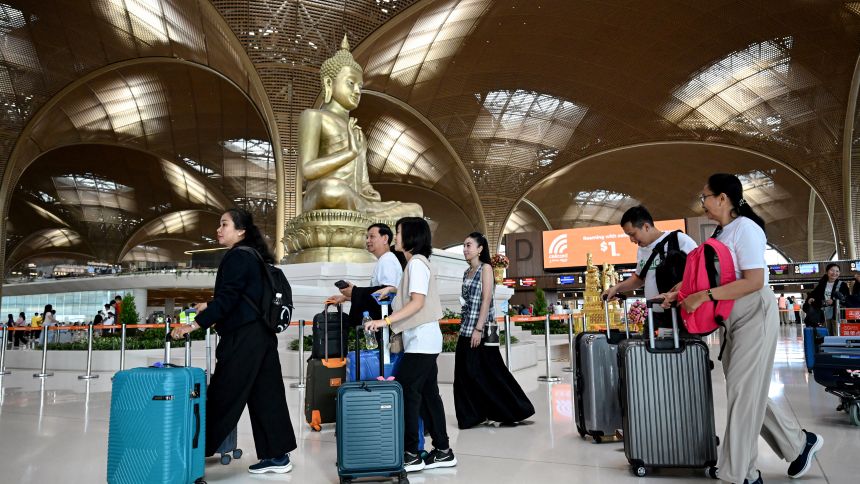
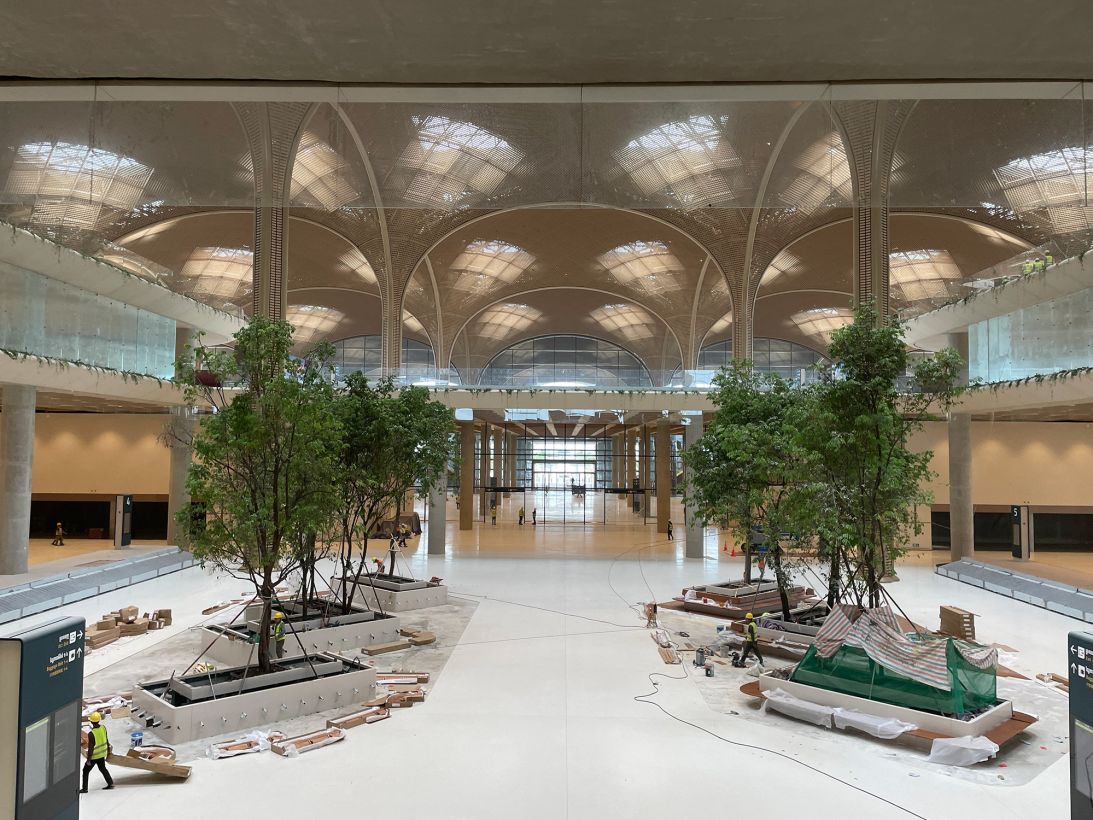
Inside, floor-to-ceiling windows flood natural light onto pale wood floors and tropical greenery. The curvaceous roofline, designed by British firm Foster + Partners, takes inspiration from the ornate headdresses of traditional Apsara dancers.
Nikolai Marsch, senior partner at Foster & Partners, said the design emphasizes clear visibility and minimal disruption. Travelers should not feel trapped in a maze of corridors.
“It’s a very simple binary decision,” he explained. “As you walk up to the gate, you will come to a point where the gate is either to your left or to your right.”
He added that the maximum walking distance of the terminal is only 500 meters from center to edge, or about 550 yards.
Beyond efficiency, the building aims to be unmistakably Cambodian. The roof’s swooping ridge also acts as a rainwater collection point. Local coffee chain Brown Coffee opened early to provide lattes to construction workers.
Charles Van, director of Cambodia Airports Investment Company, the airport’s main financial backer, said he hoped the airport would play a role in attracting tourists. “I believe this airport can attract many visitors and tourists to Cambodia, just like Dubai (or) London,” he told CNN.
The government has positioned Techo International as both a modern infrastructure project and a source of national pride. In addition to facial recognition scanners and environmental authentication, the airport has its own theme song, “Power of Techo International Airport,” which has been shared on Prime Minister Hun Manet’s social media accounts.
“The aviation sector is one of many ways to connect tourists, businesses, political networks and multi-purpose missions,” Hun Manet wrote. “Cambodia is actively expanding and upgrading its international airport to meet growing travel demand and increasing connectivity for travelers.”
The country’s recent airport milestones are more than just pocketbooks. The $1 billion Siem Reap Angkor International Airport (SAI), due to open in 2023, is built under China’s Belt and Road Initiative, which aims to connect more of the world through Chinese-made infrastructure and expand Beijing’s influence.
Both airports form key pillars of Cambodia’s ‘Sacred Tourism 2025-2035’ master plan, a blueprint to develop wellness, agriculture and community tourism. The country wants to diversify its offering beyond Angkor Wat, the ancient Hindu-Buddhist temple complex currently considered its star attraction.
For Cambodia, the new airstrip promises connectivity. There are currently flights connecting Phnom Penh with Bangkok, Beijing, Hanoi, Singapore and Kuala Lumpur, and Turkish Airlines and Etihad Airways plan to add direct flights from Istanbul and Abu Dhabi this fall, making it much easier for visitors from Europe and the Middle East to access Cambodia.
Not everything is rosy in the Cambodia travel forecast. The airport’s major inauguration event came four days after South Korea issued an unusual “code black” travel warning for parts of Cambodia following the death of a South Korean student who was allegedly tortured at a telephone fraud center. International advisories warn travelers of the increased risk of crime in Phnom Penh and the danger from decades-old unexploded ordnance in other areas.
Some in the airline industry are skeptical of Cambodia’s large-scale tourism ambitions.
Shukor Yusof, founder of Endau Analytics, believes that a shiny new airport is not enough to attract tourists.
“Vietnam and Thailand have so much more to offer in terms of culture, food and above all security,” he says. “Aside from Angkor Wat and the Killing Fields, there is no other place that attracts tourists to Cambodia.”
“Cambodia is currently struggling to overcome its reputation as a destination for syndicates involved in fraud, fraud and human trafficking.”
Across Southeast Asia, the Belt and Road initiative is also funding a high-speed rail link between Laos and China, and Chinese investment is also contributing to the construction of a metro system in Vietnam’s capital, Hanoi.
The second phase of Techo’s development will eventually add a rail connection to Phnom Penh’s city centre. For now, most passengers arrive by private car or tuk-tuk along a new highway that winds through rice fields.
Meanwhile, Phnom Penh International Airport (the Cambodian capital’s older airport, which had already been overtaken in size by Siem Reap-Angkor International Airport) is currently closed, and there are still no formal plans for a replacement.
However, under the watchful eye of the Buddha in the departure hall, Notebook International is beginning to breathe one step at a time.
Cambodia built the airport in hopes of redefining its global image. All that remains is for the world to appear.
