

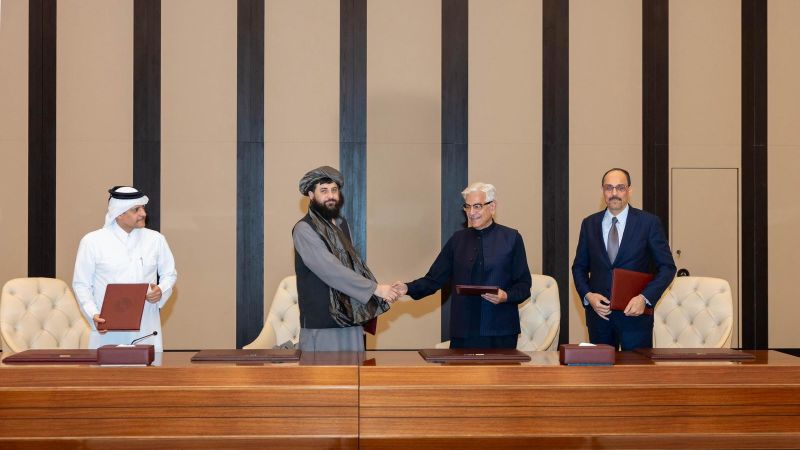
Qatar’s Foreign Ministry announced early Sunday that Pakistan and Afghanistan had agreed to a new immediate ceasefire in talks in Doha, following deadly clashes that continued for more than a week despite an earlier ceasefire.
The two countries agreed in talks mediated by Qatar and Turkey to halt fighting and work toward “lasting peace and stability,” the ministry said.
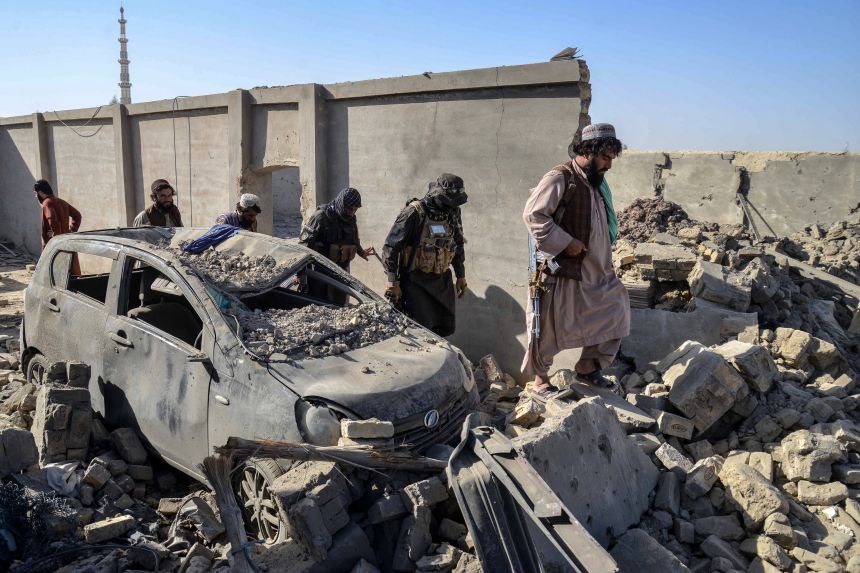
The announcement came after Afghanistan’s Taliban leadership accused Pakistan of carrying out further airstrikes on its territory amid the worst fighting between the two countries since the Taliban returned to power in Kabul in 2021.
Violence between the neighbors erupted on October 10 along the disputed 1,600-mile border after Afghanistan first accused Pakistan of carrying out an airstrike in Kabul and launched retaliatory attacks. Pakistan has long accused Kabul of harboring Pakistani Taliban insurgents (known as TTP), a charge denied by its Afghan namesake.
As part of the ceasefire agreement, Kabul agrees not to “support groups conducting attacks against the government of Pakistan,” while both sides “refrain from targeting each other’s security forces, civilians, and critical infrastructure,” according to a statement Sunday from Taliban spokesman Zabiullah Mujahid.
The two countries agreed to a 48-hour ceasefire on Wednesday after days of clashes that killed dozens of fighters and civilians. The ceasefire was extended on Friday amid a mediation plan, but the violence continued.
Ahead of Saturday’s talks, the Taliban confirmed that a high-level delegation led by Afghanistan’s defense minister had departed for Doha. The report accused the Pakistani military of carrying out airstrikes on civilian areas in the border province of Paktika.
Afghanistan “reserves the right to respond to these violations, but in order to maintain the dignity and integrity of the negotiating team, Afghan forces have been instructed to refrain from any new military operations at this time,” Mujahid said in a statement at the time.
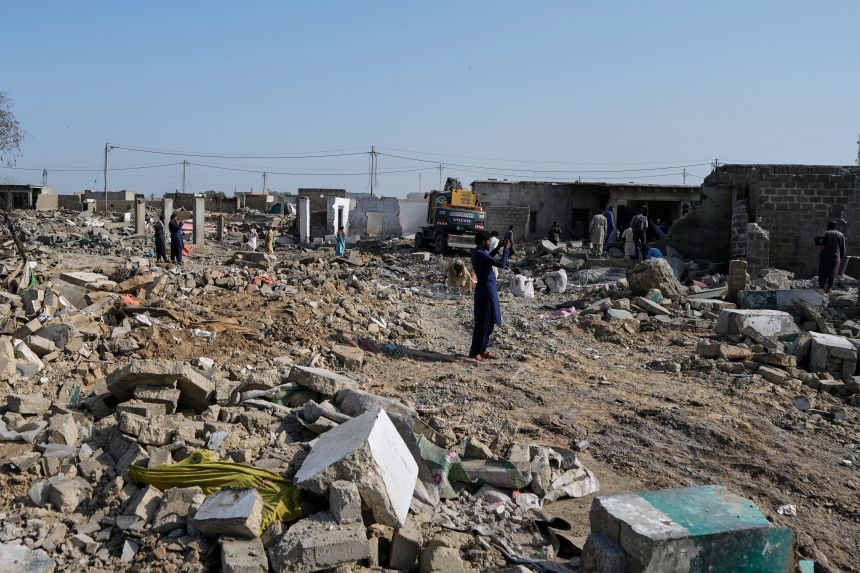
Pakistan’s intelligence minister said security forces had attacked “confirmed” camps of Islamic extremists along the border and denied targeting Afghan civilians.
“All speculations and claims being made regarding targeting civilians are false and intended to generate support for terrorist organizations operating inside Afghanistan,” Attaullah Tarar said in a post on X on Saturday.
Tarar said the insurgents tried to attack Pakistan during the ceasefire period, but Pakistan repelled the attack and more than 100 militants were killed. CNN could not confirm the death toll or targets.
The Afghanistan Cricket Board announced in a post on X Friday that eight people, including three cricketers, were killed in a Pakistani attack in Paktika.
The board said the players were “targeted during a gathering” after returning from a friendly cricket match.
Expressing “deep sadness and sadness”, the board announced Afghanistan’s withdrawal from next month’s tri-nation T20I cricket tournament featuring Pakistan and Sri Lanka.
Fighting between the two countries in recent weeks has marked the deadliest escalation since the US withdrawal from Afghanistan in 2021, potentially ushering in a new period of instability for the once friendly neighbors.
Pakistan was one of the Taliban’s main backers after they were ousted by NATO forces in 2001 and during the subsequent U.S.-backed insurgency against the Afghan government.
However, a recent report by the independent non-profit group Armed Conflict Location and Event Data (ACLED) said the TTP has re-emerged as one of Pakistan’s biggest national security threats, carrying out 600 attacks against Pakistan’s military in the past year.
At least 30 civilians have been killed and hundreds injured in Afghanistan since the latest clashes broke out, the United Nations Assistance Mission in Afghanistan (UNAMA) said on Thursday.
