

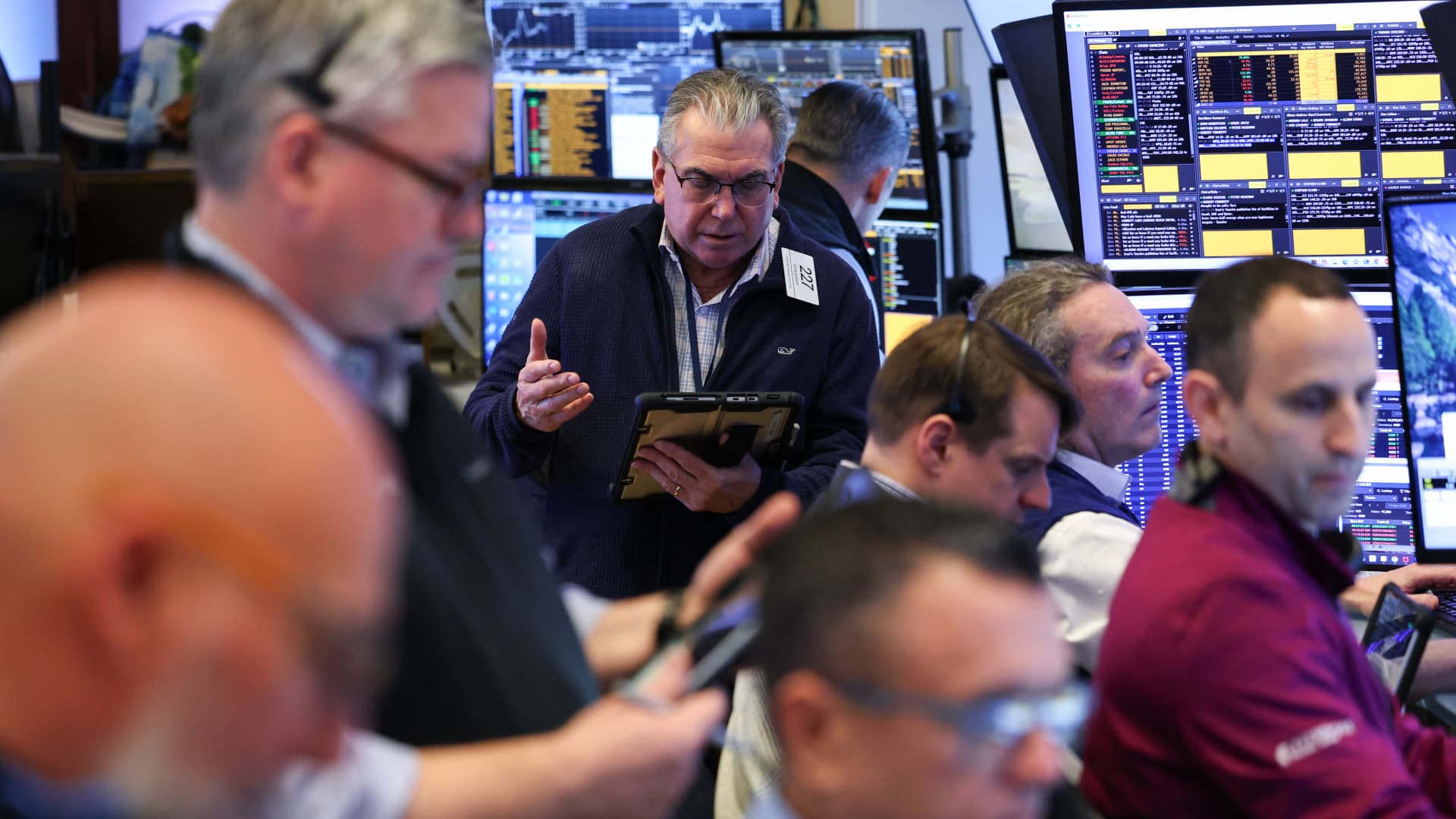
The S&P 500 could soon join other U.S. benchmarks in a correction as the Iran war stretches into its fifth week. As hopes for a quick resolution to the Middle East conflict have turned to anxiety, stock prices have been deteriorating rapidly, with all major stock averages on pace to post ugly monthly losses. This week, the Nasdaq Composite Index fell into correction territory, and the Dow Jones Industrial Average quickly joined the tech-heavy benchmarks. The S&P 500 is only 9% off its all-time high, so it doesn’t look like it’s far behind. A correction is defined as a slide of more than 10% and less than 20% from the recent peak. The technical setup is also a concern, given that the S&P 500 Index’s recent move below its 200-day moving average suggests more downside to come. At the very least, it means more volatility. According to analysis by Cormark Capital Markets, the Vix index averages 17 points above 200-day support and 26 points below that support. Investors have been hoping all month that a quick resolution to the Iran war would mean a sustained bull run in stocks, given that strong earnings growth and easy fiscal policy are (and are) supporting a strong recovery later this year. But as the conflict begins to have real-world effects, the longer the Strait of Hormuz remains closed, the more uneasy it becomes. “I think if you can tell me what’s going to happen in the Middle East, you can tell me what’s going to happen in the market,” said Thomas Brown, portfolio manager at Keeley Gabelli Funds. The investment environment is beginning to reflect these changing expectations. U.S. Treasury yields are rising as inflation expectations rise, with the 10-year yield above 4.4%. Federal funds futures pricing is starting to indicate that rates are expected to rise later this year, rather than cut. Oil remains above $100 a barrel, and many forecasters doubt it will fall anytime soon. For a while, it looked as if investors could count on a so-called “Trump Always Chicken Out” (TACO) trade in which stocks would rebound significantly after President Donald Trump backed away from his initial threat. The acronym became popular last year after President Trump eased the severity of his initial tariff announcements. Investors now appear to be bracing for a prolonged conflict, given that Iranian officials have shown no intention of negotiating with the United States, even after President Trump signaled a willingness to negotiate an end to the war. Additionally, the Wall Street Journal reported, citing people familiar with the matter, that the United States appears to be increasing its military presence in the Middle East, with the Pentagon sending an additional 10,000 troops. More strategists are turning bearish on the stock market as investors become complacent in the face of sharp downside risks. Citigroup strategists announced this week that they were reducing their exposure to U.S. stocks, warning that “incentives for both Iran and Israel will not necessarily lead to an early end.” Next week’s nonfarm employment report for March will show whether the U.S. labor market remains resilient or is beginning to deteriorate rapidly. Any strength could reassure investors worried about weakening growth prospects. Employment data is released on Good Friday, but the stock market is closed for the holiday and does not react until the following Monday. Economists polled by FactSet expect the economy to grow by 57,000 jobs in March, far outpacing the previous month’s 92,000 job loss. The unemployment rate is expected to remain at 4.4%. There is some good news, at least seasonally. April marks the end of the best six months for the stock market, according to the Stock Traders Almanac. This is typically the second-best month for the Dow Jones Industrial Average, which has averaged an average annual gain of 1.8% since 1950. Week Ahead Calendar All Time (ET). Monday, March 30th Tuesday, March 31st 9am FHFA Home Price Index (January) 9:45am Chicago PMI (March) 10am Consumer Confidence Index (March) 10am JOLTS Jobs (February) Revenue: Nike, McCormick & Company Wednesday, April 1st 8:15am ADP Employment Survey (March) 8:30am Retail Sales (February) 9:45am S&P Global PMI Manufacturing Final (March) 10am Business Inventories (January) 10am ISM Manufacturing (March) Earnings: Conagra Brands Thursday, April 2nd 8:30am First Claims (03/28) Friday, April 3rd Market Closed for Good Friday 8:30am March Employment Report 9:45am S&P Global PMI Service Final (March) 10:00 AM ISM Service PMI (March)
