

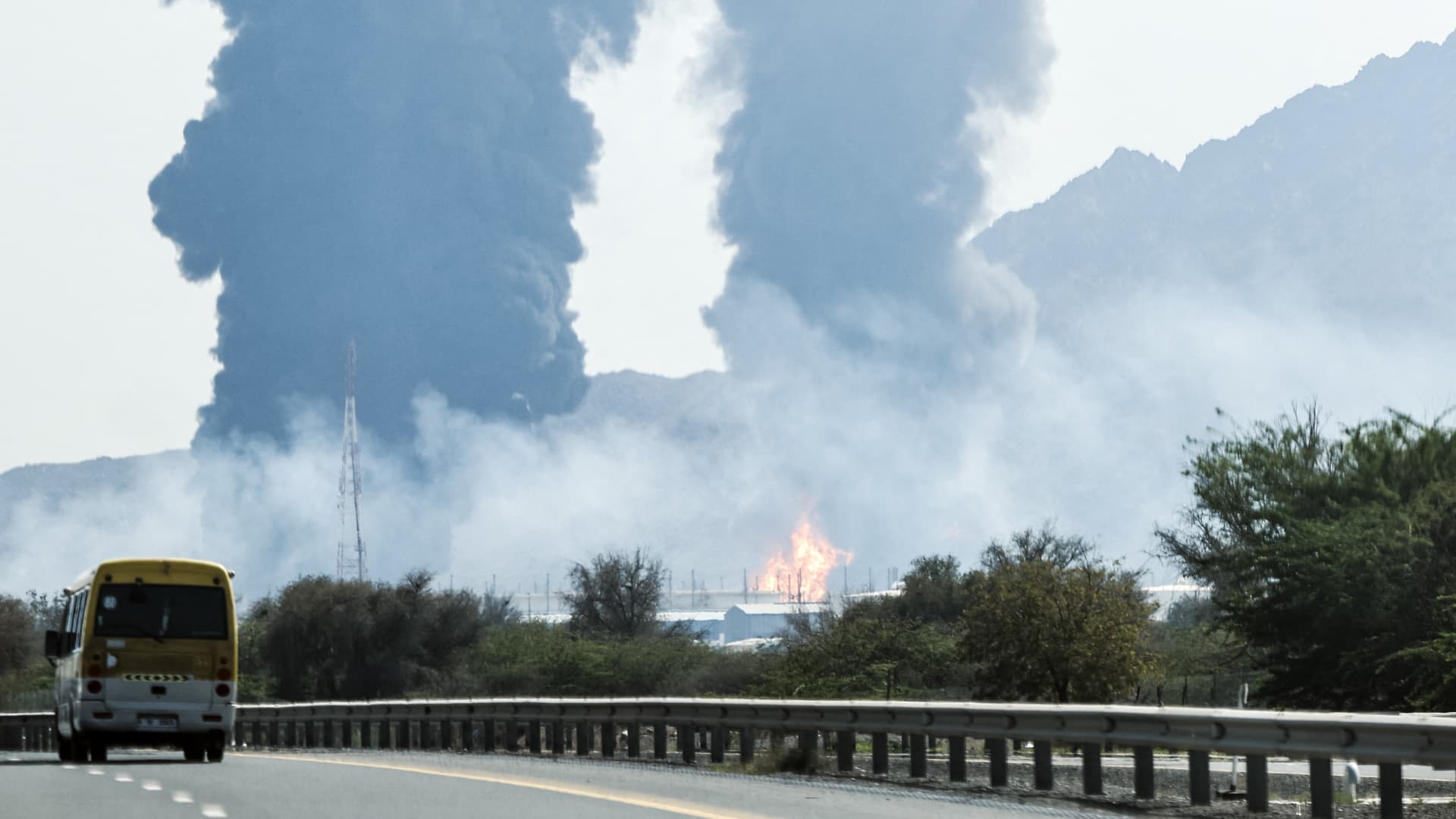
Smoke and flames rise from an energy facility in the Gulf emirate of Fujairah on March 14, 2026 (Photo by AFP, Getty Images)
– | AFP | Getty Images
Oil loading operations at the UAE port of Fujairah have resumed following a drone attack and fire, according to media reports on Sunday.
A fire at a major oil supply hub on Saturday led to the suspension of some operations, reports said. Reuters and Bloomberg reported on Sunday that operations had resumed, citing anonymous industry sources and people familiar with the situation.
A spokesperson for Abu Dhabi’s state oil giant ADNOC, which operates in Fujairah, directed CNBC to the Fujairah Media Office, which did not immediately respond to CNBC’s email seeking comment.
Iran on Saturday threatened to attack infrastructure in the neighboring United Arab Emirates and called for residents to be evacuated from three major ports that Tehran now claims are “legitimate targets” because the United States has used them to attack Iran.
Iran’s official judicial news agency Mizan claimed, without providing evidence, that US troops were stationed in the civilian ports of Jebel Ali, Khalifa and Fujairah in the United Arab Emirates. The news agency called on residents in and around these ports to evacuate immediately, saying these facilities “could be targeted within hours.”
On Friday, US President Donald Trump announced that he had directed US Central Command to conduct its first bombing campaign against military targets on Iran’s Kharg Island.
Kharg Island has attracted global attention as it is considered one of Iran’s most sensitive economic targets. The terminal accounts for about 90% of the country’s crude oil exports and has a loading capacity of about 7 million barrels per day.
Analysts say attacking or occupying the island would require a ground force operation, something the United States appears reluctant to do. An attack could also prompt a sustained rise in already high oil prices.
On Friday, Brent crude oil futures ended above $100 per barrel for the second day in a row, with the global oil benchmark rising more than 40% since the Iran war began.
