

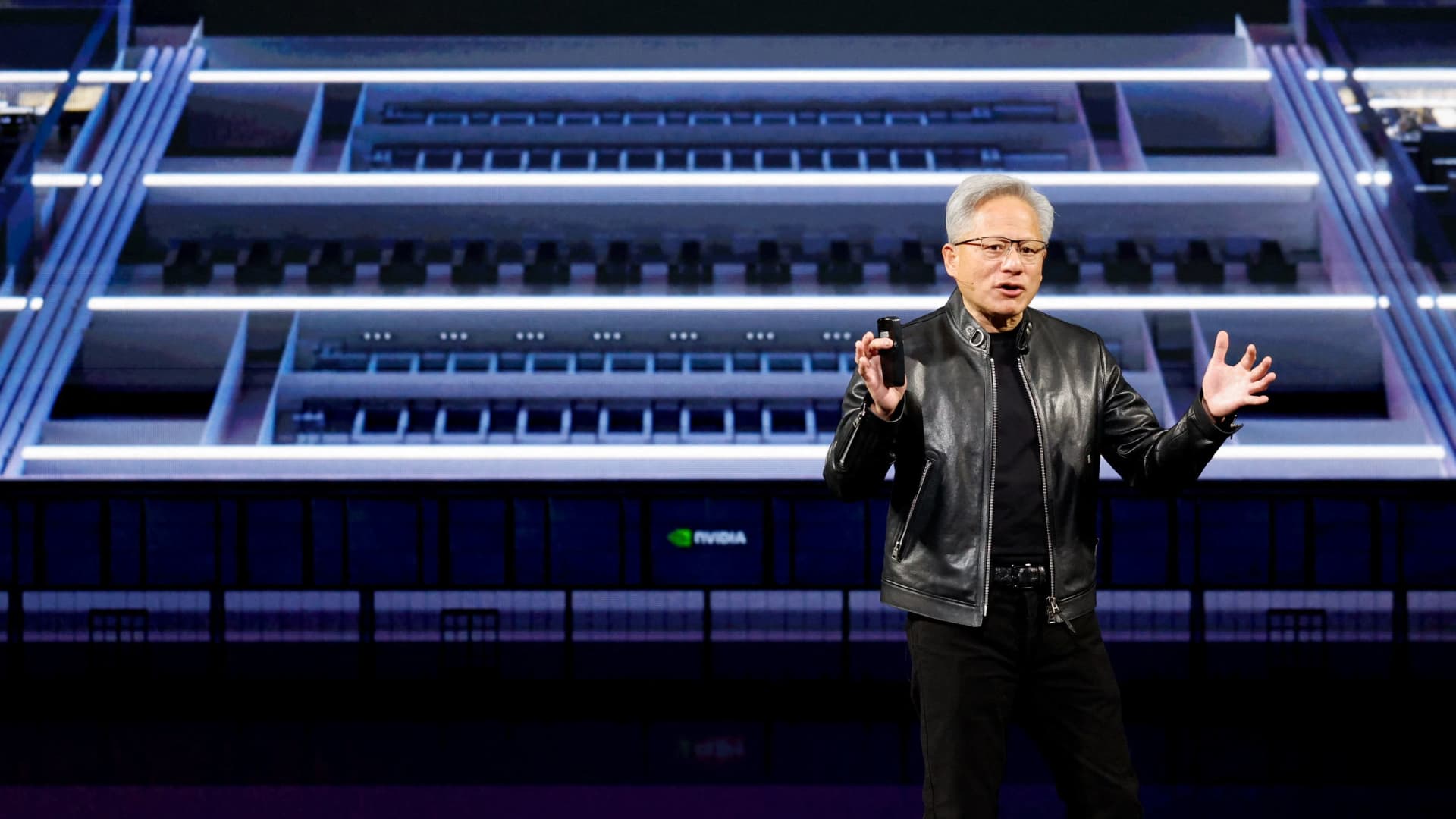

After significant delays in sales to the world’s second-largest economy, semiconductor manufacturers Nvidia CEO Jensen Huang said on Tuesday that the company is preparing to offer H200 processors to some customers in China.
“The purchase order has been received and we are restarting production,” Huang told reporters at the company’s GTC conference in San Jose, California. “This is new news for everyone, and the situation is different than it was two or three weeks ago, but that’s where we are today… and our supply chain is revitalized.”
Huang told CNBC that the company currently has permission from both parties.
China once accounted for at least a fifth of Nvidia’s data center revenue, but the company has been locked out of China since the Trump administration told it in April that it needed a license to export chips to the country and a handful of other countries. The company announced that it would incur a $5.5 billion bill due to export restrictions.
Previous export restrictions forced Nvidia to develop a lower-performance chip called “H20” for the Chinese market. President Donald Trump initially halted those sales, but reversed course in December and allowed Nvidia to ship its more advanced H200 chips to China on the condition that the U.S. get 25% of sales.
But as of last month, there was still virtually no movement in this regard.
After the company’s quarterly earnings report on Feb. 25, Chief Financial Officer Colette Kress told analysts that “a small number of H200 products” had been approved by the U.S. government for sale to China, but “we are not yet profitable.”
The delay was linked to reports of security surveillance in both countries, despite Huang’s lobbying efforts in Washington and a visit to China earlier this year.
Despite no sales to China, NVIDIA reported a 73% revenue increase in its latest quarter, marking the 11th consecutive quarter of growth of more than 55%.
Nvidia said it expects growth of about 77% for the quarter and its guidance assumes no data center revenue from China.
U.S. licensing requirements remain burdensome, including caps on shipment volumes, mandatory third-party testing, and reduced sales to the government.
WATCH: Nvidia sets $1 trillion revenue goal for Blackwell and Vera Rubin in 2027

