

Paris
—
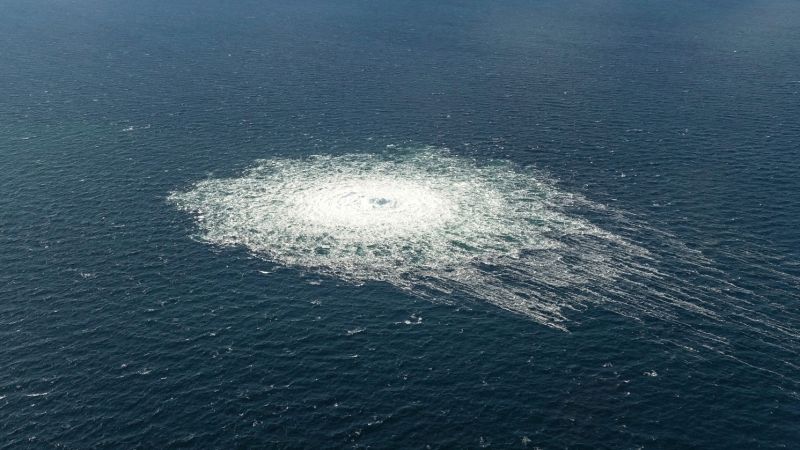
It was a night in late September when a muffled blast and a stream of foam cracked the surface of the Baltic Sea. Months after Moscow’s all-out invasion of Ukraine, explosions destroyed two Nord Stream gas pipelines, Russia’s gas highway to Europe. Years later, the shockwaves of that night still ripple across the continent.
A highly controversial attack on the pipeline in 2022 sparked an international investigation, immediately placing suspicion on Russia and forcing even the United States to deny involvement.
Conspiracy surrounding the explosion continues to swirl today as Germany prepares to prosecute suspected Ukrainian saboteurs. And Poland’s efforts to stop the incident, as well as to protect its ally Ukraine, have caused new tensions in Europe.
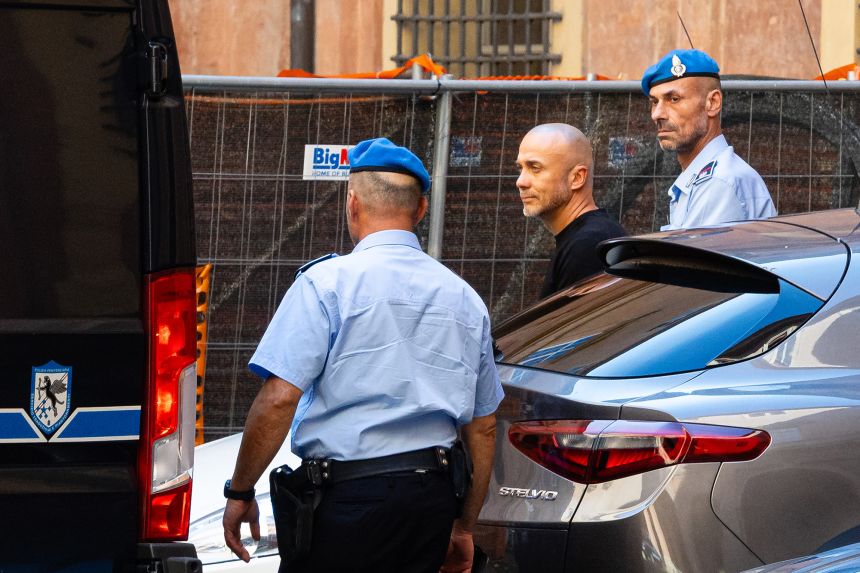
Germany appears determined to take Nord Stream to court and has applied for arrest warrants for two Ukrainian men, Volodymyr Zhuravlov, who is being held in Poland on suspicion of involvement in the explosion, and Serhiy Kuznietsov, who is being held in Italy.
Leaders of other countries have questioned whether criminal proceedings should be brought against those allegedly responsible.
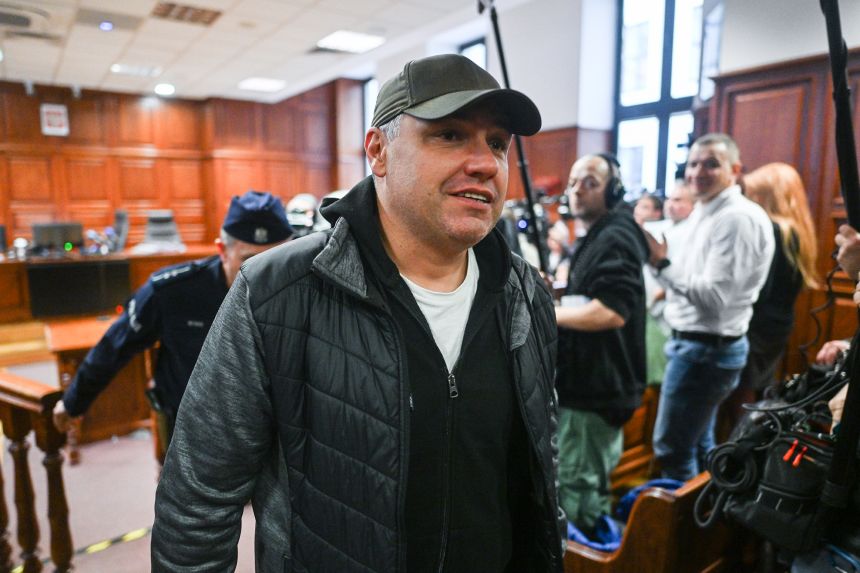
After slow progress in Zhuravlov’s extradition, a Polish court decided in mid-October to release him, severely damaging Berlin’s hopes for a prosecution. In the judges’ eyes, if the Nord Stream explosion was an act of sabotage by Ukraine, it would be a legitimate response to unprovoked aggression.
“If Ukraine is in fact the organizer of this act of aggression, then only Ukraine can be held responsible for what happened,” Judge Dariusz Lubowski said in his verdict blocking Zhuravrov’s extradition to Germany, CNN affiliate TVN24 reported.
According to TVN24, the 49-year-old Ukrainian claims he had nothing to do with the attack and was in Ukraine at the time of the incident.
German prosecutors claim that Zhuravrov, a “trained diver”, was “part of a group that planted explosives on the Nord Stream 1 and Nord Stream 2 gas pipelines near Bornholm in September 2022.” The team allegedly used false identities to rent a yacht and transport themselves and their equipment to the blast site.
Serhiy Kuznietsov, a 49-year-old former Ukrainian military officer and alleged coordinator of the operation, was detained in Italy in late August on a German warrant.
Kuznetsov’s lawyer, Nicola Canestrini, told CNN that the Ukrainian denies any wrongdoing and is currently appealing Italy’s Supreme Court’s decision to extradite him to Germany.
“The problem in Europe, the problem in Ukraine, the problem in Lithuania and Poland is not that Nord Stream 2 was blown up, but that it was built,” Polish Prime Minister Donald Tusk told reporters in early October.
“It is never in Poland’s interests or in the interests of decency and justice to prosecute or extradite this citizen to another country,” he added.
Mr. Tusk’s stance reflects long-standing concerns about pipelines within and outside Europe.
Back in 2007, Poland’s then-defense minister Radek Sikorski slammed the Nord Stream 1 pipeline project, calling it “Mr Putin’s most egregious attempt to divide and damage the EU.”
Europe’s dependence on Russian hydrocarbons has faced opposition from the U.S. government dating back to the days of President George W. Bush. This sentiment has long been bipartisan, with Republican Sen. Ted Cruz telling senators in 2019 that the Nord Stream 2 pipeline “if completed would make Europe even more dependent on Russian energy and more vulnerable to Russian blackmail.”
In Europe, Poland’s stance exposed divisions within Europe.
“Shocking” was how Hungary’s Foreign Minister Péter Szijjarto, one of Russia’s few allies on the continent and who recently received an exemption from the United States to allow it to continue purchasing Russian oil and gas, explained Tusk’s position.
“One thing is clear: we do not want a Europe where the prime minister champions terrorists,” he wrote to X.
For many people in northern Europe, focusing on who blew up Nord Stream prevents them from remembering how it was built in the first place.
Gabrielius Landsbergis, Lithuania’s former foreign minister, told CNN that taking up the case alone “may force us to forget how we got there.” The Polish government’s position “has a lot to do with domestic politics, and the president comes from a very nationalist party.”
Helga Kalm, deputy director of the Estonian Center for International Defense and Security, told CNN. Pursuing prosecutions that could harm Ukraine’s interests “shows that Germany is doing the wrong thing.”
Many post-Soviet European countries, led by Poland, feel they are finally being vindicated after decades of warning against pressure from European powers like Germany to build closer ties with Russia.
Both Denmark and Sweden, whose waters straddle the Nord Stream pipeline, have refused to pursue the explosion, citing lack of jurisdiction.
Still, Germany continued to advance.
“This is a country ruled by law,” Stefan Meister, an Eastern Europe expert at the German Council on Foreign Relations, told CNN.
“I think this is particularly domestic,” he added. He said that, along with right-wing populists, the AfD challenges the credibility of state institutions and allows Germany’s judiciary to toe its line, which is about “the credibility of institutions and institutions and the ruling political elite.”
Germany was the driving force behind the Nord Stream pipeline in Europe.
And it paid dividends. According to German government statistics, in 2016 nearly 30% of Germany’s gas demand was met by Russian suppliers, which delivered gas through the Nord Stream 1 pipeline.
Gerhard Schröder, who served as Chancellor of Germany from 1998 to 2005, aspired to join the board of Russian energy giant Gazprom, and after leaving office, he became chairman of Russian oil giant Rosneft.
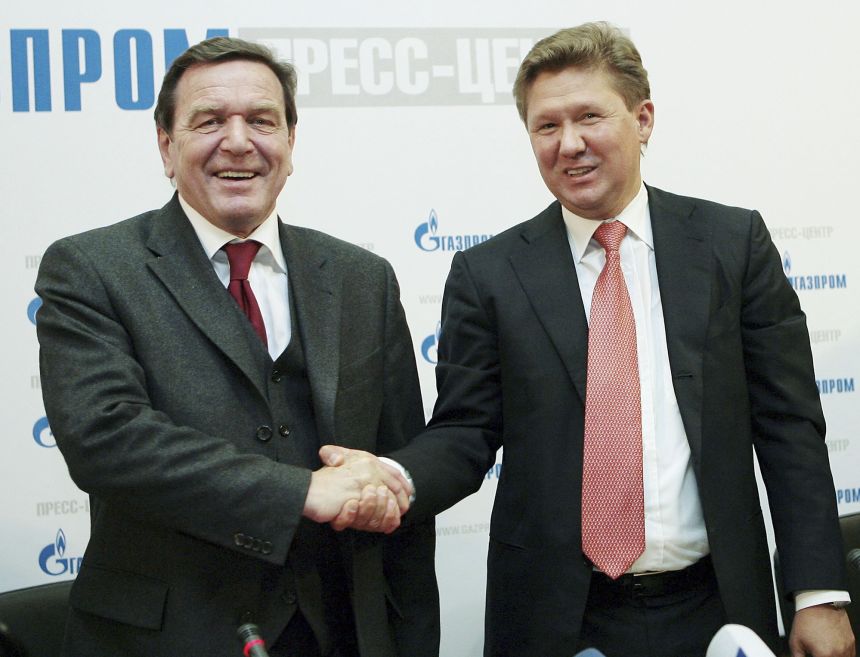
Similarly, the pipeline has become a totem symbolizing Europe’s dependence on cheap Russian hydrocarbons in exchange for principled stands against Moscow’s aggression in Ukraine in 2014 and Georgia in 2008.
Former Chancellor Angela Merkel drew particular criticism for her conciliatory approach to Moscow.
In her recently released memoir, Chancellor Merkel refuted accusations that Germany was dependent on Russian gas, writing: “Especially in the case of Nord Stream 2, even if no gas was ever transported through this pipeline… it was the relic of a failed investment.”
Meister said many politicians today would welcome distancing themselves from the incident, given how entangled many in German politics are with the push to build the Nord Stream pipeline.
“My impression is that they want to clean themselves,” he said.
The fog surrounding the incident will only heighten tensions in Europe at a time when unity against Russia and the United States’ unpredictable allies is paramount. Russia’s efforts to sow division abroad are well-documented, but here the Kremlin may have achieved one of its goals without saying a word.
Landsbergis said there was a risk that Nord Stream “could raise further questions and cause rifts within the alliance.” “We must remember that, especially now that we are no longer at peace.”
Whatever the outcome of Germany’s pursuit of judicial satisfaction over Nord Stream, Russian gas will not flow south as before 2022.
Since Russia’s full-scale invasion of Ukraine, Europe has been fighting to break free from decades of dependence on Russian gas. The loss of Nord Stream has only accelerated that.
According to EU statistics, Russia’s share of the EU’s pipeline gas imports fell from more than 40% in 2021 to around 11% in 2024.
“The appropriate location for Nord Stream 2 is the fragmented ocean floor,” Estonian Foreign Minister Margus Tsakna said in March.
