

Editor’s note: This story contains discussion of suicide, which some readers may find offensive. If you feel you are in crisis, contact the 24-hour Suicide Crisis Lifeline by calling or texting 988.
Noelia Castillo’s story was defined by physical and emotional pain. This overwhelming pain led the young Spaniard to request euthanasia in 2024. On Thursday, at age 25, that request was fulfilled, bringing an end to her difficult life.
“I just want to go away in peace and stop suffering,” Castillo said in an interview with Spanish news channel Antenna 3 a few days before his death.
Her case sparked intense debate in Spain, especially after the interview was broadcast. It was noticeable both among those who supported her decision and those who sent her messages on social media asking her not to choose euthanasia.
In an interview, Castillo explained that her decision was rooted in her turbulent home life after her parents separated when she was 13 years old. Castillo spent time in a supervised care center and was diagnosed with obsessive-compulsive disorder and borderline personality disorder.
She also told the interviewer three episodes of sexual abuse. One was allegedly raped by an ex-partner, another was raped by two men in a nightclub, and the third involved three young men at a bar. She said she did not report any of them. A few days after the second episode, in October 2022, she attempted suicide. She survived, but was left partially paralyzed and confined to a wheelchair.
This was the turning point for her to consider euthanasia.
“Sleeping is very difficult for me, and on top of that, I have pain in my back and legs,” Castillo said. But she also emphasized that the suffering is not just physical. Before seeking euthanasia, “my world was very dark…I had no goals, no goals,” she said.
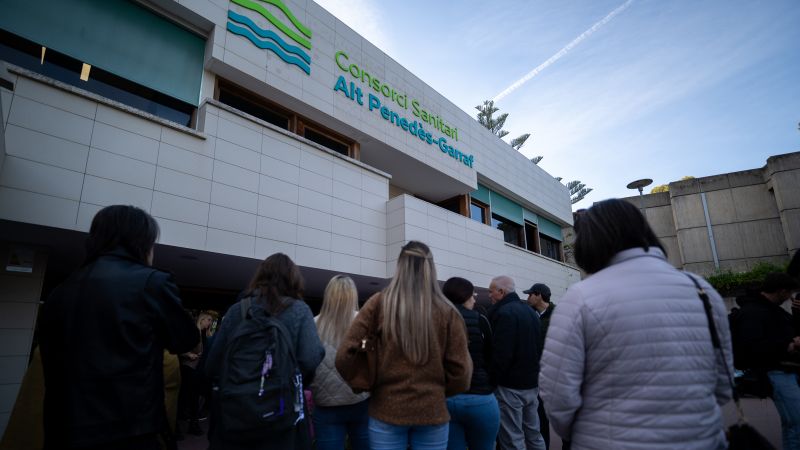
Her euthanasia took place at Sant Pere de Ribes Hospital, where she lived.
Assisted suicide will be legal in Spain from June 2021. For Castillo, applying for assisted suicide was just the beginning of a complicated journey — largely because her family opposed it.
Her request was approved on July 18, 2024 by the Catalan Guarantee Evaluation Board. The committee found that she met all legal requirements because she had an “irreversible clinical condition” that caused her “severe dependence, pain and chronic disabling suffering.” All this hindered her independent living and negatively affected her daily life.
However, in August of the same year, her father, on the advice of the ultra-conservative religious group Christian Lawyers, launched a legal battle to block the proceedings, arguing that she was incapable of making such a decision.
“He didn’t respect my decision and never will,” Castillo said of his father.
Since then, her father has begun a lengthy legal process that has led to a 20-month postponement of Noelia’s euthanasia, which has gone through five judicial levels: the courts of Barcelona, the High Court of Catalonia, the Supreme Court, the Constitutional Court and the European Court of Human Rights.
None of these groups opposed the young woman’s decision. It became clear to everyone that she met the requirements and was capable of deciding to die.
“I understand that he’s a father and he doesn’t want to lose his daughter,” Castillo said in an interview. She added that she felt confused because she did not have a close relationship with him.
“He ignores me. So why does he want to keep me alive? To put me in the hospital?” she said.
The battles Castillo fought ultimately allowed her to carry out her decision.
“Now that I’ve finally done it, I might finally be able to rest,” she told Antena 3 journalists. “I can’t take this family anymore, I can’t take the pain anymore, I can’t wrap my head around everything that’s hurting me.”
Castillo said goodbye to his entire family and asked them to be alone in his final moments.
“I don’t want anyone in the room,” she said. “I don’t want them to see me with my eyes closed.”
