

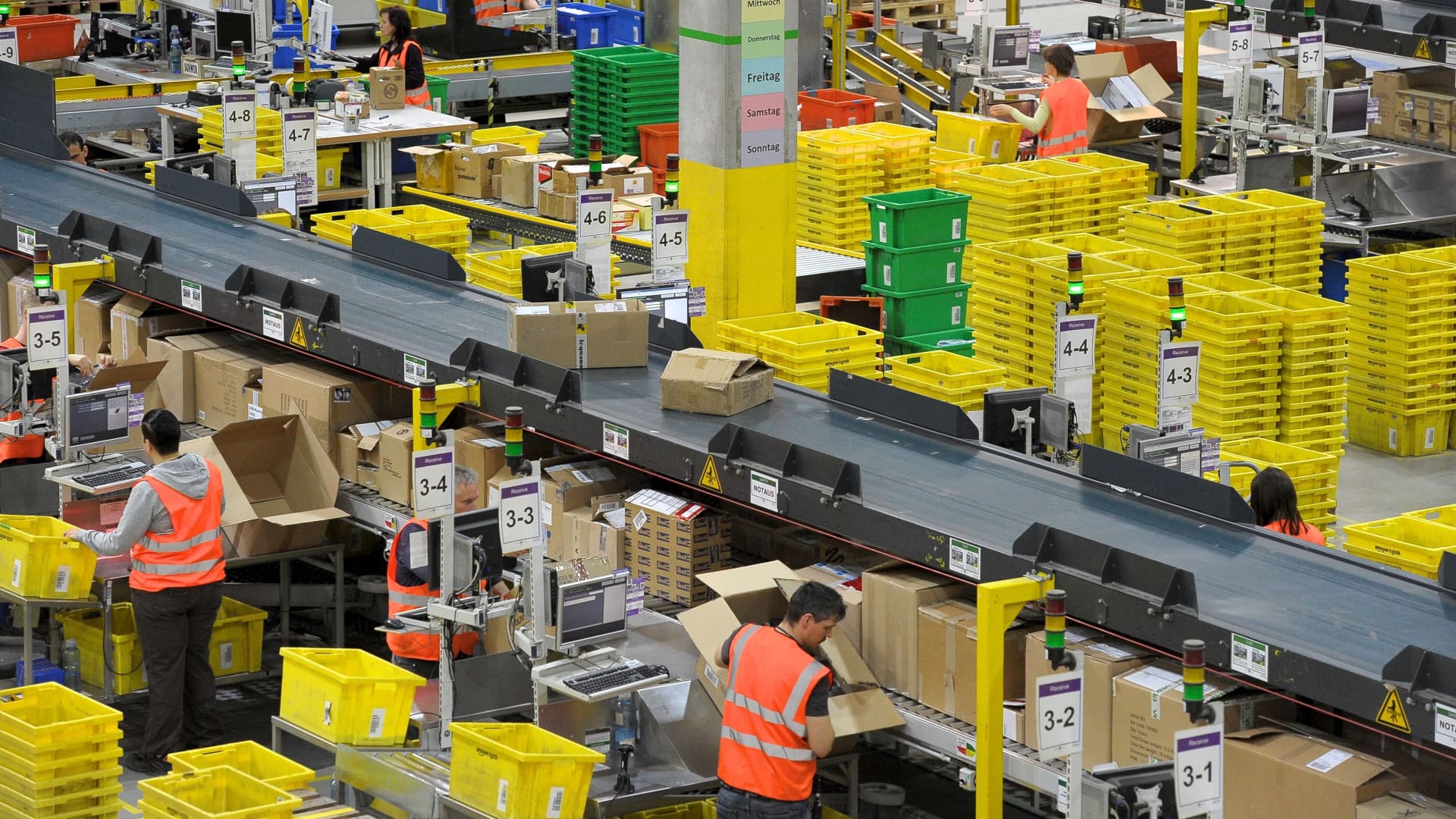
Peter Endig | AFP | Getty Images
New Jersey Attorney General Sues Amazon The company alleged Wednesday that it violated the rights of thousands of pregnant and disabled employees at several of its facilities across the state.
The complaint, filed in Essex County Superior Court by Attorney General Matthew Platkin’s office, alleges Amazon violated state anti-discrimination laws in its handling of requests for accommodations by pregnant and disabled employees.
The state said the lawsuit stems from a years-long investigation by the state’s civil rights division into Amazon’s treatment of workers at warehouses across New Jersey.
According to the complaint, a state investigation shows that since October 2015, Amazon allegedly violated the rights of pregnant and disabled employees by giving them unpaid time off when they requested accommodations, denying them reasonable accommodations, and “unreasonably” delaying responding to their requests.
The company also alleged that Amazon “unlawfully” retaliated against these workers when they asked for conditions, including firing them. After the workers were given accommodations, Amazon allegedly fired some employees for “failing to meet the company’s rigorous productivity requirements.”
“There is no excuse for Amazon’s shameful treatment of pregnant and disabled workers,” Platkin said in a statement. “Amazon’s outrageous practices are causing tremendous harm to pregnant and disabled workers in our state, and they must stop now.”
Amazon spokeswoman Kelly Nantel said in a statement that accusations that the company does not comply with federal and state laws, such as New Jersey’s anti-discrimination law, are “absolutely untrue.”
“Ensuring the health and well-being of our employees is our top priority and we are committed to providing a safe and supportive environment for everyone,” Nantel said.
The company said it approves more than 99% of pregnancy accommodation requests submitted by employees. Amazon also denied automatically placing pregnant employees on leave and claimed it was unfairly denying requests for accommodations.
The complaint asks Amazon to pay unspecified compensatory damages and civil penalties, as well as a court order requiring the company to adjust its policies and comply with five-year monitoring and reporting requirements.
In one of the incidents described in the complaint, the unnamed pregnant employee said she was allowed to take additional breaks and received accommodations that limited her from lifting more than 15 pounds.
The complaint alleges that less than a month after her accommodation was approved, she was fired for “not meeting the packing requirements,” even though her accommodation required fewer packages each shift.
In another case, a pregnant employee’s accommodation application was closed due to missing medical documentation, even though the requested documents were not required. The worker tried to resubmit his request, but was given three warnings for “decreased productivity” and was eventually fired for “non-payment,” according to the complaint.
Amazon’s internal investigation into her case did not confirm that the employee was fired for being pregnant, but the company ultimately reinstated her with back pay, the lawsuit states.

“Amazon’s discriminatory practices and systematic failure to accommodate pregnant workers and workers with disabilities have the effect of displacing these employees from Amazon’s workforce, exactly what the[anti-discrimination laws]were designed to prevent,” the complaint says.
Amazon has come under intense scrutiny in the past for its treatment of pregnant employees and others among its many front-line workers.
The company, the second-largest private employer in the U.S., is facing a lawsuit from warehouse workers who say the company failed to accommodate them after they became pregnant and fired them for failing to meet performance standards, CNET reported.
Last year, the Equal Employment Opportunity Commission launched an investigation into Amazon’s treatment of pregnant workers in its warehouses, with six senators citing “concerning patterns of abuse.”
In 2022, the New York State Department of Human Rights sued Amazon, accusing it of discriminating against pregnant workers and workers with disabilities in its facilities.
Amazon said it does not comment on ongoing litigation.
