

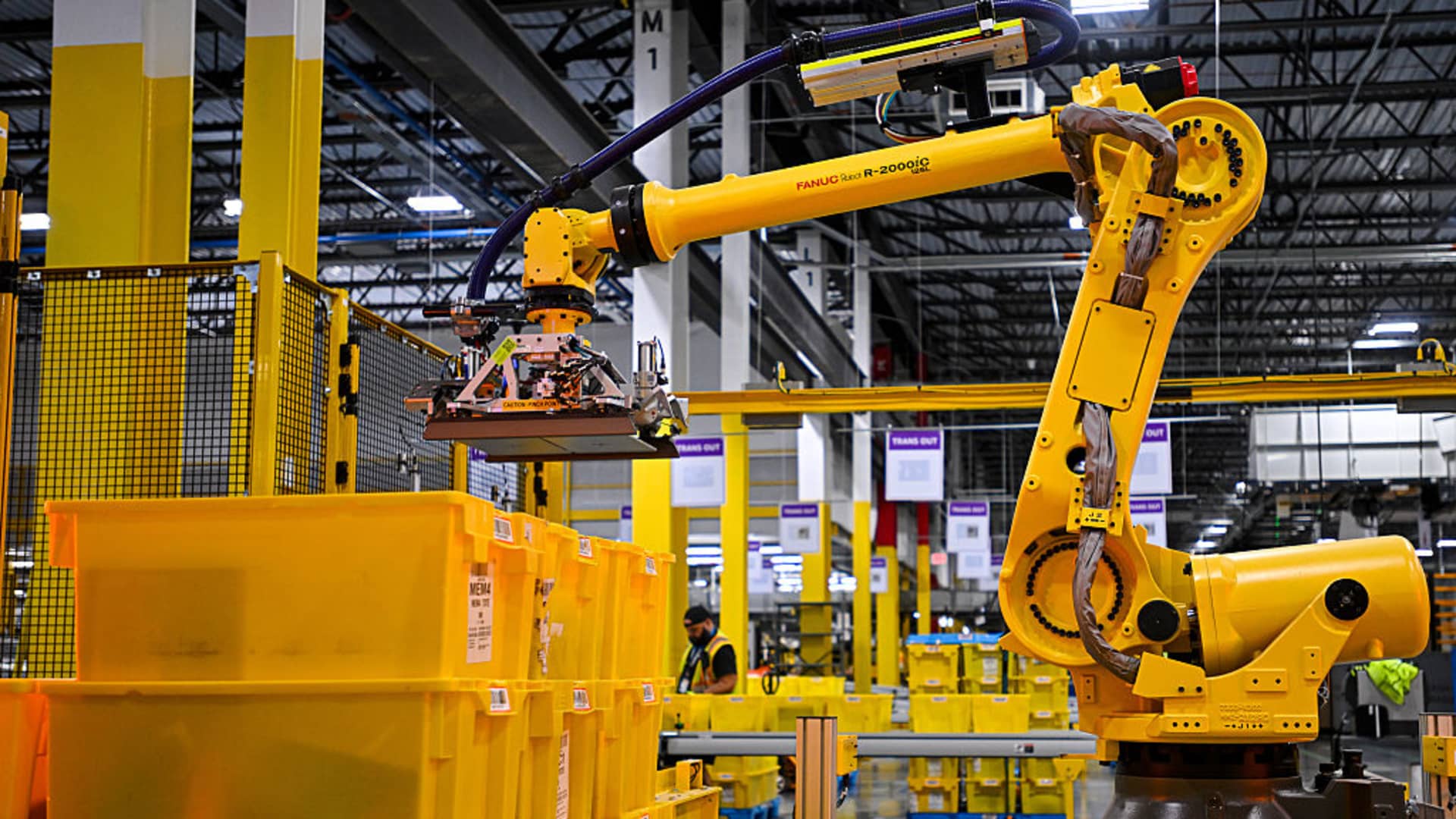
Amazon’s robotics ambitions could lead to billions of dollars in cost savings for the company, according to Morgan Stanley. Amazon plans to replace 600,000 jobs with robots over the next few years and is working toward a goal of eventually automating 75% of its operations, The New York Times reported Monday, citing multiple internal strategy documents. The e-commerce giant plans to add about 40 next-generation robotic warehouses by the end of 2027 and has already started renovating older fulfillment centers, according to the report. These efforts could eliminate thousands of full-time human jobs across Amazon’s warehouses over the next decade, and the money could start flowing in in just a few years. Morgan Stanley analyst Brian Nowak estimated that the transition could increase the company’s annual recurring expenses by $2 billion to $4 billion by 2027. The analyst reiterated his overweight rating and $300 price target on Amazon stock, suggesting the stock could rise 35.1%. Amazon’s stock price has fallen about 0.3% this year, making the megacap tech stock a laggard among the members of the Magnificent Seven. Part of the reason for the slump was Amazon’s weak operating profit outlook for the third quarter. Analysts who remain bullish on the stock are betting on growth in cloud computing service Amazon Web Services, along with retail sales and online advertising. “In the short term, we expect AWS growth to be most important for AMZN stock,” Nowak wrote in a note to clients on Wednesday. “However, we continue to believe that AMZN’s GenAI advances in retail operations through robotic efficiency are undervalued by the market.” AMZN 1Y Mountain Amazon stock performance over the past year. To be sure, Morgan Stanley’s cost-cutting estimates could be a softer part of Amazon’s own far-reaching goals. Nowak’s savings calculations are based on an estimated cost of about $3 to fulfill each Amazon order, and robots could make that process 20% to 40% cheaper. That’s a savings of 60 cents or $1.20 per order. The analyst pointed to comments by Amazon CEO Andy Jassy during Amazon’s Q3 2024 earnings call. At the time, Jassy noted that Amazon’s state-of-the-art robotic warehouse in Shreveport, Louisiana, had reduced fulfillment costs by about 25%. Jassy also said in July that Amazon uses more than 1 million robots across its facilities, which he said are “improving cost efficiencies” and leading to faster delivery times and lower costs for customers. “As an outlook, we currently model company-wide EBIT for AMZN ’27 at approximately $124 billion. That said, (Monday’s) report suggests the actual savings could be even higher,” Nowak said. The Times reports that Amazon’s automation team believes the company could avoid hiring more than 160,000 American workers by 2027, which would save Amazon about 30 cents per item it ships to customers. In this case, a savings of 30 cents per unit would mean savings of approximately $10 billion, Nowak said. “This seems high to us (given that next-generation robotic warehouses may only fill 10% to 20% of units by then). However, it is important to follow up with AMZN and industry experts on these estimates, as they may suggest that AMZN is on pace for even greater robot savings than expected,” Nowak said. Amazon, the nation’s second-largest private employer, on Wednesday introduced a new robotic system called Blue Jay that can perform multiple tasks at once in its warehouses. The company says the system has so far been able to retrieve, store and consolidate “approximately 75% of the items we store on our sites.”
