

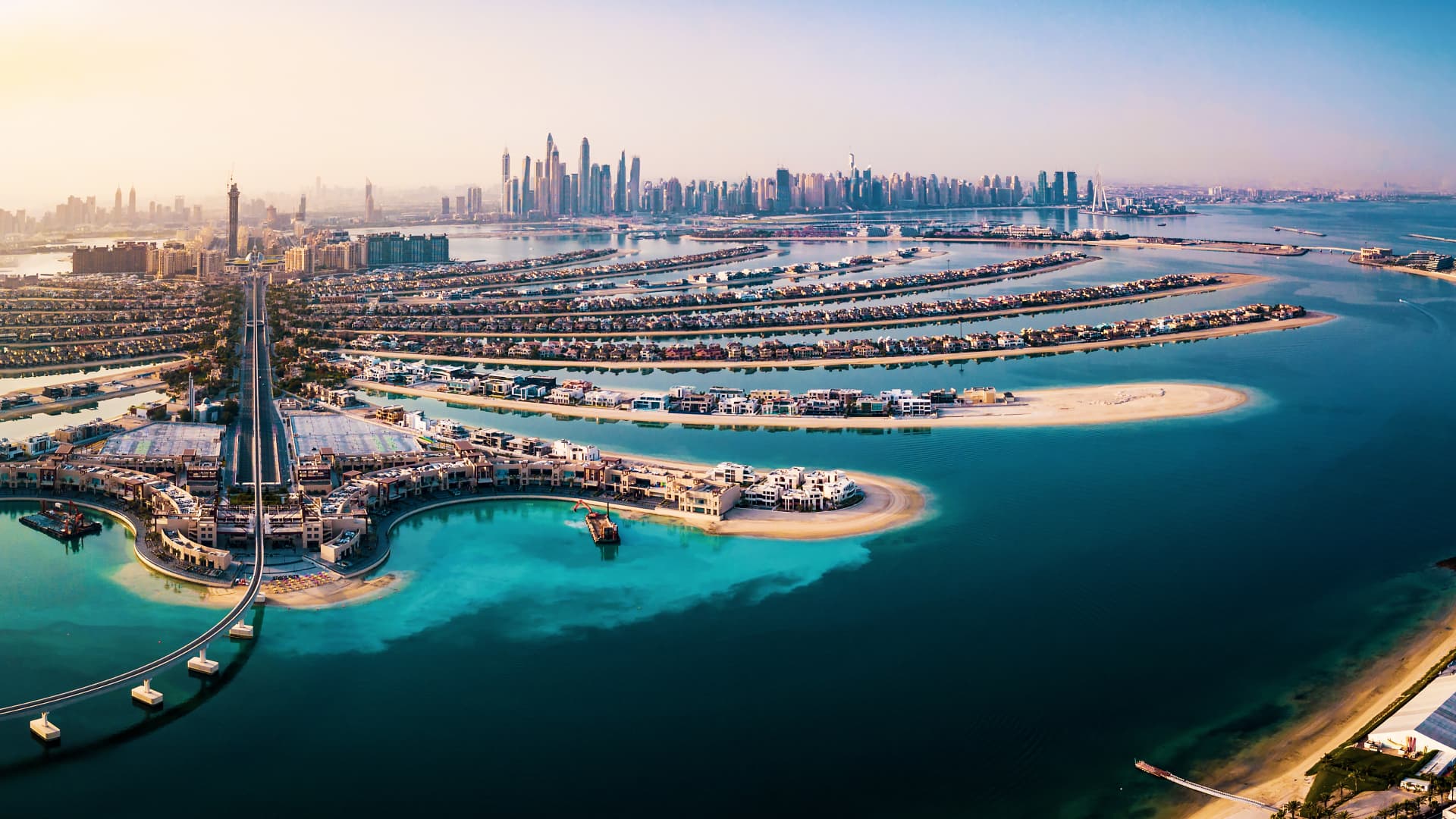
The Middle East has not traditionally ranked among the top destinations for Chinese travelers, but that appears to be rapidly changing.
According to Trip.com, during this year’s long Golden Week holiday (October 1 to 8), Chinese travel bookings to Doha increased by 441% year-on-year, while bookings to Abu Dhabi increased by 229%. The online travel agency said the data covered the period from September 27 to October 8, as many office workers took additional time off to extend their vacation.
Meanwhile, Dubai was among the top 10 destinations outside Asia with a 27% increase, according to travel data analysis firm Forward Keys, which compiled international flight departures from China from September 27 to October 12.
The emirate, which is part of the United Arab Emirates, is also one of the top choices for wealthy Chinese travelers traveling in premium economy, business and first class seats, with demand increasing 133% year-on-year.
This increase reflects a broader trend of more Chinese travelers heading to the Middle East. Trip.com Singapore general manager Edmund Ong told CNBC that flights from China to the region have increased by 25% so far this year compared to the same period in 2024.
Ong said the growth was even more pronounced when compared to the same period in 2019, with current levels more than 180% higher than before the pandemic.
The five overseas destinations with the biggest spike in hotel bookings during Golden Week were Saudi Arabia, Egypt, New Zealand, Kazakhstan and the UAE, according to Google translation of data from Tongcheng Travel, China’s second-largest online travel booking platform.
In the Middle East, Ong said the UAE, Saudi Arabia, Egypt, Qatar and Oman are the most popular.
Still, the usual suspects – nearby, affordable and visa-free Asian countries – continue to account for the majority of Chinese tourists’ outbound trips, led by Japan, Thailand, Malaysia, South Korea and Singapore, according to Trip.com data.
Accessibility, “uniqueness” fuel demand
Mr Ong said the Middle East’s rise in popularity in recent years has been driven by relaxed visa policies and an increase in direct flights.
“Before COVID-19, the United Arab Emirates (Dubai and Abu Dhabi) in particular were very popular because the visa process was very easy. And visas, and the presence or absence of visas, are really big drivers for Chinese people,” said Alexander Gross, CEO of China I2I Group, a Shanghai-based marketing and business development company.
Gross added that the UAE and some countries in the Middle East have “done very well” in the post-COVID-19 years. “Again, it’s because it’s open, it’s easy to get to, it’s affordable, and it offers a variety of travel opportunities.”
Peggy Li, CEO and managing director of Chinese marketing consultancy SPS Affinity, said the Middle East is also “very progressive” in adding direct flights to Chinese cities. She pointed out that Emirates, Dubai’s flag carrier, opened a new flight route to Hangzhou, home to Alibaba’s headquarters and close to Hong Kong, in July, just weeks after starting flights to Shenzhen.
“If you look at these new destinations that Emirates has started, it’s strategic not only from a tourism perspective but also commercially,” Mr Lee said.
(Tourists) don’t see anything local or unique (in Dubai). McDonald’s, KFC, Tim Hortons… They don’t seem to be very Arabic-style.
alexander gross
China i2i Group CEO
Chinese travelers are also attracted to experiential attractions and cultural diversity. Lee said that while “demand for private charters and luxury desert safaris (experiences) remains relatively strong,” demand for “authentic and meaningful experiences” such as educational trips is becoming more pronounced.
i2i’s Gross said the Middle East’s novelty has turned it into a status symbol for Chinese travelers.
“It shows some kind of status. I’m an adventurer. I have the financial ability to travel. I’m going to go places you haven’t been,” he said. “And you can share it with your 965 closest friends on WeChat.”
SPS Affinity’s Lee said the region’s diverse cuisine is also appealing. “[Chinese travelers]don’t usually have the ability to sample like Iranians, Afghans, Syrians, Lebanese,” she added. “This is a melting pot, so they get a really tasty kick to try different flavors.”
Has Dubai lost its luster?
Increased demand for outbound travel to the Middle East may be a boon for the region, but the challenge for Gulf countries will be to differentiate themselves in offering similar attractions.
“If you look at the natural resources available in all the[Gulf Cooperation Council]countries, everyone has it in terms of a bucket list for tourists,” Lee said. “You’ll want to go on a desert safari, speeding through the dunes. Deserts are everywhere. You’ll want to enjoy a hot air balloon breakfast in the desert… You can also ride camels in the desert, ride at sunset. All of that is in the desert.”

Dubai, in particular, is “having a lot of trouble” attracting Chinese tourists who are more interested in local things, Gross said. The tourist added: “I don’t see anything local or unique[in Dubai]. McDonald’s, KFC, Tim Hortons… it’s not very Arabian.”
Based on his research and conversations with hoteliers and destination management companies, he estimated that Chinese tourism to Dubai is down about 50% this year.
In comparison, Abu Dhabi looks “more Emirati” and “more local”, he said, adding that its cultural and historical attractions create “a different kind of combination of experiences”.
Travelers to the emirate of Dubai from northeast and southeast Asia fell by around 0.4% year-on-year between January and July compared to the same period in 2024, according to data from Dubai Economic and Tourism Authority.
Dubai’s reputation for luxury shopping is also waning as Chinese consumers cut back on spending amid domestic economic pressures. The weaker yen has made luxury goods more affordable even in neighboring Japan.
Li said it will be a “race of the fittest” for the Middle East region to capture a larger slice of China’s overseas travel pie in the future.
