

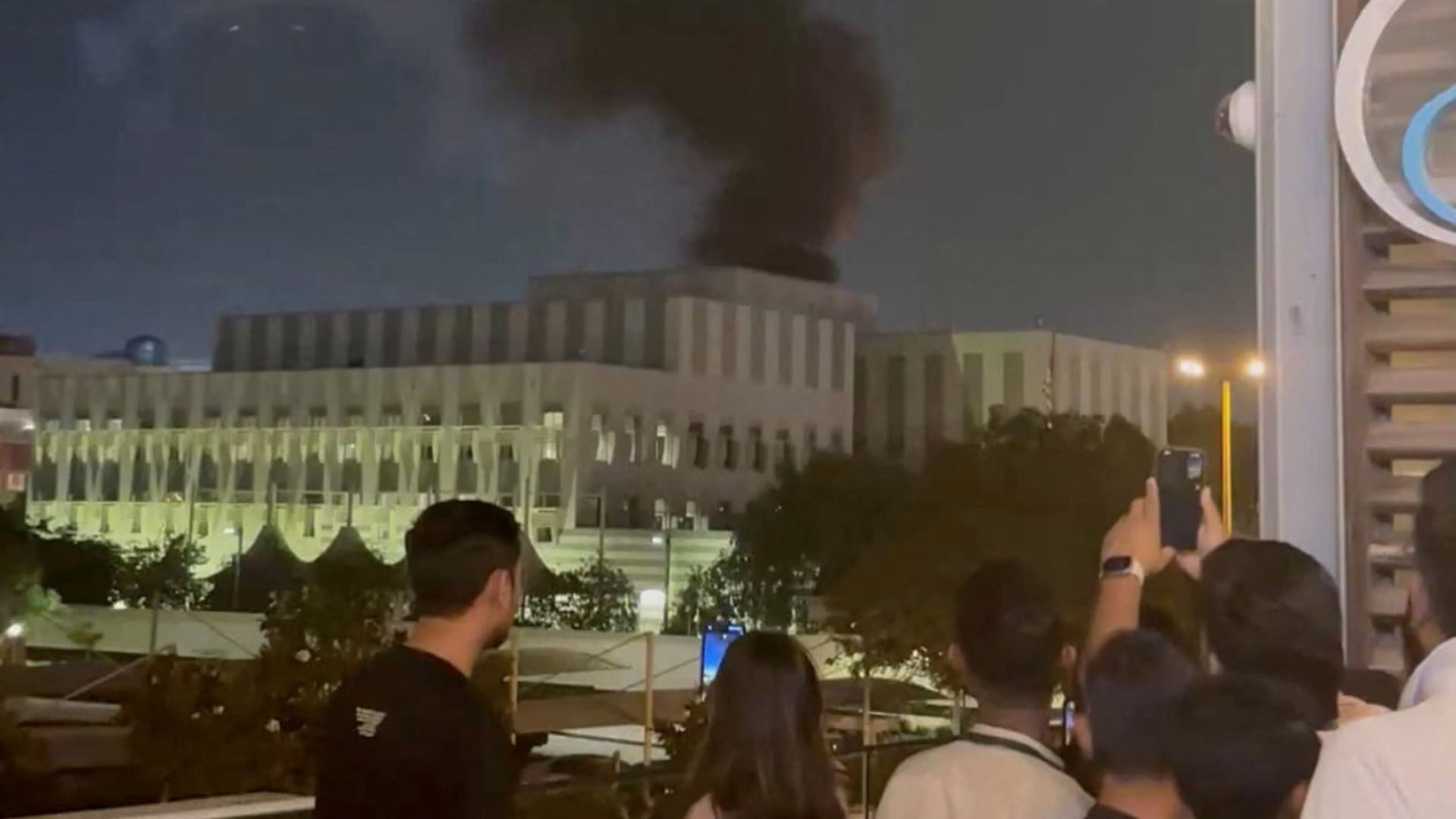
There is tension in Dubai. As air defense forces intercept drones, evacuation warnings and flashes of light in the sky have disrupted social events and daily activities, but much of life continues as normal, residents told CNBC.
Iran launched drones and missiles toward neighboring countries in the Middle East in response to attacks by the United States and Israel on Iran that began on February 28. The Iranian government has targeted U.S. military bases in the region, as well as oil and gas production facilities and civilian infrastructure.
As attacks continue into the second week of the conflict, the United Arab Emirates, like many other countries, is mobilizing its air defense forces and rushing to reassure its citizens and foreign investors, whom it has long favored.
However, Dubai Police warned citizens that “taking and sharing photos of security and sensitive locations, or reposting unreliable information, may lead to legal action and undermine national security and stability.”
A total of 21 people have been charged in connection with social media posts about the Iranian attack, according to Detained In Dubai, which works to support people trapped under the country’s harsh laws.
While many expatriates scrambled to leave the region after the outbreak of war, others chose to stay, and some shared their experiences with CNBC.

reputation
Dubai’s five-star Fairmont The Palm hotel was attacked in the first time since the war began, and debris from a downed Iranian drone started a fire at the Burj Al Arab hotel. Dubai’s airport was damaged by a missile attack, and on Tuesday the US consulate in Dubai was attacked by what appeared to be a drone attack, causing a fire nearby.
Last week, attacks on AWS data centers in the country caused disruptions to banking, payment services, enterprise services, and consumer services.
“Living in Dubai right now is a strange mix of normalcy and quiet tension,” Glenn Pawson, managing partner of marketing agency M3, who moved to Dubai in 2025, told CNBC.
Glenn Pawson, Managing Partner of Marketing Agency M3
“It’s surprisingly easy to get caught up in the rhythms of daily life and forget about the wider context,” he added.
“Then you remember something. For us, it’s usually a phone alert telling people to evacuate.”
Emergency alert messages received by UAE residents
Emma Graham, CNBC
Pawson said he saw the air defense take to the air several times. “It’s surreal to see flashes in the distance and, in some cases, flaming pieces with debris falling to the ground.”
Despite this, businesses are still open, people are still socializing, and the overall mood is one of “cautiousness” rather than “panic,” he said.
“The reality on the ground is that life feels completely normal and completely abnormal at the same time,” Pawson told CNBC. “You can go from your normal day to watching defense systems light up the sky in minutes.”
visible vigilance
Harley McGaughran previously lived in London but has lived in Dubai for two years, where she runs a high-end independent shopping business. He said he had “never felt so safe.”
“While foot traffic to physical stores has slowed, online inquiries and personal messages have remained steady,” he told CNBC. Although Dubai is quieter and the restaurants and beach clubs aren’t as crowded, “if you run a business and call the UAE home, life goes on,” McGoran added.
He added that on March 6, “While we were at the restaurant, the government issued an evacuation order, but we were able to respond efficiently without panicking, but the venue was still fairly crowded.”
Nick Rowles-Davies, a lawyer who previously lived in London but moved to Dubai in 2022, said the situation in Dubai was “functional but tense”.
“In some areas, you can hear interceptions, especially at night, so there’s visible vigilance,” he told CNBC. “There’s no panic, but there’s a clear recognition that this is no longer a distant geopolitical thing.”
economic goals
Despite government efforts to project an image of business as usual, several major international banks laid off employees from their Dubai branches on Wednesday after Iran announced it would target economic hubs and U.S.-linked financial institutions across the Middle East.
Dubai International Financial District (DIFC).
Christopher Pike Bloomberg | Getty Images
Dubai’s international financial center remains quiet following two consecutive Iranian attacks targeting the region this week. Dubai’s media office confirmed the incident but said no one was injured.
Regional offices of Goldman Sachs, Citi and Standard Chartered have ordered employees to work from home.
The financial center’s iconic ICD Brookfield Building, a Foster and Partners-designed skyscraper and home to BlackRock, Bank of America, JP Morgan, EY and BNP Paribas, is usually crowded with bankers but is currently vacant.
CNBC interviews Judd Elone, Managing Partner and Head of Middle East, Brookfield, ICD Brookfield, DIFC
Emma Graham, CNBC
