

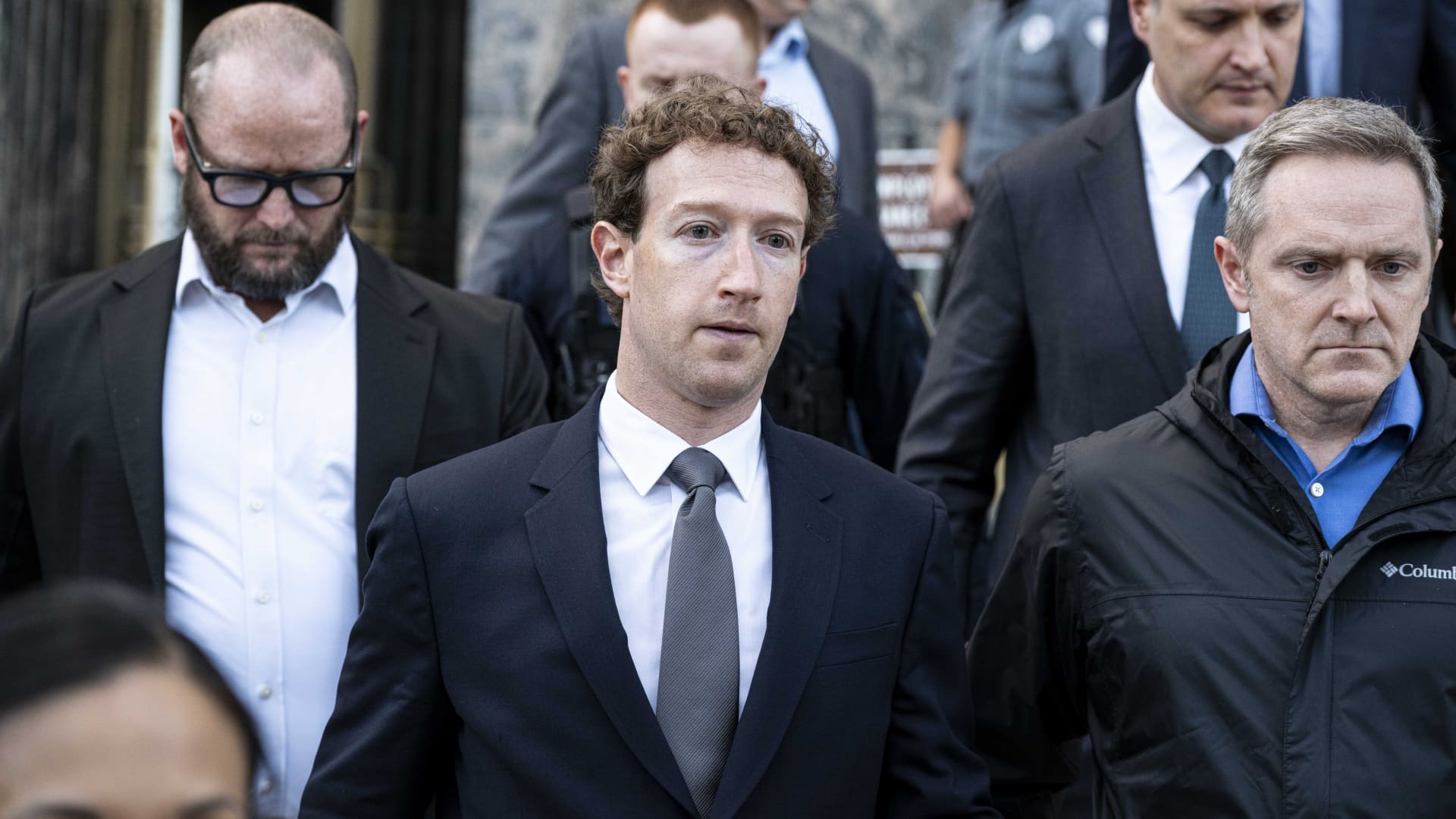
February 19, 2026, Meta CEO Mark Zuckerberg leaves federal court in downtown Los Angeles after defending the company in a landmark social media addiction trial in Los Angeles, USA.
John Putman | Anadolu | Getty Images
Jurors reached verdicts in major cases including: meta and google That could impact social media and the broader technology market as a whole.
The verdict has not yet been announced.
The personal injury trial began in Los Angeles Superior Court in late January. The young woman, who identified herself as KGM (Kaley), claimed that she became addicted to apps such as Instagram and YouTube as a child. Deliberations began last Friday, May 13th.
The case is one of several being heard this year, and experts have characterized it as a “Big Tobacco” moment for the social media industry, comparing it to the 1990s, when tobacco companies were forced to pay billions of dollars for lying to the public about the safety and potential harms of their products.
On Tuesday, a jury in Santa Fe, New Mexico, found that Meta intentionally violated the state’s unfair practices law after Attorney General Raul Torres argued that the company did not adequately protect its apps from online predators targeting children. Meta was ordered to pay $375 million in damages based on the number of violations. The company announced that it would appeal the case.
The New Mexico lawsuit is separate from other social media lawsuits brought by state attorneys general against companies such as Meta and TikTok.
During the six-week trial in Los Angeles, jurors were tasked with determining whether Mehta and YouTube implemented certain design features in their apps, such as recommendation algorithms and autoplay, that contributed to KGM’s severe mental distress. The 20-year-old woman claimed she suffered from severe body dysmorphic disorder, depression and suicidal thoughts due to near-continuous use of the app, which was difficult to stop due to constant notifications.
Meta and YouTube deny the plaintiffs’ claims, saying they take safety and health concerns seriously and have implemented features aimed at minimizing potential harm. Lawyers representing the tech giant argued that KGM’s mental health issues stemmed from an unstable childhood and related family issues, and that she used services as a way to cope with trauma.
The court selected the plaintiffs’ case as a bellwether for determining verdicts in similar related cases throughout California under the so-called Judicial Council Coordination Procedure. TikTok and snap They were originally part of the lawsuit, settled with the plaintiffs before the trial began, and are currently involved in other legal proceedings.
A federal trial involving similar consolidation claims by school districts and parents across the country is scheduled to begin this summer in the Northern District of California. They claim that the apps Meta, YouTube, TikTok, and Snap have promoted harmful mental health-related harms against young users.
A key legal strategy for prosecutors and plaintiffs’ lawyers is to focus on alleged design flaws related to apps like Instagram and YouTube, rather than specific content, to counter claims by tech companies that they cannot be held liable for certain third-party content on their platforms under Section 230, which regulates free speech.
The LA trial featured testimony from several executives, including Meta CEO Mark Zuckerberg, Instagram chief Adam Mosseri, and YouTube’s vice president of engineering Christos Goodrow.
Mosseri hit back last month, calling the concept of social media addiction a “problematic” use. Mr. Zuckerberg’s testimony the following week included a revelation that the Facebook co-founder had once contacted him. apple CEO Tim Cook spoke about the company’s decision-making processes related to the health of teens and children, digital filters that promote cosmetic surgery, and other issues.
Goodrow said in his testimony that YouTube was “not designed to make the most of your time.”
Lawyers representing both parties made closing arguments about two weeks ago.
WATCH: Meta expands chip production;

