

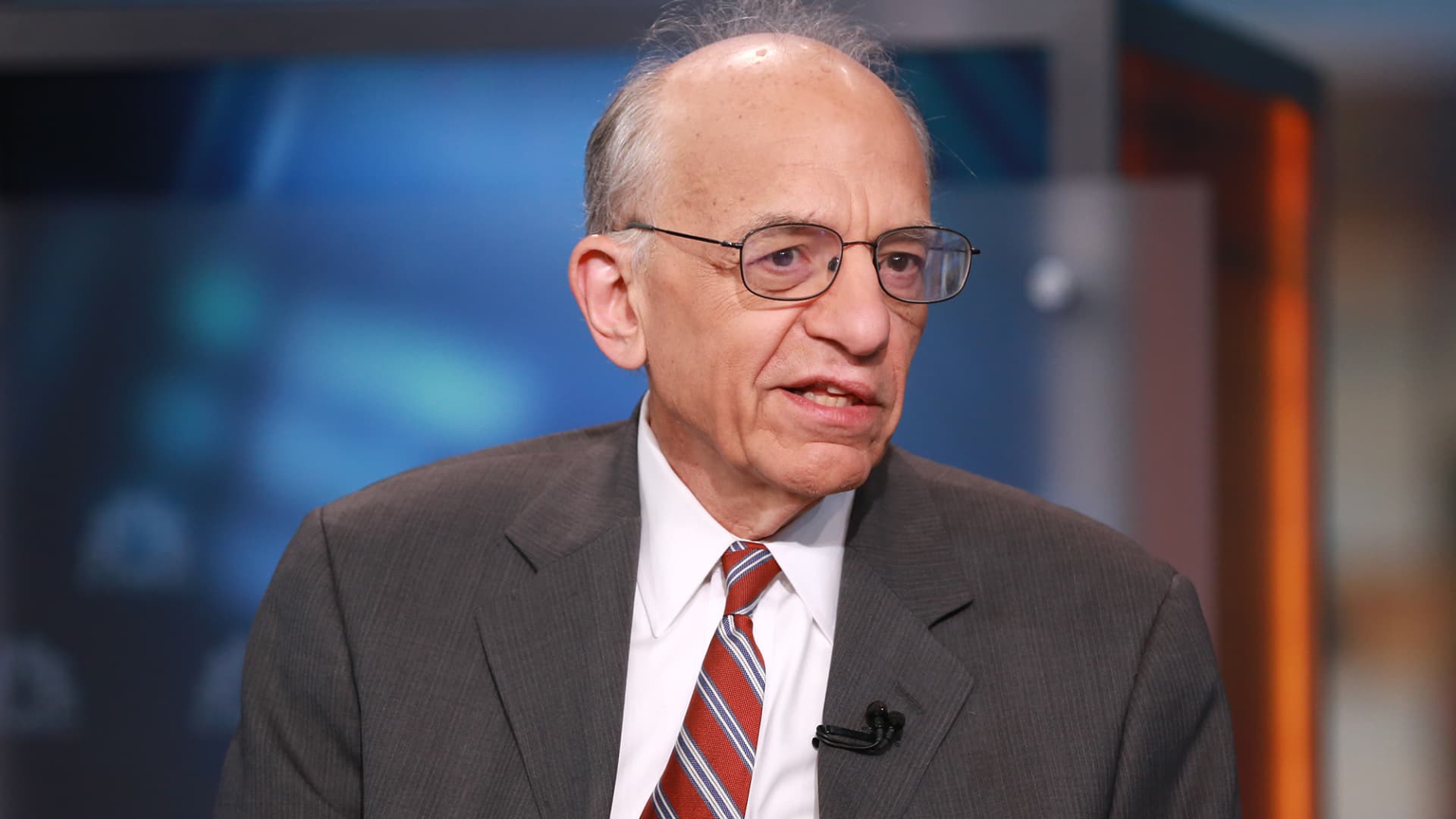
Jeremy Siegel thinks stocks could see more turmoil ahead, despite Wednesday’s big gains in major averages. “The short term doesn’t seem very advantageous to me,” Siegel, a professor emeritus at the Wharton School of Business at the University of Pennsylvania, said in an interview Thursday on CNBC’s “Squawk Box.” Stocks soared on Wednesday after the United States and Iran agreed to a two-week ceasefire, allaying fears that President Donald Trump would ramp up bombing efforts against Iran if the Strait of Hormuz is not reopened. The Dow Jones Industrial Average rose 2.9%, its best day in a year. The S&P 500 and Nasdaq Composite rose 2.5% and 2.8%, respectively. US crude oil prices have fallen by the most in a single day since 2020. .SPX 5D Mountain S&P 500 for the Past 5 Days “What we got yesterday was a relief rebound that the worst-case scenario was off the table,” Siegel said. But he added that with oil prices still above $90 a barrel, the Federal Reserve remains more likely to raise overnight rates at some point than cut them. “When you look at the money supply, you’re seeing expansion, and when you look at commodity prices, you’re seeing expansion in fiscal policy and defense spending. In fact, I don’t see how the Fed can ease at this point,” Siegel said. “This is going to be a challenge for bond markets and stock markets.” Investors entered 2026 expecting at least one rate cut from the Fed. However, CME Group’s FedWatch tool, which uses 30-day federal funds futures prices to track the probability of a Fed rate change, shows that traders are not currently pricing in a rate cut before the end of 2026. “Unless we get a better solution, which I hope we will in the next two weeks…I actually see the market going sideways,” Siegel said, noting he remains bullish on stocks in the long term.
