

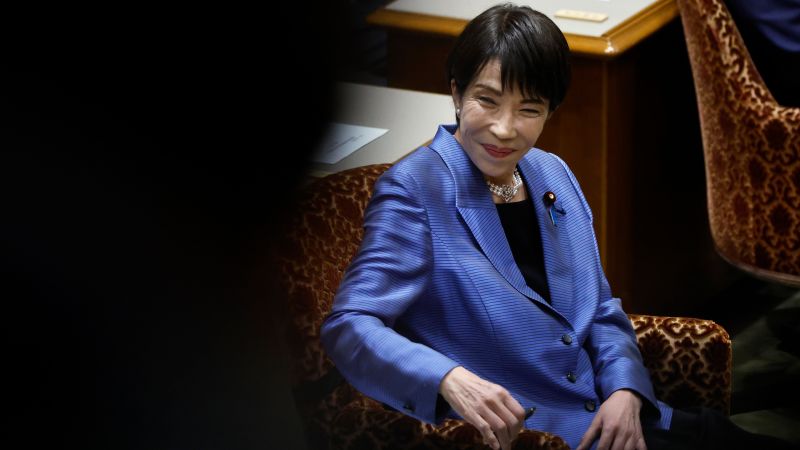
Japan’s prime minister has said that the recent increase in the number of female members of parliament has led to long lines at the toilets, and he is working with more than 50 female members to push for more women’s restrooms in parliament.
Tokyo’s male-dominated House of Representatives currently has 73 female members serving in just two chambers, according to a petition filed by female lawmakers on December 12.
According to the opposition Constitutional Democratic Party of Japan, Japan’s first female leader, Sanae Takaichi, who was elected last year, is among the 58 members who support the request, which has received support from members from seven parties and independent groups.
Yasuko Komiyama, a female member of the Constitutional Democratic Party of Japan, said, “There are so many female members lined up in front of the women’s restroom before the plenary session.
Japan is a culturally conservative country where politics and the workplace have long been dominated by older men. The country maintained its low ranking at 118th out of 148 countries in the World Economic Forum’s latest Global Gender Gap Index.
Last year saw Takaichi’s historic election, increasing the number of female councilors to 73. According to IPU Perline, women still hold just under 16 percent of seats in the lower house of parliament.
The bipartisan petition says the lack of toilet supplies is a “serious issue that could potentially impact the progress of litigation and the performance of mandates.”
In a Facebook post, Komiyama said the issue not only affects female lawmakers, but also female staffers and the growing number of female journalists.
Tomoe Ishii, a female opposition lawmaker, added in an Instagram post that the shortage “has been a problem for a long time.”
“Society tends to be reluctant to raise the issue of adding more women’s restrooms in workplaces and schools,” she added.
The National Diet Building in Tokyo was built before women had the right to vote in this country.
Completed in 1936, it sat idle for almost a decade until women won the right to vote in 1945, and a year later the first female MP was elected.
