

Growing up in a small village in Marawila, Sri Lanka, about 20 minutes from Negombo, Krishan Kargamage spent his childhood running hard and bowling fast on the streets and at school.
But money was tight and economic opportunities limited, so when Kargamage was 15 years old, his parents packed up and moved with their three children to Tuscany, Italy, in search of a better life.
Recommended stories
list of 3 itemsend of list
Kargamage never dreamed that 21 years later he would pack his bags again and head to India, now a talented leg-spinner, to represent Italy in his T20 World Cup debut against Scotland in Kolkata on Monday.
Italian cricket: Older than you think
When British expatriate Herbert Kilpin founded the Milan Football and Cricket Club in 1899, he could not have imagined that the Italian team would play in front of thousands of fans in India and be broadcast to millions around the world.
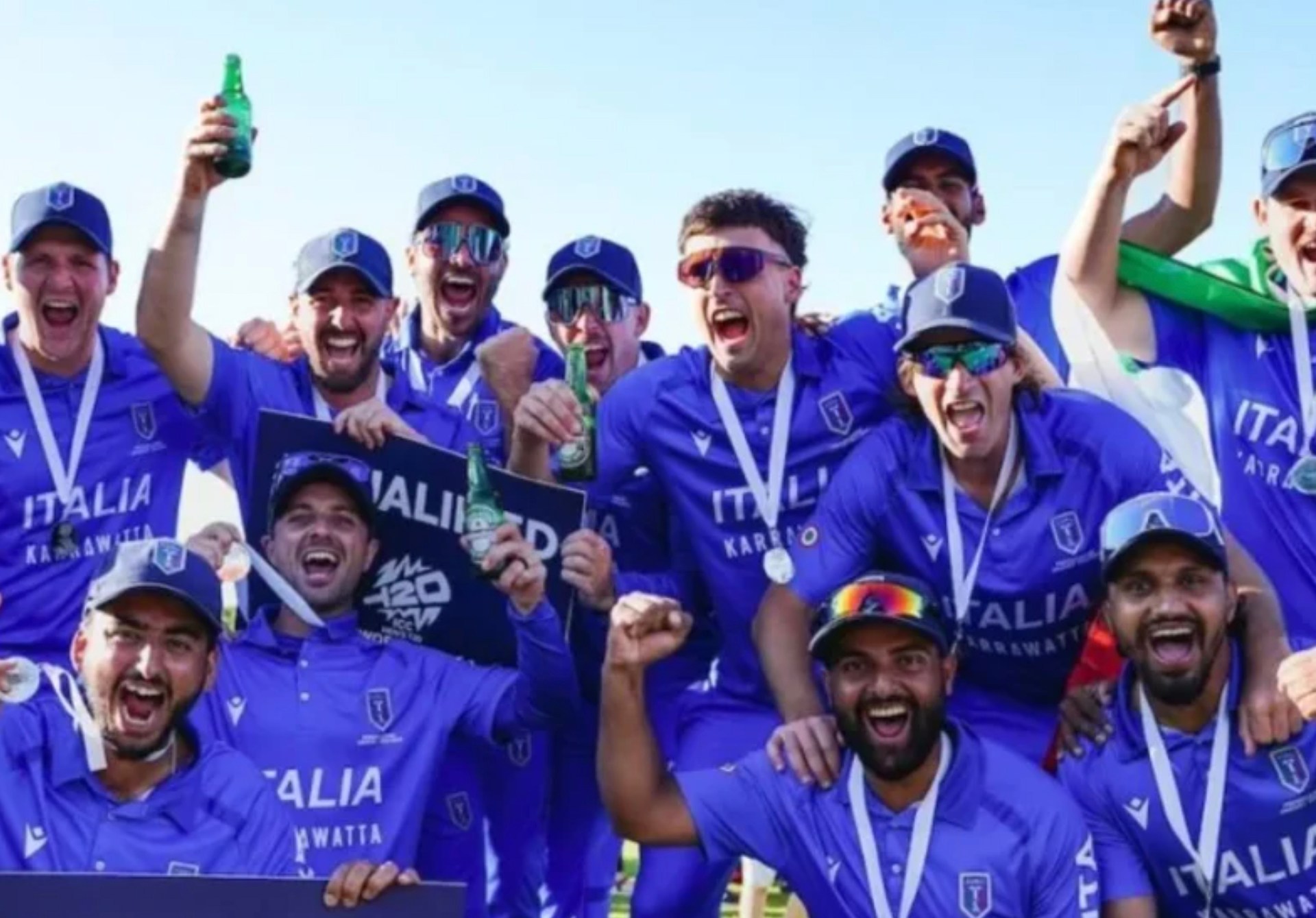
AC Milan went on to transform into a footballing giant, but cricket took much longer to develop in Italy. However, the country’s participation in the 2026 ICC Men’s T20 World Cup, co-hosted by India and Sri Lanka, was a big step for the Azzurri.
Italy finished second behind the Netherlands in the European qualifiers last July, ensuring their World Cup debut. A 12-run victory over Scotland secured their progress and stunned the cricketing world. Scotland, one of the most successful nations in the second division, was expected to finish in the top two.
An outstanding performance from all-rounder Harry Manenti, who scored 38 run-a-balls and took five wickets, and a 21-ball 50 from Emilio Gay, who was absent from the current squad due to injury, turned the tournament on its head. Italy qualified with an excellent net run rate, but Scotland were given a spot at the last minute due to Bangladesh’s late withdrawal from the T20 World Cup.
Italy will join Scotland, Nepal, West Indies and England in Group C of the 16-team tournament, with the top two teams advancing to the Super Eights phase. Their coach, former Ireland international Kevin O’Brien, has set his sights on reaching the knockout stages and was encouraged by his team’s performance in the pre-tournament tri-series against Ireland and the Netherlands in Dubai.
“Our aim is to win games and ultimately we want to qualify from our group,” O’Brien said. “We have a very experienced team, who may not necessarily be in the World Cup, but we certainly have players who have played professional cricket for many years.
“We can compete with any of the other four teams in the group on the day. We beat Ireland in the T20 chasing 157, so that was a big confidence booster.”

Who is on the Italian national team?
The 15-player team is made up of five “home base” players and other players selected with Italian status through relatives from Australia, South Africa and England. None of them were born in Italy, but some have Italian passports.
There are two sets of siblings in Australia. Harry and Ben Manenti, Justin and Anthony Mosca. Both Manenti brothers play in Australia’s Big Bash League, with Ben playing for South Australia’s title-winning Sheffield Shield team last season.
Other notable names include JJ Smuts, a 37-year-old former South African international who recently gained eligibility due to his wife’s inheritance. A regular on the T20 franchise circuit, the explosive top-order batsman and handy left-arm serious spinner is expected to lead the way with both bat and ball.
The captain is Wayne Madsen, 42, a South African-born batsman who moved to England and is currently captain of the Derbyshire club, having made 253 first-class appearances. Australian Grant Stewart is also an experienced English domestic cricket professional, playing for Kent.
Apart from Karugamage, who is now a leg-spinner, there are four home-based players. Zain Ali is a towering all-rounder who was born in Pakistan and moved to Italy with his family when he was two years old. Hassan Ali and Syed Naqvi also have Pakistani roots, while Jaspreet Singh was born in India and raised in Italy.
Rounding out the team are Englishman Marcus Campiano, South African-born Jean-Pierro Mead and England-based Australian player Thomas Draka.
credibility issues
There will undoubtedly be questions about whether a team with several players who have played much of their cricket in other countries can really be considered Italian, or whether their participation is contributing to the meaningful growth of Italian cricket.
O’Brien insists the team’s identity is firmly rooted in Italian culture.
“Before qualifying, they talked about why they were playing in Italy,” O’Brien said. “Many of our players have deep ties to this country through their parents or grandparents, and certainly in terms of Italian culture, many of them speak Italian fluently. All of our home-based players speak Italian fluently, and three or four of our non-Italian-based players speak Italian fluently. This is an important thing we are doing, bringing together the Italian people, players and culture with the history of cricket.”
O’Brien, who has experience playing international cricket with players from a variety of backgrounds, likens the current Italian squad to Ireland’s first World Cup appearance in 2007, which included several players from Australia and South Africa, although he admits Ireland had a stronger domestic system.
“The difference is club cricket. You can’t have someone come from Australia and go professional at a club in Milan or Rome because there are no standards at the moment.
“There is a strong understanding and passion for cricket in Italy and federations are moving into schools. They are working to bring cricket more into the grassroots level in Italy.”
“Of course it’s going to be difficult, but if we don’t take these small steps, we’ll never know how far this sport can reach. There will be even more interest in the World Cup. It may take a decade or so to see the results, but this World Cup could be a big springboard for cricket in this country.”

Krishan’s story
Kalugamage’s journey highlights the importance of accessibility. After moving to a small town near Lucca, he turned to track and field in the absence of cricket, training with Olympic gold medalist Marcel Jacobs and excelling in the long jump.
He found a local team before joining Rome Cricket Club, where he still plays, juggling cricket 700 kilometers (435 miles) round trip from Lucca, where he works as a pizza chef.
“I lost a lot of jobs to play cricket in Italy because I work in a restaurant,” Kargamage said. “Sundays are a very busy day, so when I would say I’d like to go home to play cricket, they’d say, ‘No, you can’t do that.’ But I quit work and play cricket.”
Calgamage’s development as an international leg-spinner is remarkable considering that club cricket in Italy is played on synthetic pitches typically used by junior and recreational players. O’Brien believes he can be Italy’s trump card with his quick leg breaks and goury.
But Kargamage also represents latent talent and passion. He cried with joy when Italy qualified, saying he had witnessed the growth of the sport in his home country.
“What we really think is that after the World Cup it’s going to be even bigger and probably a lot of younger kids will be fascinated by cricket and our team’s performance.”
world cup ambitions
O’Brien knows what it’s like to shake up the established order. In 2011, he completed the fastest World Cup century with just 50 balls, as Ireland defeated England in what was then the most successful World Cup match.
“There are huge similarities between our current situation and the situation of Irish cricket in 2007 in terms of team strength. So there’s no reason why this Italian team can’t get into the group, win their games and qualify for the Super Eights.”
For Kargamage, who has never played in front of a large audience, being on the world stage is a childhood dream come true.
When asked what the game means to him, he replied with a smile: “Cricket is life.”
Cricket is my life.
