

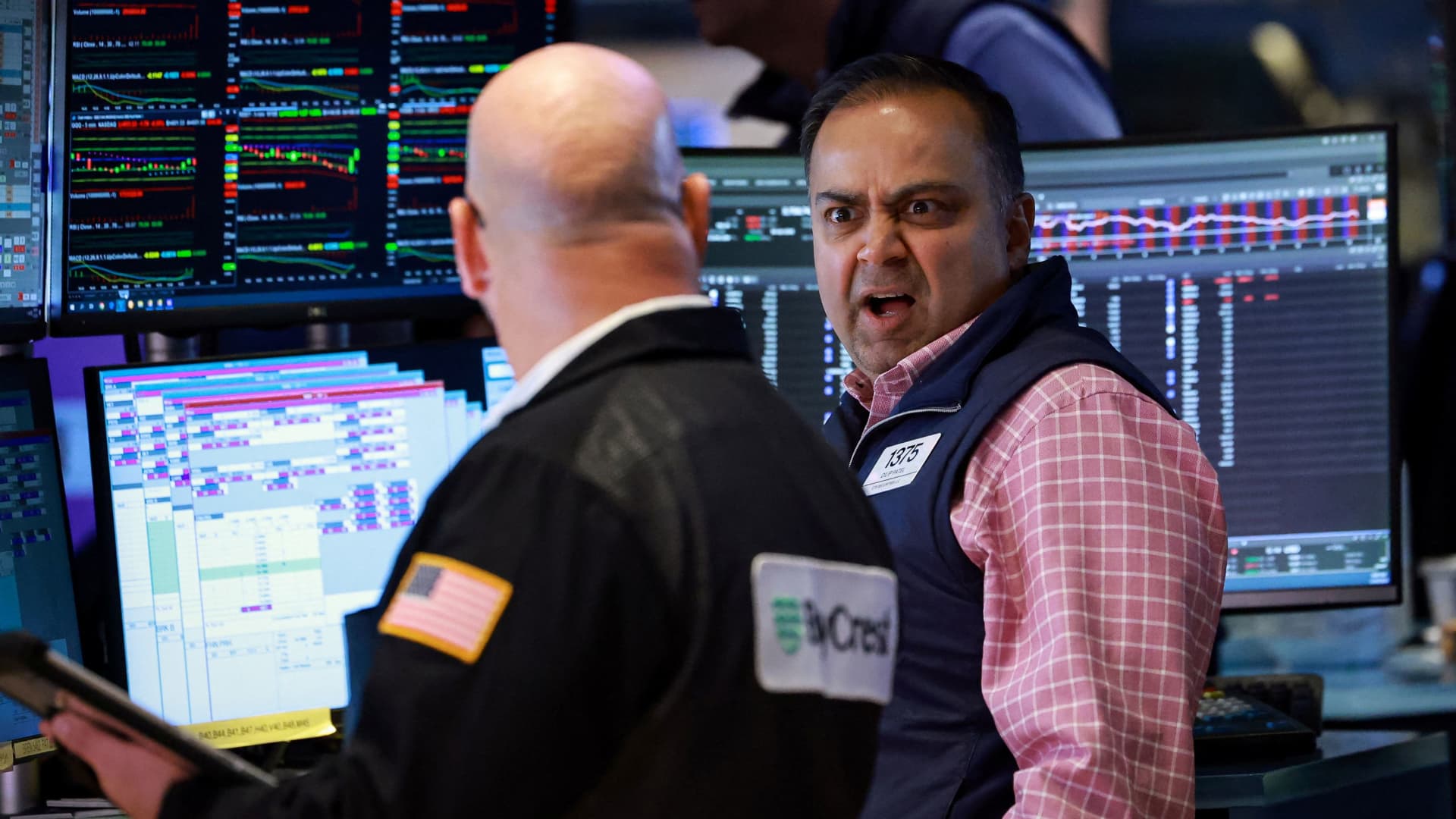
President Donald Trump has caused another major reversal in global markets. President Trump posted on Truth Social on Monday that the United States and Iran had “productive” talks over the weekend. This came after President Trump gave Iran an ultimatum: If it did not open the Strait of Hormuz, the US would attack Iran’s key energy infrastructure. The post caused stock futures prices, which had fallen sharply that day, to soar. Contracts tied to the Dow Jones Industrial Average rose about 1,000 points. S&P 500 futures and Nasdaq 100 futures each rose 2%. Oil futures fell and gold prices pared losses. It was a surprisingly quick turnaround. “Depending on how long you take the elevator to the office, this could mean futures prices of more than 100 basis points,” Deutsche Bank’s trading desk said in an email. @SP.1 5D Mountain S&P 500 Futures 5-Day Chart Monday’s early trading action is giving Wall Street a “TACO” trading vibe. TACO is an acronym that stands for “Trump Always Chickens Out,” and the “chicken out” part of the abbreviation became famous when the president imposed very high tariffs on countries in 2025, but appeared to settle for much lower levies. “As we saw with the tariff hikes, it is typical of President Trump to release positive news before the moment of final decision, and in this case we could start to see the same scenario as he is desperate to open the Strait of Hormuz, which is causing pain across markets,” Citi’s trading desk said in a note. Stock prices, which had been stagnant since the war began, rose. JPMorgan Chase & Co. and Goldman Sachs are down 4.6% and 5.4%, respectively, this month, but each is up more than 2%. Travel company names like Delta Air Lines and Carnival all rose more than 6%. There’s just one problem. Iran has contradicted President Trump’s posts and state media has denied that talks over the weekend even took place, meaning Monday’s early gains could be short-lived. “After a tumultuous weekend and dangerous Monday’s trading, this tweet heard around the world this morning has markets reeling and heads spinning,” Wells Fargo’s trading desk said in a statement. “It’s still early, but my sense is that investors remain skeptical. The market remains untradable and uninvestable.” One level investors should keep an eye on is the S&P 500’s 200-day moving average, said Jay Woods of Freedom Capital Markets. The S&P 500 index closed below that mark last week for the first time since May. But Monday’s surge in futures suggests the benchmark is trying to trade above that. “Can the S&P rise to its 200-day moving average of $6,621 and then recover it? We expect a bailout rebound in depressed sectors like technology and discretionary early in the week, but the rhetoric with only five days left could prevent a stronger, more sustained rally. For now, we expect trading to fade until further news comes out of Washington,” Woods told CNBC.
