

Abuja —
In northern Malawi, Steny Williams Nsamba struggles to buy fertilizer for his small farm, which grows maize, groundnuts and tobacco. He warned that the war in Iran has raised the cost of living and that “catastrophically low yields” are inevitable if transport disruptions continue into Malawi’s growing season in November.
“The prices of many goods will rise and life will become untenable,” he told CNN.
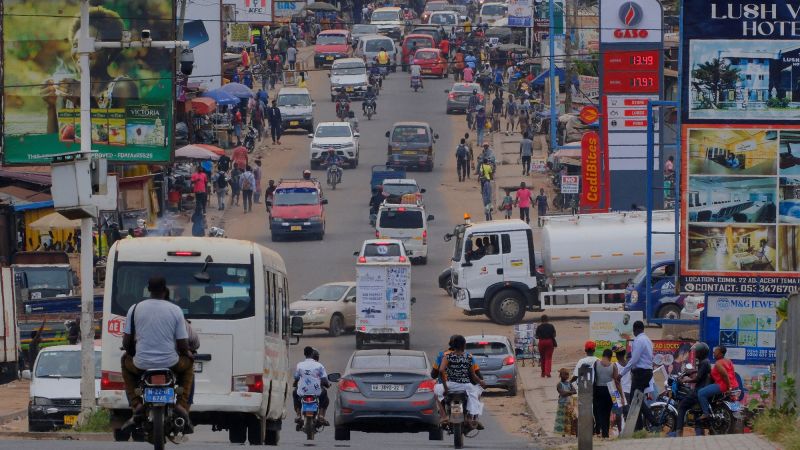
Nsamba’s plight is echoed across Africa, where soaring fuel prices and disrupted trade routes have hit economies hard with fertilizer shortages during the crucial planting season.
A two-week ceasefire announced between the United States and Iran offers hope, but even if it lasts, few expect a quick return to normalcy. Aliko Dangote, the owner of Africa’s largest oil refinery in Nigeria, told CNN last month that it could take months for oil prices to stabilize.
No country is immune from the impact of the Iran war, but African countries that rely heavily on imports of fuel, food, and fertilizer are particularly vulnerable.
Simon Mhlongo, a former African Union special envoy for Somalia and the Sahel, told CNN that the temporary ceasefire was too late to ease the difficulties faced by African countries facing soaring resource prices.
He said it was “slow and uneven”, with some oil importing countries on the continent facing “exchange pressures, subsidy burdens and rising pump prices”.
Fuel prices have soared by 15% to 40% across Africa, further straining already struggling economies. In Malawi, gasoline prices rose 34% and jet fuel prices rose 81%.
African countries are once again victims of a distant war in which they have no say.
“Previous shocks such as the COVID-19 pandemic and the Russia-Ukraine war demonstrate that African economies remain highly exposed to global instability,” said Fola Aina, a political scientist and international security analyst.
The economic impact of conflicts elsewhere is painfully familiar to Africa, which was just recovering from the price shock caused by Russia’s ongoing war in Ukraine.
Until Russia’s full-scale invasion of Ukraine in 2022, the two neighboring countries were important suppliers of agricultural products to many African countries.
A 2024 study by think tank ODI Global found that Kenya and Egypt, two of the continent’s largest economies, rely on Russia and Ukraine for a significant portion of their wheat imports, sourcing up to 85% and 67% respectively.
Much of the impact is due to the de facto closure of the Strait of Hormuz. While much of the world’s attention is focused on oil, this chokepoint is also an important conduit for fertilizers, putting crops and daily meals at risk. Despite the ceasefire, only a few ships are passing through.

The numbers are clear: Africa is dependent on global supply chains.
According to the United Nations, Africa’s annual food import costs range from $70 billion to $100 billion. The continent also imports more than 6 million tons of fertilizer each year. Additionally, Africa’s spending on refined petroleum products exceeds $120 billion annually.
A report released last year by the United Nations Conference on Trade and Development (UNCTAD) said that “during global shocks, African economies face greater uncertainty than other regions of the world,” pointing to high levels of debt and weak infrastructure as well as heavy use of imported goods.
The ramifications of the Iran war extend far beyond the oil crisis.
Aid agencies have warned that the conflict could disrupt humanitarian efforts across Africa and worsen food insecurity on a continent already facing sharp declines in foreign aid.
Even before the conflict began, the World Food Program warned of a “disastrous” year in which 55 million people in West and Central Africa were expected to endure crisis-level hunger.
In Sudan, Somalia and Ethiopia, “millions of people are already living in drought, hunger, displacement and conflict,” Merak Irga, Mercy Corps vice president for Africa, told CNN. We may be “on the brink of the first major crisis of the post-aid era. The need is immense, but the response is simply not there,” Irga warned.

The International Rescue Committee (IRC) reported that transport delays are causing significant disruption to the delivery of vital aid.
Medicines meant to help 20,000 people in war-torn Sudan “whose needs have already reached catastrophic levels” are stuck in Dubai, while more than 600 boxes of potentially life-saving therapeutic food for more than 1,000 severely malnourished children in Somalia remain stuck in India, the IRC said.
Both countries rely on imported fertilizers shipped through the Strait of Hormuz, increasing the risk of acute famine if the crisis drags on, according to the United Nations World Food Program (WFP).
Tensions in the Middle East coincide with the critical planting season from March to May, when fertilizer demand peaks in many African countries.
“This will impact agricultural production and exacerbate the risk of crisis and emergency levels of food insecurity, particularly for low-income households and import-dependent economies,” said a policy brief published by the United Nations Development Program (UNDP).
WFP estimates that an additional 45 million people around the world may be at risk of severe hunger, especially as this conflict coincides with critical funding shortfalls for aid services.
African governments have varied in their response to the crisis brought on by conflict.
Tanzanian President Samia Suluhu Hassan has cut back on convoys and told accompanying officials to travel together in shared buses to save fuel as oil prices rise in the East African country.
Madagascar has declared a national energy emergency due to continued disruptions to energy supplies. South Sudan, where nearly all electricity is generated from fossil fuels, has rationed electricity in the capital in response to oil shortages. South Sudan produces oil for export, but has little refining capacity of its own and must import much of what it uses.
Egypt has implemented a nationwide policy requiring restaurants, cafes and shops to close by 9pm to reduce energy consumption.


What is missing is that in the long run, analysts say Africa needs to reduce its vulnerability to global economic shocks, including by strengthening regional bonds.
Neo Letswalo, a researcher at the University of Johannesburg in South Africa, told CNN that there is a critical need to strengthen trade between African countries.
“Our deeply entrenched dependence on foreign value-added products and services continues without a minimum of urgency to turn to intra-African alternatives,” he said.
Aina, who teaches at London’s School of Oriental and African Studies, called for speedy implementation of the African Continental Free Trade Area (AfCFTA), an agreement signed by countries on the continent to boost trade between their countries. The agreement was launched in 2020, but progress has been slow, with just over 20 of the continent’s 55 countries trading under it.
“The alternative for African countries is strategic autonomy,” he explained. This includes “deepening intra-African trade through the AfCFTA, investing in local production, particularly in food and energy, and building resilient regional value chains.”
In the meantime, African countries can only hope that a ceasefire between the US and Iran will bring some relief.
“Africa should not celebrate. It should recalibrate,” said Mhlongo, a former African Union special envoy.
“While the ceasefire reduces escalation risks, structural vulnerabilities remain. Importers still face inflation, (while) exporters benefit only temporarily. This (ceasefire) is not stability, but breathing room, and complacency will be costly.”
