

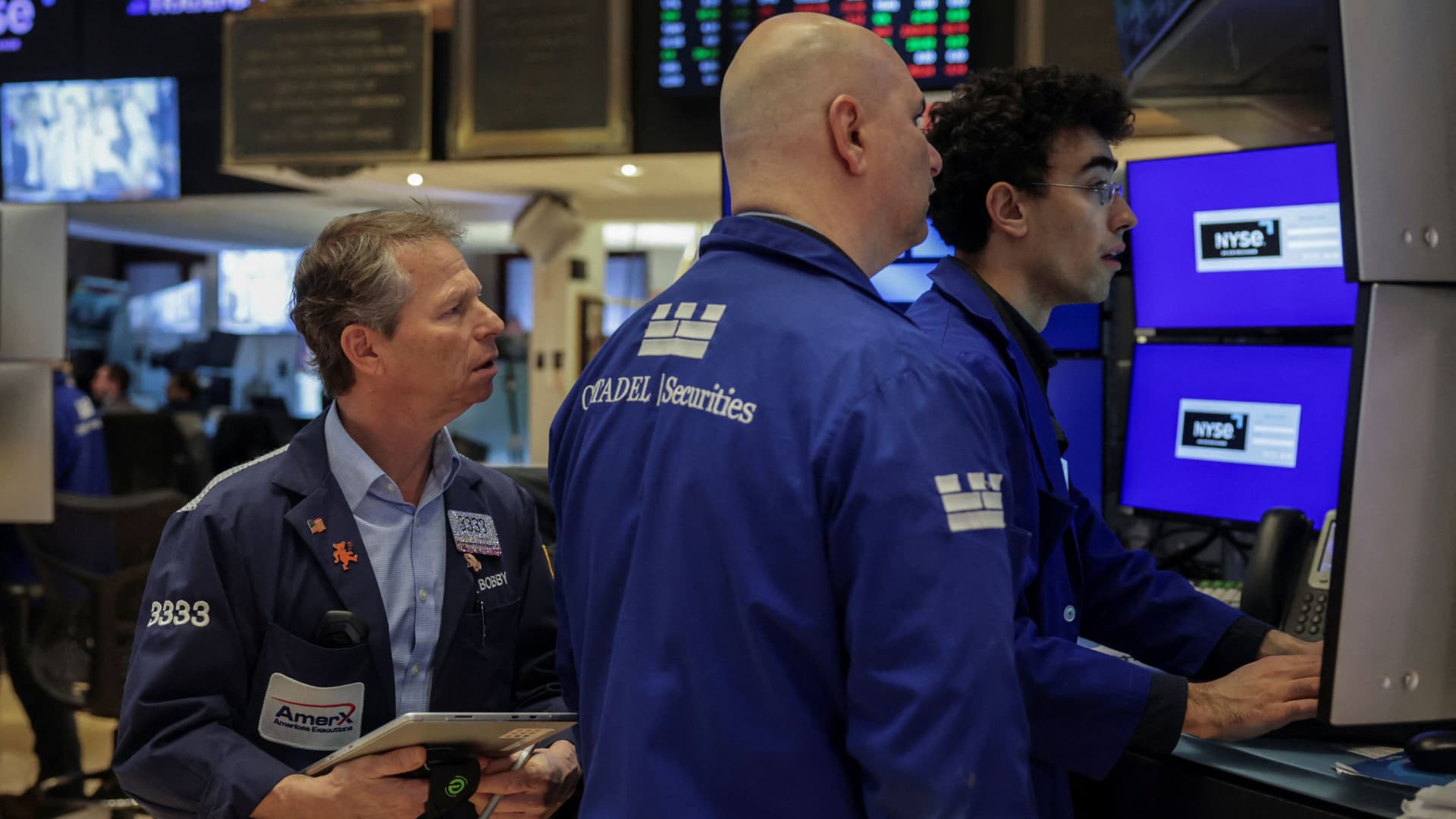
Traders work on the floor of the New York Stock Exchange (NYSE) on February 24, 2026 in New York City, USA.
Gina Moon | Reuters
US Treasury yields rose on Monday as investors failed to use the US bond market as a safe haven despite the US and Israel launching attacks on Iran over the weekend.
Rising oil prices have heightened concerns about inflation, leading to a rise in yields.
The benchmark 10-year Treasury yield rose 8 basis points to 4.044%. The yield on the 30-year Treasury note rose more than 5 basis points to 4.688%. The yield on two-year government bonds rose 10 basis points to 3.479%.
One basis point equals 0.01%, and the yield is inversely proportional to the price.
Last weekend’s attack on Iran by the United States and Israel killed Iran’s supreme leader Ayatollah Khamenei. Meanwhile, more than 200 people have died in the country, according to state media.
Iran has launched retaliatory attacks against US military bases in the Middle East region. Four U.S. military personnel were killed in this operation.
President Donald Trump told CNBC’s Joe Kernen that American military operations in Iran are “ahead of schedule,” and that the conflict could last four to five weeks, or even “much longer than that.”
Geopolitical conflicts typically cause U.S. bond prices to rise and yields to fall, but concerns about the impact of higher oil prices on inflation and the potential for a protracted conflict with the U.S. going largely alone appear to have outweighed the safe-haven bid.
WTI crude oil prices recently rose about 7% to over $72 per barrel. Other safe-haven assets such as gold also rose.
“The bond market is saying, ‘We’re more worried about inflation than we are about a flight to growth or quality,'” Mohamed El-Erian, chief economic adviser at Allianz, said on CNBC’s “The Exchange,” pointing to conflict-induced rises in oil prices and ISM Manufacturing Index data that showed economic activity expanding in February as a driver of rising yields.
El-Erian said he expects the 10-year Treasury yield to hover between 4% and 4.5% barring another financial shock.
On the economic data front, investors are awaiting several important releases on Friday, including the February jobs report, January retail sales and February unemployment rate. Ahead of these, investors will focus on Wednesday’s ADP jobs report.
— CNBC’s Davis Giangiulio contributed reporting
