

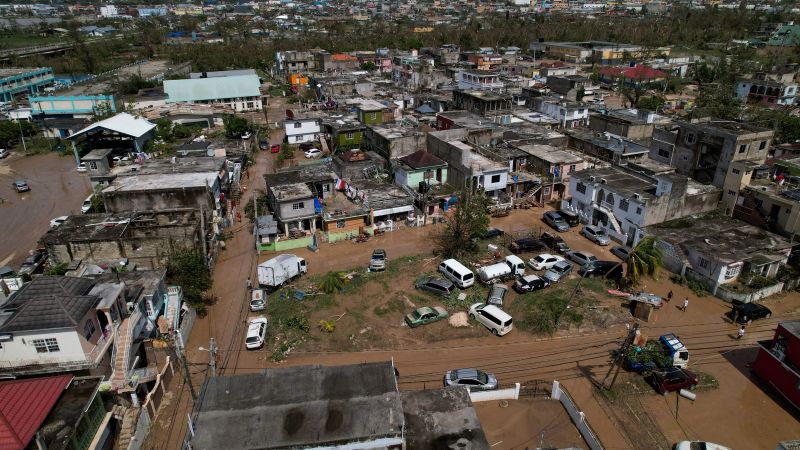
The trail of destruction left behind by Hurricane Melissa as it crossed Jamaica has been seen for the first time from space in new satellite images obtained from Bantar.
The storm made landfall in Jamaica on Tuesday as a Category 5 hurricane, moved to Cuba on Wednesday, and then made landfall in the Bahamas.
These aerial photos show widespread flooding and extensive damage in towns along Jamaica’s southwest coast in the parish of St. Elizabeth, and on the other side of the island, in the town of Montego Bay, the capital of the parish of St. James. The storm first made landfall on Jamaica’s southwest coast near the town of Black River, parts of which can be seen here.

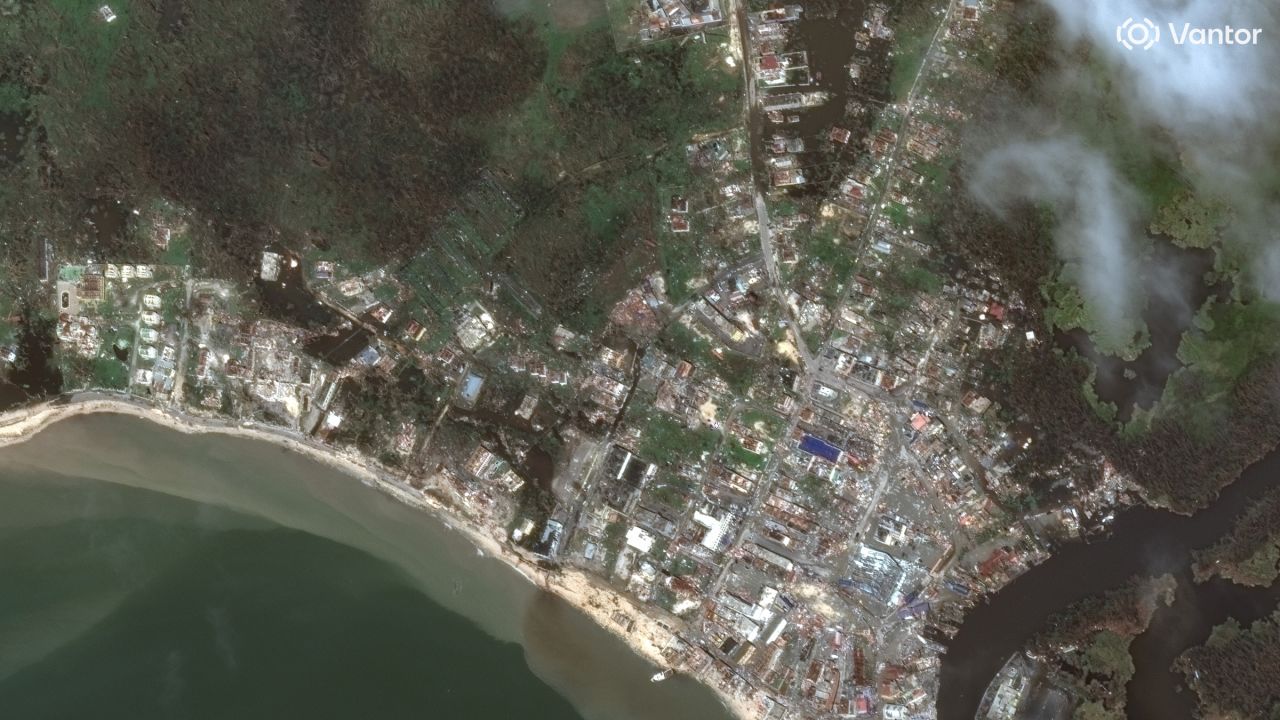
The damage to homes, businesses, and community centers in Black River is widespread, even within this limited area. This satellite photo taken after the storm shows the roof of one of the neighborhood’s largest markets peeled clean off from its foundation.
Coastal communities were hardest hit by the storm’s devastating winds, with some remote fishing villages nearly flattened by the hurricane. A small boat was launched in the town of White House, less than 10 miles northwest of the Black River, whose economy relies on its proximity to the Caribbean Sea.
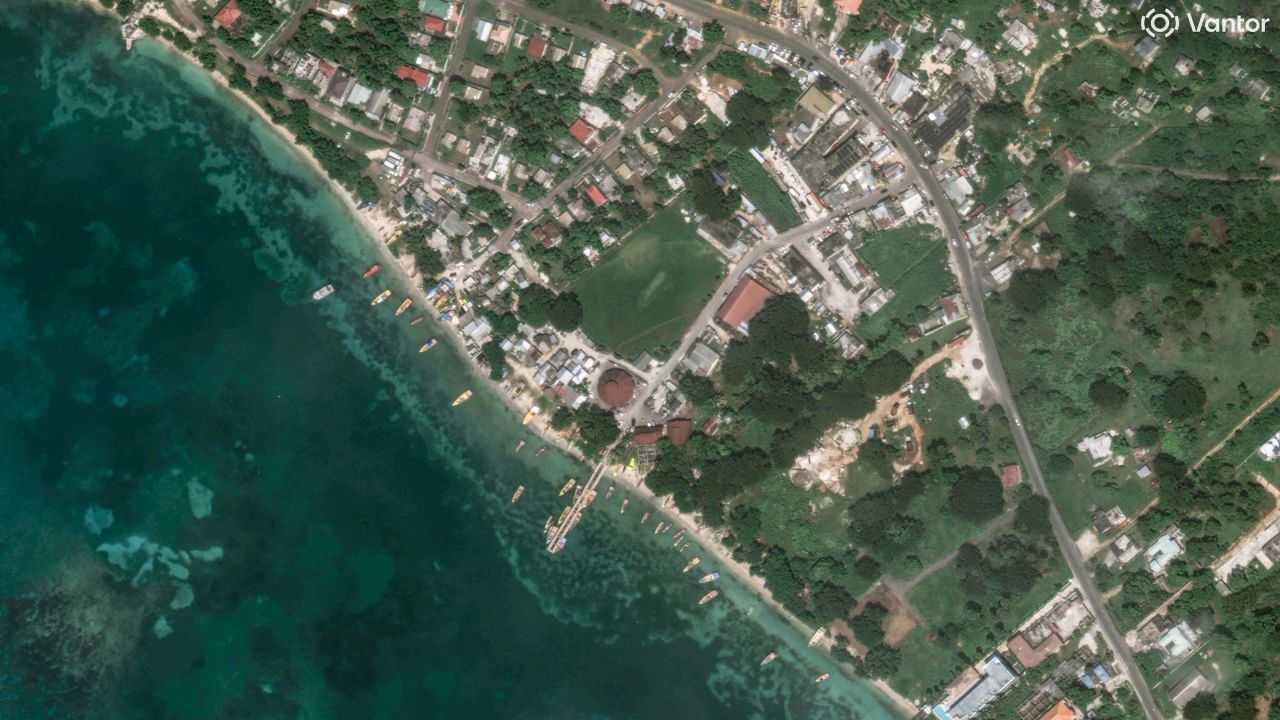
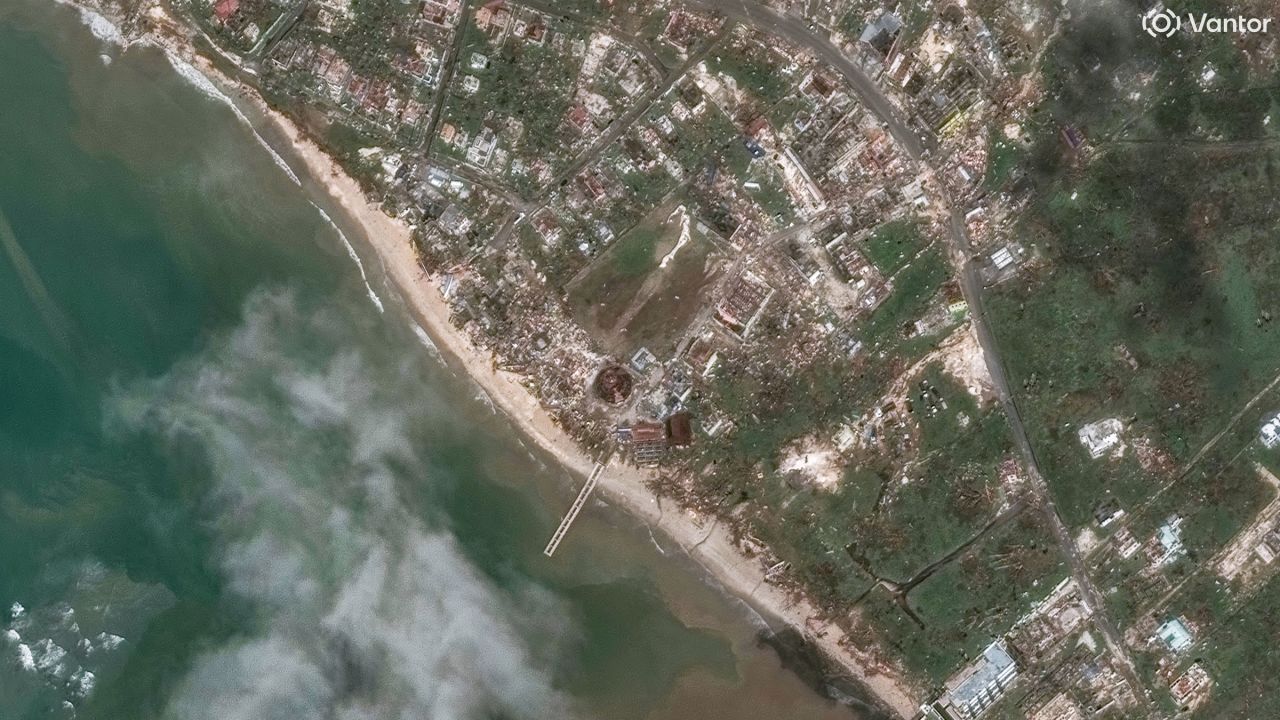
As the storm moved north, it flooded rural farmland across St. Elizabeth Parish in the southwest, Jamaica’s breadbasket. Footage taken on the ground showed how quickly low-lying farmland was submerged in rainwater.
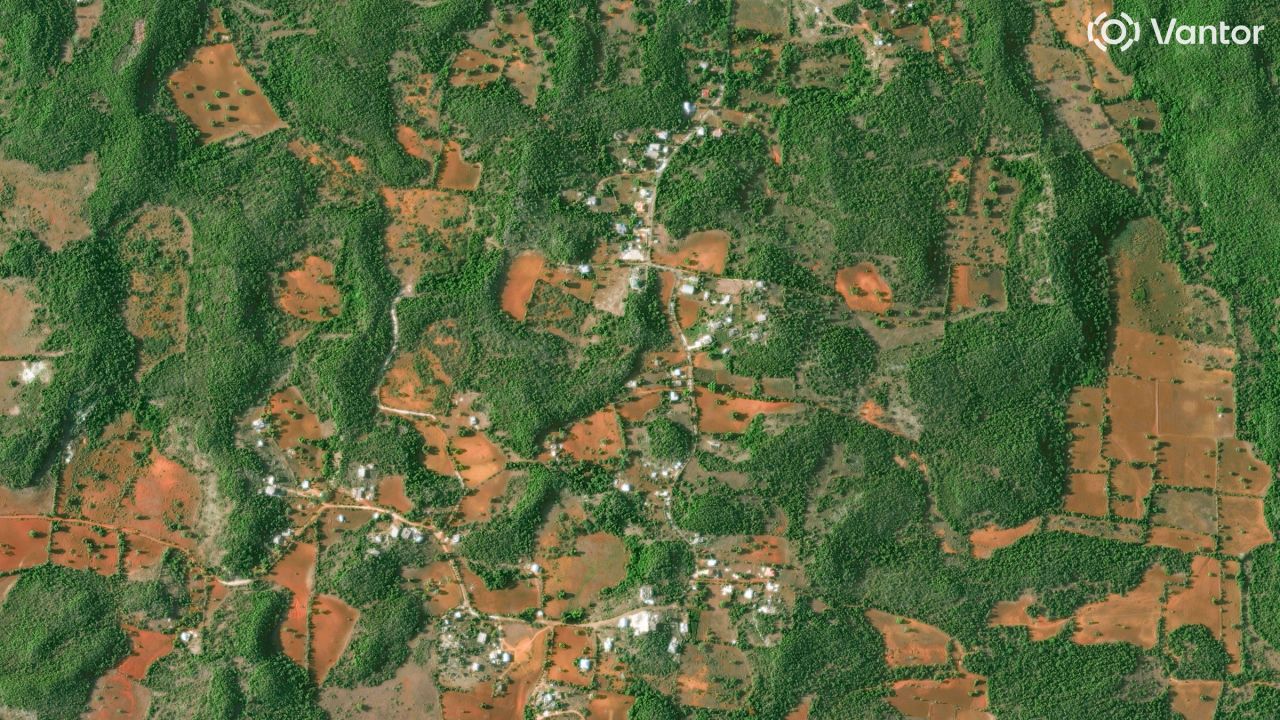
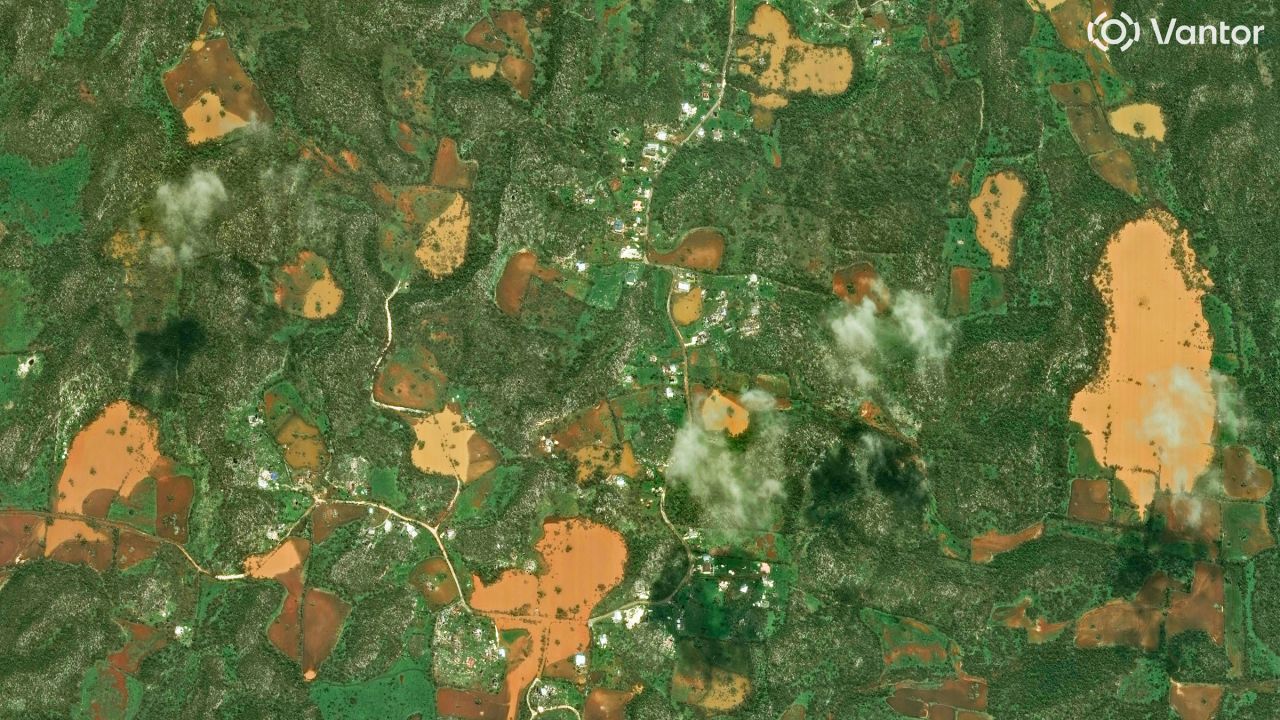
Images taken within 24 hours of the floodwaters show flooded farmland and large tracts of farmland stripped of vegetation.
On the opposite coast, Hurricane Melissa hit Montego Bay in northern Jamaica. This satellite image taken in the aftermath shows massive flooding across the city and large pools of water around storage facilities at the city’s main port.
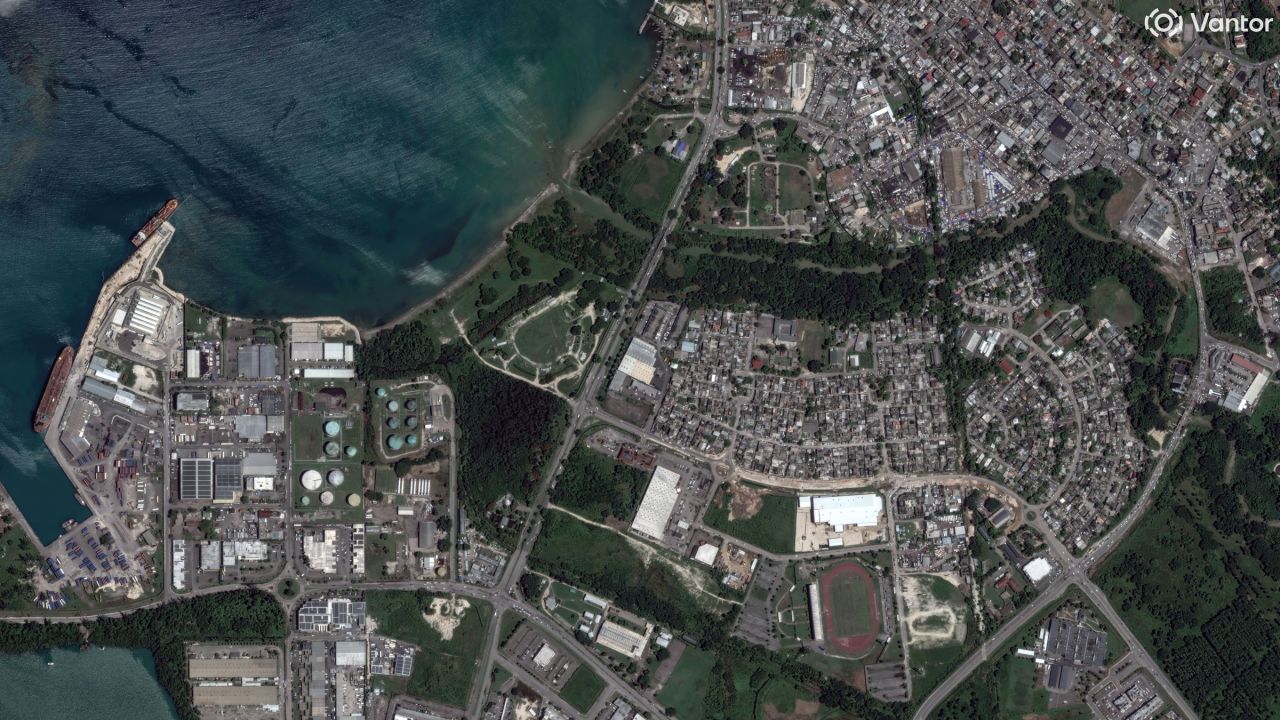
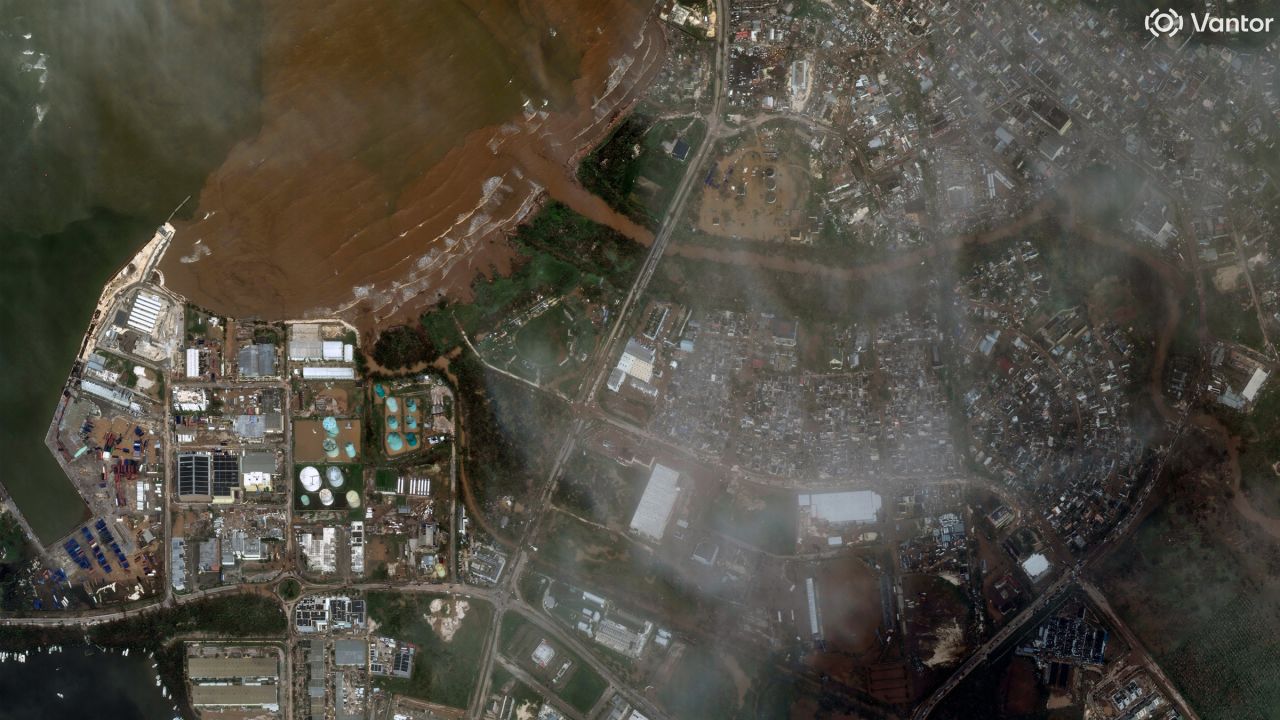
As the storm moved out to sea, it pulled debris and muddy water through the Burnett and Pye Rivers (seen in the center of the frame). The debris looks like a large cloud of dirty water visible across the shallow waters off Montego Bay.
