

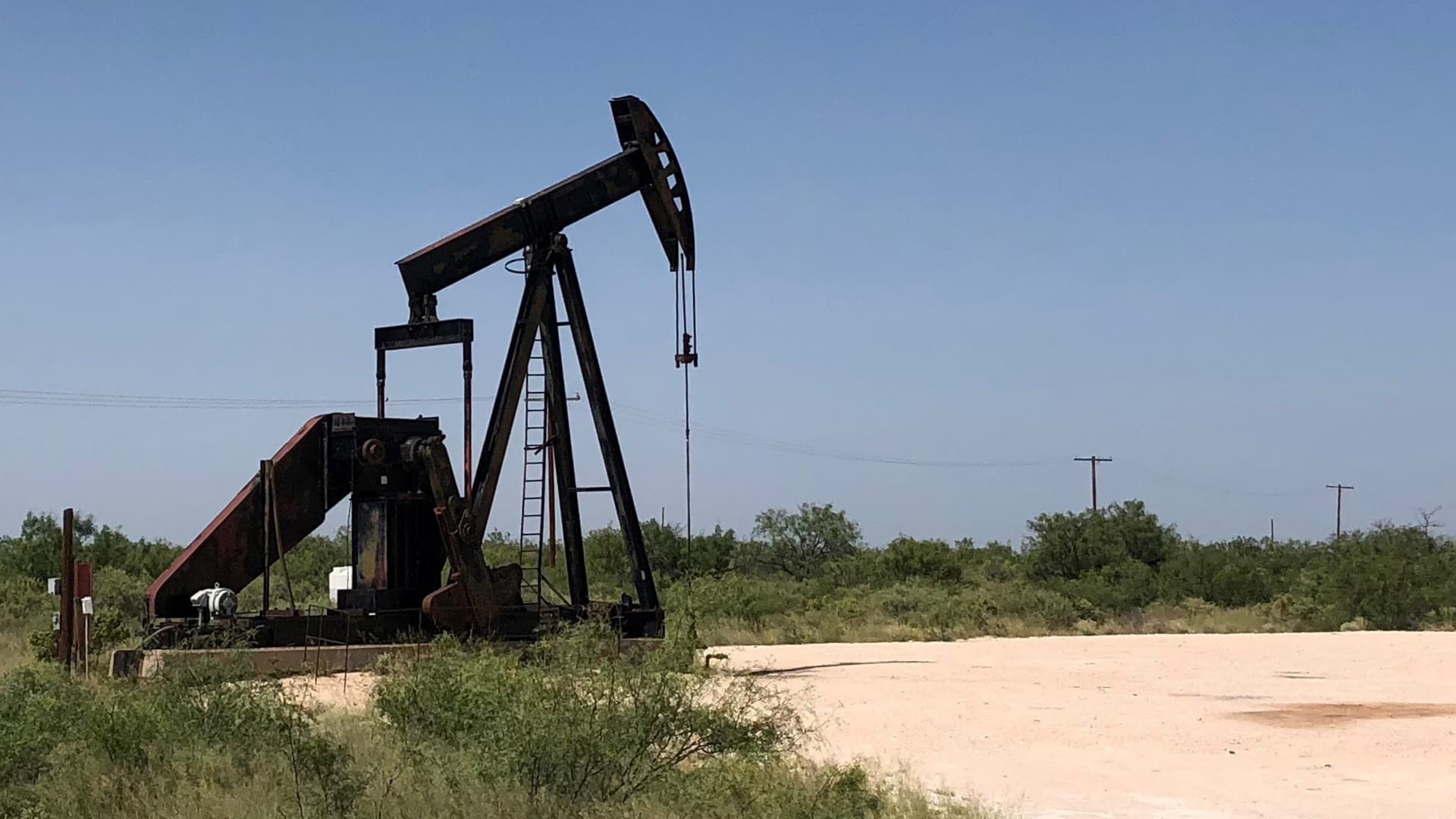
Oil prices have soared to historic levels amid uncertainty over the Iran conflict. Such extreme vertical movements are prime candidates for short positions, but war-induced oil spikes tend to come back down to earth over time. For this reason, you should adopt a different layered approach when structuring your next trade. Time Frame Adjustment: I generally prefer bull call spreads because bullish strategies inherently offer a higher win rate. When making occasional bearish trades, I typically keep a tight 14- to 21-day time frame, as pullbacks in broader bull markets are notoriously short-lived. However, this geopolitical situation is unique. Uncertainty could easily cause prices to rise for more than a month. Our goal is to increase the expiry date from 35 days to 50 days to give you enough time to get it right. Scale in: No one rings the bell at the top. When a strong general trend weakens, the initial entry is more likely to go underwater. To manage this, I am slowly building my position and starting very small. The advantage of this particular setup (a $1 wide at-the-money bear put spread) is that you can start a position with as little as $50 and steadily scale up as price movements develop. $110 Trigger: I am following the US Petroleum Fund’s $110 level as my primary benchmark. Every time the USO moves above $110, I consider piling on another small bearish spread, always ensuring that the newly added contract has at least 40 days until expiration. Trade Setup: Bearish Put Spread Now that my bearish bias is solidified, the next step is to find a suitable vehicle to execute the trade. For this reason, I use a standard bear put spread (also known as a put debit spread). Check out the USO options chain for April 17th and you’ll quickly see why I like this product. It is incredibly liquid and features tight strikes in the $1 range. This structure is great for capital efficiency. If the trade goes well, you can make $50 by risking just $50 and building a $1 wide put spread. Upsizing is easy. If you want more exposure, just add more contracts. For example, for 10 lots, $500 is at stake as there is a potential payout of $500. Execution Habits Here’s the game plan: If USO spikes to $120 on Wednesday, I would consider buying an out-of-the-money (OTM) bear put spread with a strike about $4-5 below the current price. Why do OTM instead of your usual fund input? It comes down to how the market works. If you trade individual stocks, you can typically get executed for around $0.50 on ATM spreads. But the ETF landscape is changing. Recently, ETFs like USO have been notoriously difficult to obtain fair execution due to ATM strikes. Slightly sliding out-of-the-money solves the liquidity problem and allows trading on the books. Assuming USO hits $120, here’s how we would structure the trade using an April 17th expiration: Buy $115 put, expiring April 17th Sell $114 put, expiry April 17th Number of contracts: 1 Cost: $50 Potential profit: $50 — Nishant Pant Founder: https://tradewithmaya.com/ Author: Mean Reversion Trading YouTube, Twitter: @TheMeanTrader Disclosure: Pant has a bear put on the USO that expires on April 17th. Contains spreads. All opinions expressed by CNBC Pro contributors are solely their own and do not reflect the opinions of CNBC, its parent or affiliate companies, and may have been previously disseminated on television, radio, the Internet, or another medium. The above is subject to our Terms of Use and Privacy Policy. This content is provided for informational purposes only and does not constitute financial, investment, tax, or legal advice or a recommendation to purchase any securities or other financial assets. The Content is general in nature and does not reflect any individual’s unique personal circumstances. The above may not be appropriate for your particular situation. Before making any financial decisions, you should strongly consider seeking the advice of your own financial or investment advisor. Click here for full disclaimer.
